About Becky Pliego

I am grateful because God, in His grace, called me out of darkness and into his admirable light. When I did not look for Him, He found me. When I was in a pit of sin, He rescued me. I am not walking this road alone, my family is always with me, and we love Him, because He loved us first.

>Time to Study Philippians -Week Seven-

>@font-face { font-family: “Wingdings”;}p.MsoNormal, li.MsoNormal, div.MsoNormal { margin: 0cm 0cm 0.0001pt; font-size: 12pt; font-family: “Times New Roman”; }h1 { margin: 0cm 0cm 0.0001pt; page-break-after: avoid; font-size: 12pt; font-family: “Times New Roman”; }p.MsoBodyTextIndent, li.MsoBodyTextIndent, div.MsoBodyTextIndent { margin: 0cm 0cm 0.0001pt 72pt; text-indent: -72pt; font-size: 12pt; font-family: “Times New Roman”; }span.Ttulo1Car { font-weight: bold; }span.SangradetdecuerpoCar { }div.Section1 { page: Section1; }ol { margin-bottom: 0cm; }ul { margin-bottom: 0cm; }

Greetings to the ladies of our Philippians study!
Welcome to Week Seven~
This study and the following two weeks of lessons will be a condensed version of Mining God’s Word – How To Study the Bible; Foundation Series by Bethlehem College and Seminary Press. I highly recommend that you purchase your own workbook at www(dot)bethlehemcollegeandseminary(dot)org – it would be a great tool for you to have!
“And Jesus increased in wisdom and in stature and in favor with God and man.”                                 Luke 2:52
Let us review our homework first:
Did you manage to find references to “fellow worker(s)”? I will list a few of mine below for you. Most likely you will have come across some of these also. Please read the verses around these texts to know the context.
Romans 16:3 – “Greet Prisca and Aquila, my fellow workers in Christ Jesus…”
            The fellow workers listed here are a man and a woman. A church met in their home (16:5).
Phil. 4:2-3 – “Yes, I ask you also, true companion, help these women [Euodia and Syntyche], who have labored side by side with me in the gospel together with Clement and the rest of my fellow workers, whose names are in the books of life.”
            Referring to men and women as fellow workers.
1 Cor. 3:9 – (beginning in verse 8) “He who plants and he who waters are one, and each will receive his wages according to his labor. For we are God’s fellow workers.”
            This text is talking about what Paul and Apollos have individually done for the church body. Do not think one is better than the other.
Col. 4:11 – “ …These are the only men [vs.10] of the circumcision among my fellow workers for the kingdom of God, and they have been a comfort to me.”
            These men are Paul’s comfort and support during this time.
Philemon – 1:1 “To Philemon our beloved fellow worker…”
            We know that Philemon had a house church where the saints gathered together.
Phm. 1:24 – “…and so do Mark, Aristarchus, Demas, and Luke, my fellow workers.”
            Paul is sending greetings from these men back to Philemon along with others mentioned in the verses before this one.
2 Cor. 8:23 “As for Titus, he is my partner and fellow worker for your benefit.”
            Titus was a leader and a teacher.
There are more than this listing, but these will give us a good foundation. What were you able to learn about “fellow workers”? They could be both men and women; they were more than just Christians in the first century, they were ones who labored close to Paul, striving for the kingdom of God. Many were church leaders, or had churches meeting in their homes. (However, it was not a church office.) They were held up as examples, and Paul often requested on their behalf, for the saints to comfort and refresh them, since many of them also traveled to comfort and encourage Paul.

Main point of Philippians 2:19-30

Paul is sending Timothy and Epaphroditus and back to the Philippians. Timothy is known for his love and service to Paul and his love for the Philippians. Epaphroditus, being the Philippians’ minister and messenger, is returning so they no longer have concern for his safety or his health. He went through many trials to be with Paul and he deserves their honor also.
For Today: 
Since this eight-week study is a condensed version of a twelve-week study, I will need to blend some chapters and homework together, so that we may finish the first week of December. Therefore, I am going to assign homework for you now, and then give you a bit more after I finish today’s lesson.  
Homework part 1 – Read all of Philippians and then re-read Phil 3:1-16. Write down your observations (remember “pointer” words), and then give me a short summary of Phil. 3: 1-16.
Today’s lesson:
Bible Genres – By definition, a genre can be a literary work characterized by its form, content, or style. The Bible contains eight main genres:
1)    Historical Narratives – these contain stories with specific time/place and events mentioned, and usually have a beginning, middle and an end. 
2)    Law – writings that have the commands of God and tell the people how to act according to His decree.
3)    Prophecy – God’s messengers calling the people/nation to obedience of His word. Can contain future judgments. 
4)    Poetry – a writing style that is figurative, has parallelism and uses language with vivid imagery.
5)    Proverbs – short, memorable sayings that portray truth and yet also have a bit of a sting or bite to them. Contain great wisdom.
6)    Gospels –writings that join together biography (of Jesus) and theological teachings.
7)    Parables – stories or statements that portray life; those listening recognize they are to do something with the information of the story.
8)    Epistles –written with a specific audience in mind (like the letters to the Philippians) but can be used today to glean wisdom and knowledge of Godly living. The epistles are generally a one-sided conversation, since they were written in response to an event.
With these eight genres in mind, I am going to write a few verses, but not tell you where they are located. Are you able to recognize which Book I’m quoting out of? Can you figure out the genre? I will write the correct answers at the end of all these verses. Try not to peek at the answers first. J
1)“But as for me, my prayer is to you, O LORD. At an acceptable time, O God, in the abundance of your steadfast love answer me in your saving faithfulness. Deliver me from sinking in the mire; let me be delivered from my enemies and from the deep waters. Let not the flood sweep over me, or the deep swallow me up, or the pit close its mouth over me. Answer me, OLORD, for your steadfast love is good; according to your abundant mercy, turn to me.”
2) “So the LORD sent a pestilence on Israel from the morning until the appointed time. And there died of the people from Dan to Beersheba 70,000 men. And when the angel stretched out his hand toward Jerusalem to destroy it, the LORD relented from the calamity and said to the angel who was working destruction among the people, ‘It is enough, now stay your hand.’ And the angel of the LORD was by the threshing floor of Araunah the Jebusite. Then David spoke to the LORD when he saw the angel who was striking the people, and said, ‘Behold, I have sinned, and I have done wickedly. But these sheep, what have they done? Please let your hand be against me and my father’s house.’”
3) “Even a child makes himself known by his acts, by whether his conduct is pure and upright. The hearing ear and the seeing eye, the LORD has made them both. Love not sleep, lest you come to poverty; open your eyes, and you will have plenty of bread. ‘Bad, Bad,’ says the buyer, but when he goes away, then he boasts. There is gold and abundance of costly stones, but the lips of knowledge are a precious jewel.”
4) “A man planted a vineyard and let it out to tenants and went into another country for a long while. When the time came, he sent a servant to the tenants, so that they would give him some of the fruit of the vineyard. But the tenants beat him and sent him away empty-handed. And he sent another servant. But they also beat and treated him shamefully, and sent him away empty-handed. And he sent yet a third. This one also they wounded and cast out. Then the owner of the vineyard said, ‘What shall I do? I will send my beloved son; perhaps they will respect him.’ But when the tenants saw him, they said to themselves, ‘This is the heir. Let us dill him, so that the inheritance may be ours.’ And they threw him out of the vineyard and killed him. What then will the owner of the vineyard do to them? He will come and destroy those tenants and give the vineyard to others.”
5) “And she has rebelled against my rules by doing wickedness more than the nations, and against my statutes more than the countries all around her; for they have rejected my rules and have not walked in my statutes. Therefore thus says the Lord GOD: Because you are more turbulent than the nations that are all around you, and have not walked in my statutes or obeyed my rules, and have not even acted according to the rules of the nations that are all around you, therefore says the Lord GOD: Behold, I, even I, am against you. And I will execute judgments in your midst in the sight of the nations. And because of all your abominations I will do with you what I have never yet done, and the like of which I will never do again.”
Answers:
1)    Ps. 69:13-15. Poetry. Vivid imagery. Parallel theme of deliverance in the plea.
2)    2 Sam. 24:15-17. Historical Narrative. There are names/places mentioned and a story line.
3)    Pr. 20:11-15. Proverb. Short sentences. Many with contrasts between folly and wisdom.
4)    Luke 20:9-16. Parable. Introduction is the beginning of a story. No one specifically is named. The hearers are to respond.
5)    Ezek. 5:6-9. Prophecy. Judgment from the Lord because of lack of obedience.
I did not cover all the genres, but the rest are easy to recognize. How did you do? Did you recognize any of the books these verses came from?
Once we understand the genre of a book, it will be easier for you to interpret the writing of a book. (Many books do contain more than one genre. Luke is a gospel, but the part I quoted was a parable within the gospel.) Again, ask God for wisdom.
Which category does Philippians belong to? It would be an epistle because it is a letter to specific people, and it is only one side of the conversation between Paul and the Philippians. We can, therefore, make certain estimations or educated guesses about what may have happened in the past by what Paul is addressing in his letter.

Homework part 2 –

Read Philippians 3:16-4:9. Re-read it slowly, watching for ‘pointers’ and making notes on what you observe. Then write down your summary of the main point.
Read the entire book of Philippians looking for themes of JOY. It can be joy, or rejoice, or rejoicing…anything along those lines. Make a list of all the references for JOY.
Using the first half of your list, write down the reasons for the joy and who’s joy it is.
Now, do the same for the second half of your list, again writing down the reasons for the joy.
Write a summary of what you think about JOY in the book of Philippians. Do you understand joy better for your life?
Have a blessed Thanksgiving week! We do have so much to be Thankful for! (How does the old hymn go? “Count your blessings, name them one by one. Count your many blessings, see what God has done…”)
We’ll meet back here the first week in December.
Again, Thank You Becky, you are a beloved sister!

Eileen

****************

Are you just coming in?

Welcome!

You can start this series today. Read the introduction here and the first week’s study here.

**********************

>The Holiness of God – Chapter Six-

>

I don’t know where to start this entry.

******************

This is an amazing chapter, through the reading of every page my eyes were opened and I understood more about God’s GRACE! For this I am thankful today. I want to draw nearer to His Grace every day, and yet, while reading this chapter I realized I know so little of it; so I come quietly, almost in tiptoes, and with trembling hands I type words here, because I don’t want to forget what I have learned. Come quietly and read along…

 When Sproul explains us why God consumed with fire from Heaven the lives of Nadab and Abihu when they they offered a “strange fire before the Lord”; and why God struck down Uzzah when he touched the ark of God, and why God commanded his people to kill all the inhabitants of Canaan, the author is clear none of these men, women and children were innocent.

“There is a reason why we are offended, indeed angered, by the story of Uzzah and the story of Nadab and Abihu. We find these things difficult to stomach because we don’t understand four vitally important biblical concepts: holiness, justice, sin and grace. We don’t understand what it means to be holy. We don’t understand what justice is. We don’t understand what sin is. We don’t understand what grace is”

We simple expect God to be always merciful, and when He is just we just don’t like it.

“God does not always act with justice. Sometimes he acts with mercy. Mercy is not justice, but it also is not injustice. Injustice violates righteousness. Mercy manifests kindness and grace and does no violence to righteousness. Mercy manifests kindness and grace and does no violence righteosness. We may see nonjustice in God, which is mercy, but we never see injustice in God”

We are sinners, I am a sinner. The Bible says that the “souls who sins is the one who will die” (Ezek. 18:4)

Why am I breathing right now?

Why I haven’t been consumed?

Why God chose me to give me life when I only deserved death?

Why did God give me Grace when I only deserved His Holy justice?

This is the real mystery.

This is where we, the children of God, must make a stop and worship Him. It is only when we fully understand what holiness and sin and justice mean, that we can truly begin to understand the meaning of Grace.

Grace is always undeserved.

It is always undeserved.

Always.

Grace and justice, holiness and sin met in one place two thousand year ago on the Cross.

“The most violent expression of God’s wrath and justice is seen in the Cross. If ever a person had room to complain of injustice, it was Jesus. He was the only innocent man ever punished by God. If we stagger at the wrath of God, let us stagger at the Cross. Here is where our astonishment should be focused. If we have a cause for moral outrage, let it be directed at Golgotha.”

It is here, on the Cross also, where we see that God’s Grace is not infinite. Sproul reminds us, and I a thankful for that, that “God sets limits to His patience and forbearance. He warns us over and over again that someday the ax will fall and His judgment will be poured out”

Let us learn to remain silent, just as Aaron remained silent when we see God’s Holy Justice.

Let us be amazed by His amazing Grace, and His amazing Holy Justice.

You can read more thoughtful comments about this chapter at Challies. Tim invited us to read together this book, and it has been a great thing to do, with such an incredible group of readers.

Related posts:

The Holiness of God – The Insanity of Luther-
The Holiness of God -The Trauma of Holiness-
The Holiness of God – The Fearful Mystery-
The Holiness of God – Holy, Holy, Holy-
The Holiness of God – The holy Grail-

>Advent Begins November 28

>My husband and I decided to start celebrating the Advent few years ago. It was certainly not an easy decision; we really wanted to do it, but living in a Catholic country where these kind of traditions have always been associated by Evangelicals with paganism and idolatry was not easy.  We prayed, we marked the calendar, and our family was blessed indeed!

Noël Piper says about Advent,

“For four weeks, it’s as if we’re re-enacting, remembering the thousands of years God’s people were anticipating and longing for the coming of God’s salvation, for Jesus. That’s what advent means—coming. Even God’s men who foretold the grace that was to come didn’t know “what person or time the Spirit of Christ in them was indicating.” They were waiting, but they didn’t know what God’s salvation would look like.” (source) 

Today, as the time approaches I want to suggest to you several resources that have been a blessing in our home as we wait, as we sit around the Family Table and read about His glorious coming.

The Innkeeper, by John Piper

we have not read this, maybe this year we will use it…

Another book I found that looks great is this, The Christ of Christmas; have you read it?

Buy here.

Update:
I am sorry friends! I forgot to include this CD earlier. (It is one of my favorites!)

Buy it here (it is on sale right now!)

More Christmas music can be found here.

Do you have any other books, sermons, or music you would like to suggest us for this season? 

We would love to hear about them!

 Today I am grateful because we can treasure God in our traditions!

Remember that we will be celebrating the Incarnation of our Lord at Daily On My Way to Heaven,  you are invited to join us! Link to your blog post every Wednesday on December; tell us how do you keep a Jesus centered Christmas.

>Monday, a Time to Give Thanks.

>

Watercolor on Arches. Yes I painted it!

Monday is here, we open the windows and let the sun shine in. The books, the classes, and the chores are awaiting us. We start happily. Who won’t start with a wide smile after a beautiful and restful Lord’s Day?

So here we are, ready to start our weekly dance, let the music start!

And the first notes lead me to sing a gratitude song to my Lord. Thomas Watson raises the baton and I can almost hear him ask me today:

“How may we know whether we are rightly thankful?

Answer 1: We are rightly thankful—when we are careful to register God’s mercies: “David appointed certain of the Levites to record, and to thank and praise the Lord God of Israel” (1 Chron. 16:4)…. Mercies are jewels that should be locked up. A child of God keeps two books always by him: one to write his sins in—so that he may be humble; the other to write his mercies in—so that he may be thankful.

Answer 2: We are rightly thankful—when our hearts are the chief instrument in the music of praise: “I will praise the Lord with my whole heart” (Psalm 111:1).

Answer 3: We are rightly thankful—when the favors which we receive, endear our love to God the more. David’s miraculous preservation from death drew forth his love to God: “I love the Lord” (Psalm 116:1). It is one thing to love our mercies; it is another thing to love the Lord. Many love their deliverance, but not their deliverer. God is to be loved more than his mercies.

Answer 4: We are rightly thankful when, in giving our praise to God, we see no worthiness from ourselves: “I am not worthy of the least of all the mercies you have showed unto your servant” (Gen. 32:10)…

Answer 5: We are rightly thankful—when we put God’s mercy to good use. We repay God’s blessings—with service… We do not bury our talents—but use them for God’s glory. This is to put our mercies to good use. A gracious heart is like a piece of good ground that, having received the seed of mercy, produces a crop of obedience.

Answer 6: We are rightly thankful—when we can have our hearts more enlarged for spiritual mercies—than for temporal mercies: “Blessed be God, who has blessed us with all spiritual blessings” (Eph. 1:3). A godly man blesses God more for a fruitful heart—than a full crop. He is more thankful for Christ—than for a kingdom. 

 Answer 7: We are rightly thankful—when mercy is a spur to duty. It causes a spirit of activity for God. Mercy is not like the sun to the fire, to dull it—but like oil to the wheel, to make it run faster. David wisely argues from mercy to duty: “You have delivered my soul from death. I will walk before the Lord in the land of the living” (Psalm 116:8,9).

Answer 8: We are rightly thankful—when we motivate others to this angelic work of praise. David does not only wish to bless God himself—but calls upon others to do so: “Praise the Lord, all you nations; extol him, all you peoples.” (Psalm 117:1).

Answer 9: We are rightly thankful—when we not only speak God’s praise—but live his praise. It is called an expression of gratitude. We give thanks when we live thanks. Such as are mirrors of mercy should be patterns of piety. “Upon Mount Zion shall be deliverance, and there shall be holiness” (Obad. 17).

 Answer 10: We are rightly thankful—when we propagate God’s praises to posterity. We tell our children what God has done for us: in such a need he supplied us; from such a sickness he raised us up; in such a temptation he helped us. “O God, our fathers have told us, what work you did in their days, in the times of old” (Psalm 44:1). By transmitting our experiences to our children, God’s name is eternalized, and his mercies will bring forth a plentiful crop of praise when we are gone.”

And the list goes on, and my heart sings to God, from whom all blessings flow…

901. A restful Lord’s Day.

902. Books that nourish my soul.

903. Father and daughter playing guitar.

904. Father and little daughter making paper-crowns.

905. His kiss on my lips.

906. Conversations at night.

907. Mud pies.
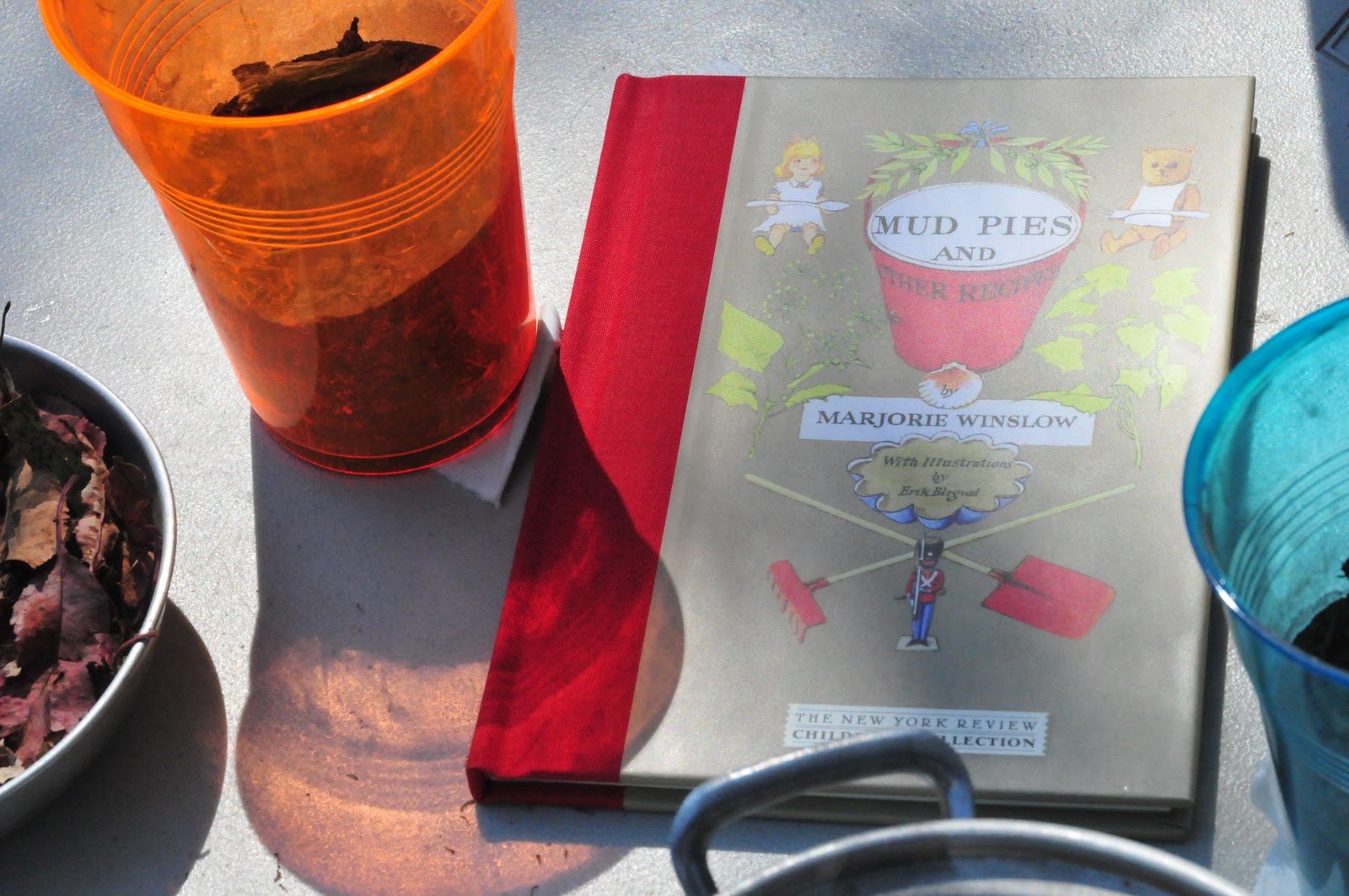
908. Brother and sister playing together.

909. My oldest son, always willing to help me with a happy heart.

910. Mondays.

Let us raise our voices today and praise the Almighty God, in whose hands our lives are!