Repentance Should be Noticed -Notes from my Reading Corner-

Buy at Monergism Books

I have been reading these past few days Dan Phillip’s book, The World-Tilting Gospel, and I have certainly enjoyed it very much. This is a book that I recommend to anyone who professes to be a Christian but cannot explain the basics of his faith: what is the Gospel for example,  and what does it mean -and why it matters so much- to have a Biblical worldview. On the other hand, it is a book that I  recommend to those who already know the answers to those questions, but love the Gospel so much that reading about the wonderful truths in it is always a joy, a refreshment. It is like taking the time to sit back on a lovely day and be reminded of all its beauty, and once more, fall in love with it.

Yesterday I read what Phillips writes about repentance; and it made me think about the beauty of it. O what a wonderful gift it is to us! Yet, just like we do with many other of the gifts we receive from God, at times we despise it.  How many times have we used this word only as an excuse to hide the sin we love? We say “I repent, forgive me,” only to keep on doing exactly the same thing, over and over again; making no effort to kill that sin; making no attempt to mortify the sin that wants to rule our conduct and destroy our relationships.

Phillips says,

“Sticking with just the words translated “repent/ repentance” in the Greek NT, we start with the term’s fundamental idea: ‘Change your mind.’ However, I must issue an immediate warning: Beware mistaking ‘change your mind’ as meaning simply ‘shift an opinion or two.’ The ‘change’ is a radical, top-to-bottom change; and it is the ‘mind’ that must change, not merely some individual notion.”


“Maybe a better explanation of repentance would be a transformed mind, or a transformed way of thinking that issues in a transformed life.

We are exposed to the Word of God; and as a result, the way we look at and think about everything is transformed.”

“Everything is transformed,” this just hits hard. If we are still in this body, we are still struggling with our sinful nature, that is true. But, if we are true believers, repentance should be part of our daily walk with the Lord, which in turns means that we should be transformed every day in all things, in our attitudes, in the way we see things, in the way we look at the world. Always walking forward toward the goal: our sanctification.

Change and transformation must be part of our daily life. I don’t want to be the same person that I am today in ten years, or two months, or three weeks from now; not even when I go to bed tonight.

Phillips explains, taking the example of the Churches at Ephesus and Thessalonica, how when they repented, “their fundamental beliefs changed, and their loves changed -in costly, practical ways.” “They turned from the dead false idols they served, and to the living and true God, to a life centered around their hope in the Lord.”

“One cannot seek God or turn to Him without by that act turning away from sin. it is impossible to lie in the arms of sin as lover, or serve sin as master, and at the same time love and serve God. One cannot turn to God without turning away from sin.”

And this truth not only refers to the first time we are called out of darkness into His admirable light. This is true for today, in our Christian walk. Today I cannot turn to God without turning away from sin.

Today as we look at the Cross and take time to examine our heart, I pray we will truly grasp by the Spirit of God, what true repentance means so that, in turn, we may be changed into his likeness.

Under His grace,

Becky

If you are interested, you can read a more thorough review of this book at Douglas Wilson’s Blog.

More on repentance:

“All too frequently repentance is either not taught at all or it is in the fine print. We somehow feel that if we get a person to “receive Christ as their personal Savior” it will automatically change their heart. We don’t bother to find out if the person wants a changed heart. The Greek word for repentance simply means to change your mind. Do the people we “lead to Christ” want HIm to change their minds? Sad to say, frequently they do not. Too many people today think that it is possible to believe in God and be a Christian without turning to God and away from their sin. This is not the gospel message of Paul.”
Douglas Wilson, Beginning with Repentance
***********************

The Shallows: A Book you Need to Read but Will Disturb You

I get the keys of my van out of my purse, get in the car, start its engine and push the accelerator. Green light, yellow light, red light. A bike. A turn. Keep going straight. A man crossing the street. Red light again. I look through the mirrors. Pass a car. Accelerate. Yellow light. 15 more minutes. I park at home and as if waking up from a dream, I think to myself, “How in the world did I arrive here? I don’t remember the details; I just arrived home, thank God safely, but I drove in “automatic,” not really thinking….

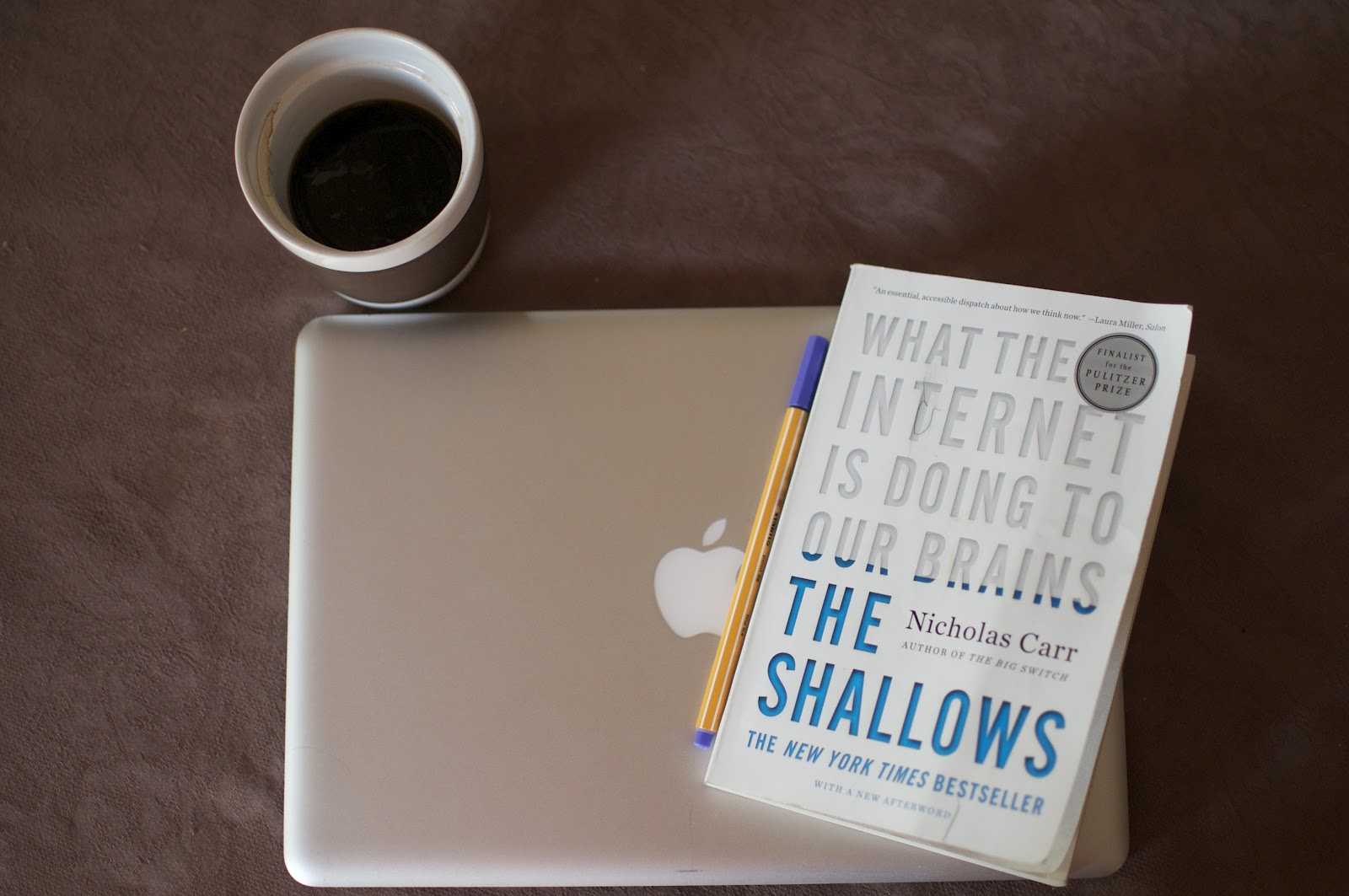
As I read the book, The Shallows: What the Internet is Doing To Our Brains, by Nicholas Carr, I had the same feeling as that time when I drove my van home in “automatic”, not knowing how it really happened; not knowing how I had arrived there.

In this book, The Shallows,  Carr gives ample proof, quoting from many different authors, doctors, researches, on how our brain, no matter if we are adults, keeps changing. It is still “plastic”. Many new connections are made, and it does change. And he goes on to explain based on his research that maybe we have not change the way we read, for example, but that our way of thinking has changed.

I came up with these questions from the first chapters:

When I am reading a book, does my concentration drifts after a page or two?

The more I use the Web, the more I fight to stay focused on long pieces of writing?

Do I find myself skimming through the books I once would read entirely?

Do I find myself having little patience for long, drawn-out, nuanced arguments?

Carr quotes Karp,

“Calm, focused, undistracted, the linear mind, is being pushed aside by a new kind of mind that wants and needs to take in a dole out of information in short, disjointed, often overlapping bursts- the fastest, the better-“

Carr, does not write this book as one who suggests that we should get rid of all technology and go live as Amish in Lancaster, PA. His approach is excellent, engaging, well thought and convincingly. His goal seems to be, to pursue us to do something about the way we decide on how we will interact with technology.

This is an excellent book for everyone of us. It is in fact, a must read. We don’t like to hear how the Web is changing the way we think, the way we read and write. The way we converse and relate to others; We don’t want to read about this because it is really disturbing;  but we must know and understand all this in order to be able to do something about it.

This is a book I would highly recommend for those who love to read and write. It addresses many of the ways our thinking process -related to our reading, writing, memorizing- has been, or is in the process of being altered by the Web.

“In the choices we have made, consciously or not, about how we use our computers, we have rejected the intellectual tradition of solitary, single-minded concentration, the ethic that the book bestowed on us. We have cast our lot with the juggler.”

The Shallows is a book for those of us who at times feel “proud” on how we have managed to be multi-taskers on the Web. The truth is that we are juggling around, and as Carr says,

“The Net seizes our attention only to scatter it.”

“Try reading a book while doing a crossword puzzle; that’s the intellectual environment  of the Internet.”

“The division of attention demanded by multimedia further strains our cognitive abilities, diminishing our learning and weakening our understanding.”

Carr now quotes Clifford Nass, a Stanford professor  who led a research on multitasking,

“Intensive multitaskers are suckers for irrelevance…everything distracts them.”

In the words of Carr,

“[W]e ask the Internet to keep interrupting us, in ever more and different ways. We willingly accept the loss of concentration and focus, the division of our attention and the fragmentation of our thoughts, in return for the wealth of compelling or at least diverting information we receive, Tuning out is not an option many of us would consider.”

For our family, tuning out is not an option. Our children take online classes, I teach online. We use Skype and Facebook to be in touch with many of our friends who live abroad. So what do we do? I pray, God will help me to discipline myself and be more focused. It is hard, it is true, because I do many different things on the Web. From working, to blogging, to keeping in touch with people I love. From listening to my music to looking at yummy recipes and ideas for my home on Pinterest. But, I must and I want to do something about this.

If you decide to read this book, I would love to encourage you to read another one that goes hand on hand with it. An excellent book by Tim Challies: The Next Story. I did not write a review on that one, but it certainly was on my list of favorite books last year.

It is my prayer that God will help me live a wise life. We only have one life which is made of thousands of minutes stringed together, the way I use each one of them really counts.

Under His sun and by His grace,

Becky

For the Love of Words; Sailing into the Vast Ocean of Words -and a Giveaway-

Isn’t it just amazing how God created everything with the power of His Word? It just blows my mind. And it amazes me how God gave us the gift of language, a way to communicate one to another, words to create, to give life (not in the sense like He does, of course), to bless -or curse-. And not only that but He, in His mercy, gave us a wonderful brain that can learn new languages. That, my friends, is pretty awesome!

So, I have decided to take advantage of this God-given gift and learn more about how to use English words -and sentences, and paragraphs, and commas, and all that- better. Yes, and you will be benefited too, I hope, as you find my writing getting clearer and cleaner 🙂

English is my second language, (I am sure you already knew -or by this time figured- that out. ) but sometimes I just doubt if I am really fluent. Specially when reading Chesterton. So, my friends, here I am, ready to sail into the vast Ocean of Words; and of course, I will be taking you with me, I am sure the adventure will be fun and profitable. I will be posting in this place quotes, rules, new words, and things like that; if you don’t want to come along, it’s OK, I will love you still.

The first book that stirred my soul into this adventure is one that I dare to say will be one of my favorite books in 2012: Wordsmithy: Hot Tips for the Writing Life by Douglas Wilson. The book is excellent; full of practical advice, encouragement and great quotes to keep in a commonplace notebook (so that you won’t forget, and use later).

See more about this book here.

A few of my favorite quotes are these:

“Pay attention to all the words you use every day -especially the words that are coming out of your mouth.” (p.22)

“If you want to say a lot, you need to have a lot to say” (p.24)

“Writing is a form of teaching, even when it is not being didactic in some formal kind of way. And the most contagious form of teaching is when an instructor loves his material in the presence of others -whom he also loves.” (p.26)

“Love what you observe, love what you write, and love those who read it.” (p.27)

“Wanting to write without reading is like wanting to grind flour without gathering wheat, like wanting to make boards without logging, and like wanting to have a Mississippi Delta without any tributaries somewhere in Minnesota. Output requires intake, and literary output requires literary intake.” (p.30)

“Read like someone who can afford to forget most of what you read. It does not matter because you are still going to be shaped by it.” (p.37)

“Set a lifetime pattern of reading books” (p.42)

“Read boring books on writing mechanics” (p.50)

“Dictionaries are books. Why can’t we read them?” (p.53)

“We {Christians} are people of the Word, and therefore we are people of words. Because we are people of words, we may, later on, be people of essays, poems, blog posts, screenplays, and novels.” (p.78)

“Love what you observe, love what you write, and love those who read it.” (p.79)

“God blesses giving, so every use of language, down to the lowliest tweet, ought to be thought as a gift to others. But when we give, we do not run out of what we are giving. If we are giving language that is thought through, language that is edifying, that is calculated to bless the other, then what on earth makes us think that God would let us run out?” (p.84)

“Your commonplace book is just a staging area. You are collecting things in order use them, to get them into your mind and heart and thence your writing.” (p.115)

“The world of actual language use is so complex and so messy that only God understands the English language. Only God is fluent.”

This book is so good, and I am so excited about this journey that I just can’t keep all this goodness for myself, after all, as one wise fellow said, “Writing is not solo work”. If you love words and sentences, and commonplace books, and want to sail with me into the vast Ocean of Words, then leave a comment here and I will enter your name in the giveaway of one copy of this book. (Feel free to share the news with your friends). I will announce the winner, God willing,  Tuesday, January 24.

Becky

Cultivating a Christ-Centered Christmas: Suggested Resources

Advent is around the corner (it starts the last Sunday of November) which is why today, as time approaches, I want to suggest to you several resources that have been a blessing in our home as we wait, as we sit around the family table, and read about His glorious coming.

Noël Piper says about Advent,

“For four weeks, it’s as if we’re re-enacting, remembering the thousands of years God’s people were anticipating and longing for the coming of God’s salvation, for Jesus. That’s what advent means—coming. Even God’s men who foretold the grace that was to come didn’t know “what person or time the Spirit of Christ in them was indicating.” They were waiting, but they didn’t know what God’s salvation would look like.” (source)

Please, continue to read over at Desiring Virtue. (and make sure to link up to your own recommendations!)

post signature


Related posts:

Celebrating the Incarnation of our Lord -part 1-
Celebrating the Incarnation of our Lord -part 2: Gifts We Bring a guest post by Elizabeth DeBarros- 
Celebrating the Incarnation of our Lord -part 3- For Little Souls
Celebrating the Incarnation of our Lord -part 4-
Celebrating the Incarnation of our Lord – Calvin, Sermon on the Nativity of Christ-
Celebrating the Incarnation of our Lord: Quotes that Nourish

Desiring Virtue

How to Make a Book Prettier, A Lovely Candle, and a Lunch Recipe

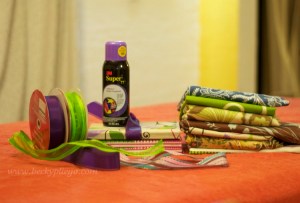
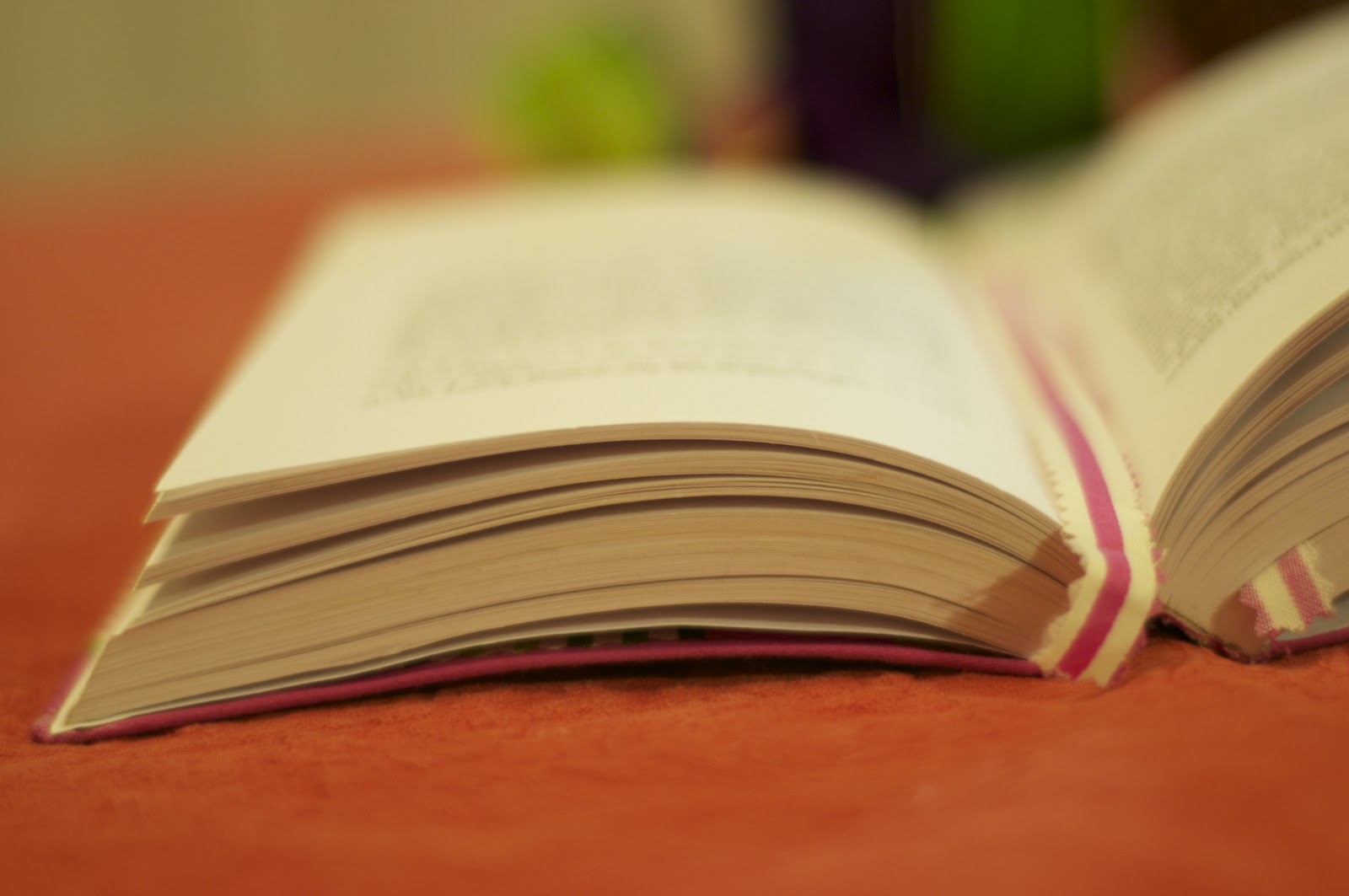
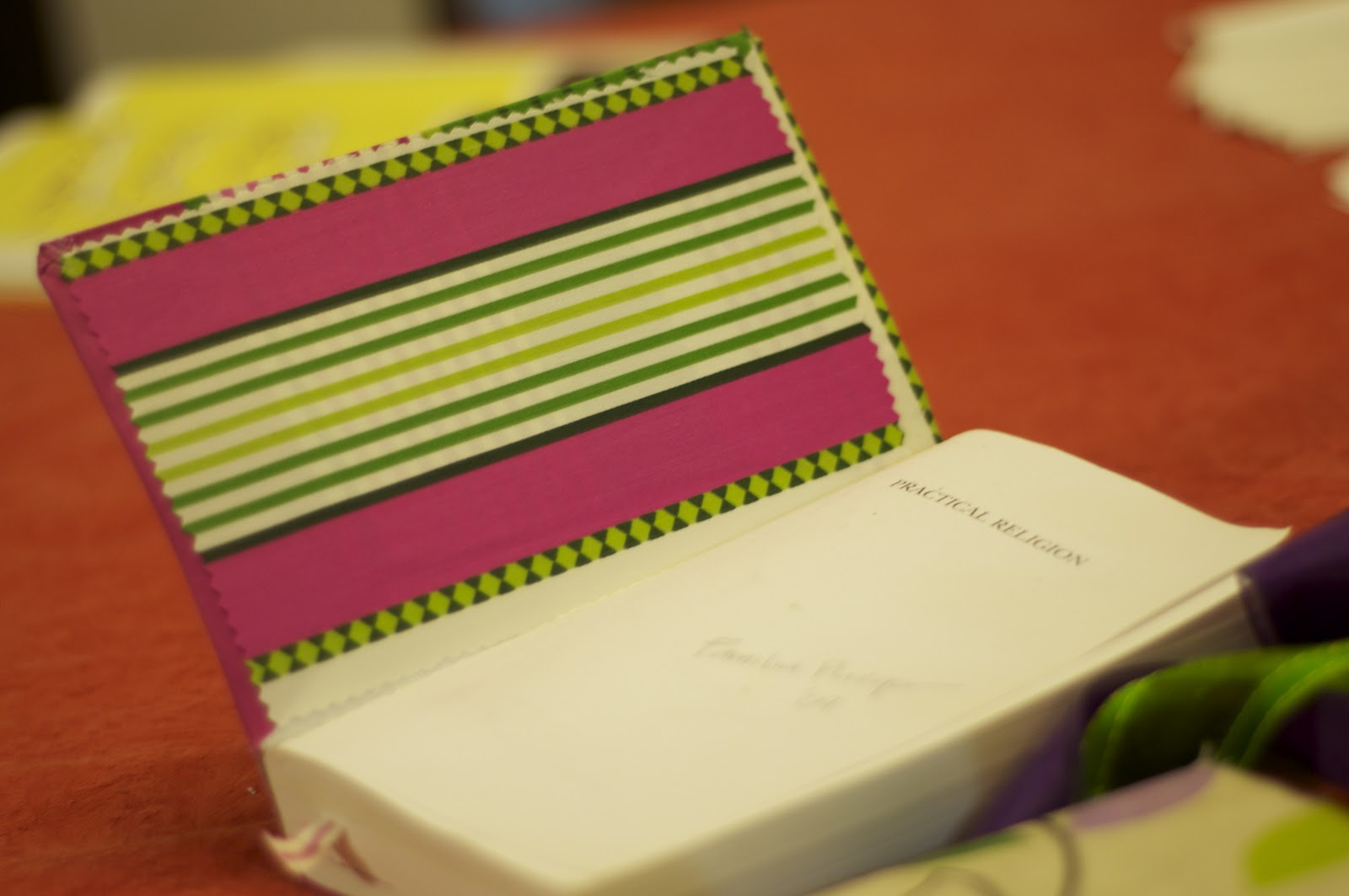
Some of us are starting this week to pray through the Valley of Vision (13 weeks, 3x’s a day -Would you join us?-), and I think that most of us own the paperback edition which to be true, and I will say this quietly, it is not very pretty. So one day, I decided I would make mine prettier. Of course, I ran over to my Mom’s because she is definitely more talented than I am; and well, I convinced her to make a new cover for my books the easiest way possible (I we also made one for one of my favorite books, Practical Religion by R.C. Ryle, because of the same reasons: a not so pretty cover, go see what I am talking about here.)

What is my secret to have a pretty cover? No needles and thread, but glue!

The result is this:

Practical Religion by Ryle


Now you know, if you don’t want to spend your money on the leather edition, get the paperback and make it special. (Isn’t this another great idea for Christmas or birthday gifts?)

This week I have made two things that I found over at Pinterest, a lovely candle and a yummy recipe.

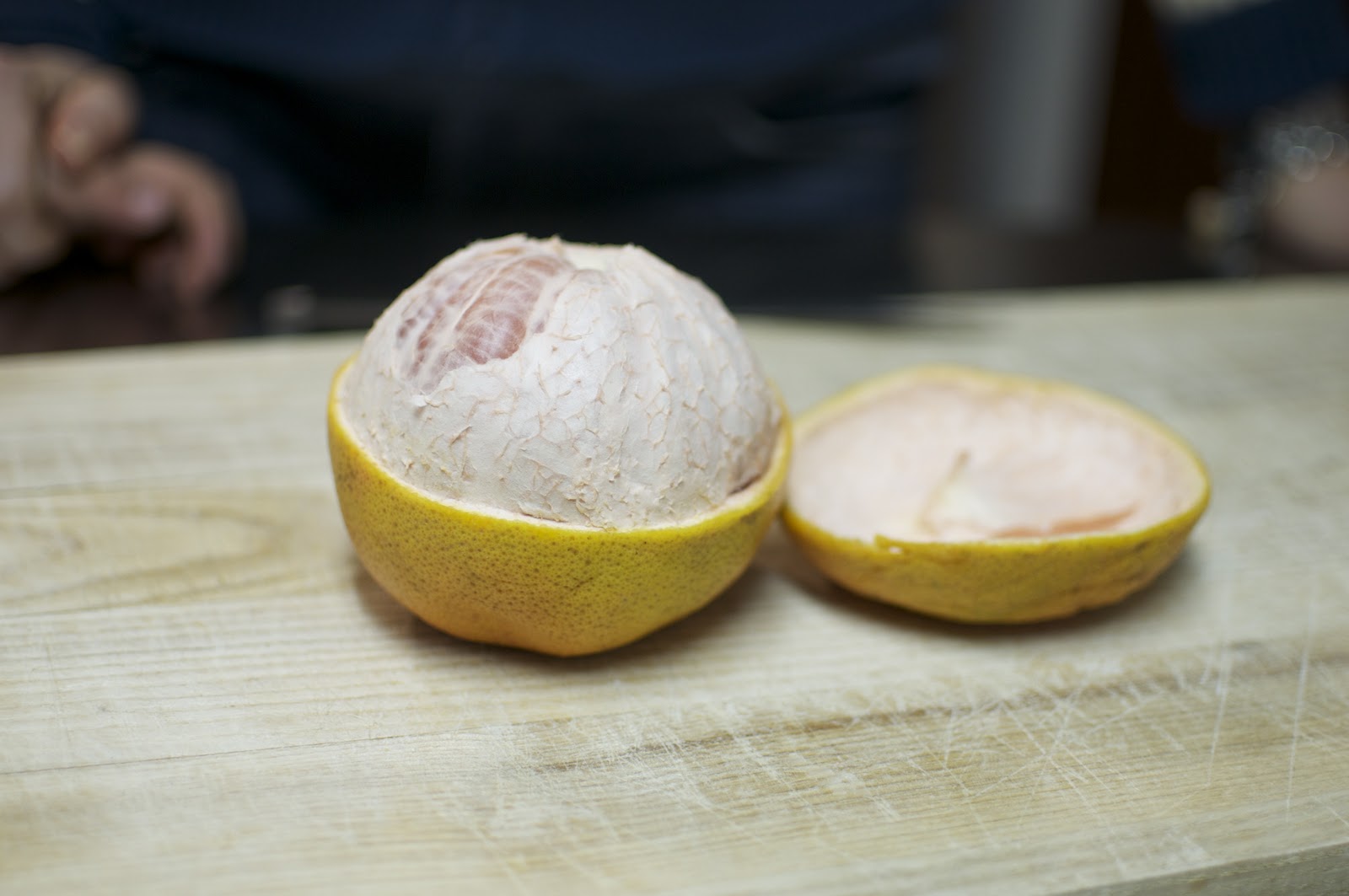
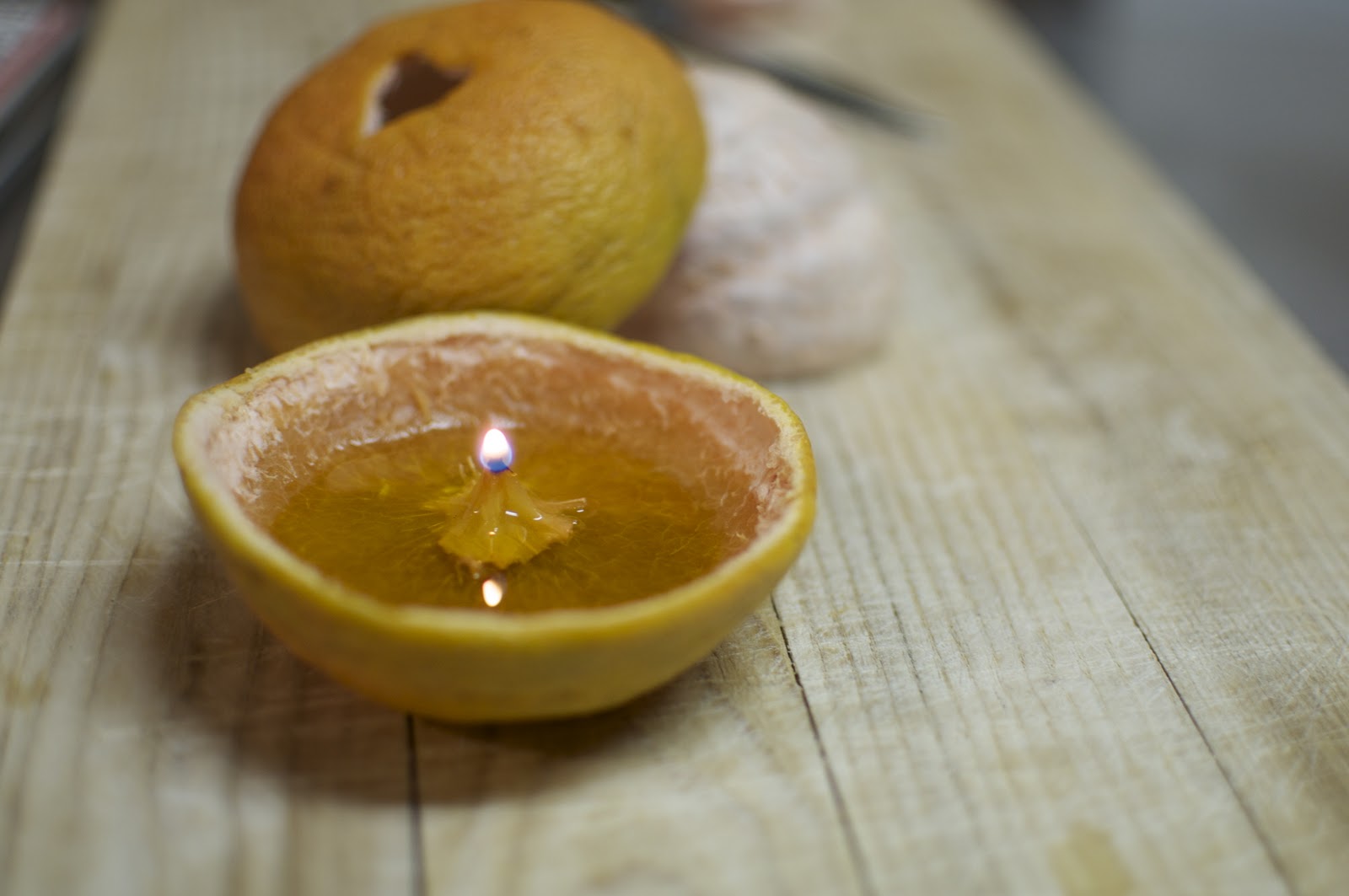
First the candle. I have seen it on Pinterest but was unsure how it worked, but after Katie Lloyd reviewed it I decided we needed to make it; and yes it works pretty well, and certainly looks very pretty. We used grapefruit instead of clementines, just because that is what I had at hand.


The “twig” is part of the fruit itself and the fuel is olive oil. (We made a second one and tried to use canola oil instead, but it never burned)

And lastly, a yummy lunch recipe. A recipe I needed to share because some of my friends are running out of ideas and serve their family breakfast for lunch, while others feed their family on chocolate and “throw them a few organic carrots once in a while to make themselves feel better”! 🙂  (Yes, you guessed, this is an “inside joke”!)

The recipe comes also from PinterestRoasted Grapes with Thyme, Fresh Ricotta & Grilled Bread from Alexandra’s Kitchen. The picture is hers, I did not even try to take one of mine, hers is just perfect.

I really recommend you to try this one; it is delicious, easy and looks perfect on your plate!

Enjoy the rest of your week, and rejoice in Him who gives us our breath every second.

Becky

Wednesday's World of Work

Awaiting a Savior – A Christian Response to Poverty-

A Cruciform Press book

I am Mexican. My country is a country of contrasts, a country in which you can find the richest man on earth, as well as people living in extreme poverty not so far from the richest neighborhoods in the most important cities.

I drive to my parents’ home once a week to have lunch with them, and every week, in the same corner, I see a poor family selling candy or some times just reaching their hand to beg for some money. The mom is always holding a baby in her “rebozo”, while the “big kids” (around seven years old) are most of the time selling gum to the car drivers when the stop light is on. But my eyes always look for the little one, a toddler. He is always in a corner playing happily with empty milk cartons, or old toys. Every week, my heart aches. Many times we have brought food for them, or clothes, but there are always these questions in my heart, how can we really help those in need when you see them every where? Is there a real solution to all this poverty around me? Whom do we help? The family on the street, the friends that are going through hard (real hard) times, the children in a far away land with no drinking water? What is the Christian response to poverty?

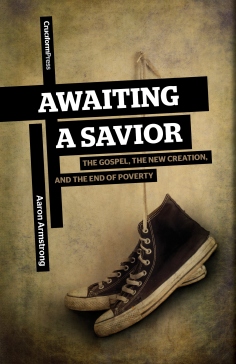
Aaron Armstrong has written a book, Awaiting a Savior: The Gospel, The New Creation and The End of Poverty,  that has spoken directly to my heart. He has in few pages, answered many of these questions.

Armstrong says,

“Resources and awareness and policies are important, but poverty is not fundamentally about any of these things. The root of poverty is sin.” (p.9)

The author understands the gospel’s message well. He knows that the bad news always precede the good, so he keeps on saying,

“¨[O]ur good faith efforts to address legitimate questions of poverty and injustice must never lose sight of the fact that poverty will persist as long as the heart of man is ruled by sin.”. (p.10)

This book is one that reminds us of the hope that should keep us pursuing biblical solutions to poverty. Armstrong says,  

“our only hope for an ultimate solution to poverty is in the return of Christ, when he will put an end once and for all to sin, suffering and death, and bring out the New Creation.” (p.11)

And that is when I take a deep breath and keep on reading. Armstrong takes us back to Genesis, the Paradise, the Fall, and the curse that came as a result of it.

“Whereas the curse upon Eve is primarily about interpersonal relationships, Adam’s curse spreads outward to all economic life… Prosperity will always be challenging and elusive. The very materials and processes we work with to try to create prosperity will resist us. And it will continue like this until the day we die.” (p.18)

But physical poverty, as terrible as it is,  is not the ultimate poverty. Armstrong says,

“A fallen world inhabited exclusively by sinners; that is the essence of poverty. Sin, and the effects of sin throughout creation, is the Poverty from which all other poverty flows” (p.23)

This is the heart of the book, this is what makes this book so important;  Awaiting a Savior goes to the root of the problem of poverty that surrounds us.

This is a book that I greatly recommend as a tool to train the young people who want to come and do missions to poor countries. In Latin America, sadly to say, we receive many missionaries, many youth groups that come every summer to help build churches, and paint walls, and sing children’s songs in poor areas; but we need to go deeper, we need to go to the root of poverty: sin in the heart man.

Armstrong deals, then, with the root of poverty, but also with the root of our inability to respond in a God-glorifying way towards poverty.

“Sin thus not only causes poverty but also poisons our attitude toward those suffering within it.”

We try to help, but very often we loose sight of our real aim:

“Ultimately, poverty can only be addressed at the heart level, one person at a time, s salvation through the shed blood of Christ pushes back against the fall of man.  The ultimate answer to poverty is circumcised hearts that know the God who forms and keeps covenant with poor and undeserving sinners.” (p.47)

Chapter Five, was probably my favorite. Armstrong reminds us of the Sermon of the Mountain and how “The gifts of love always precede the demands of love”. Oh yes, Grace, amazing Grace that reaches to the poor effectively.

“That is what is so devastating about the Sermon on the Mount. It starts with grace…”

And as the paragraph continued, it brought me to my knees in prayer, conviction and thanksgiving. Grace is the starting point; it was there where Jesus found me. It is there where we should start if we want to effectively help the poor among us until the day we see Jesus.

Come, Lord Jesus!

Becky

*I was provided with a complimentary copy of this book by the author for the purpose of this review. I was asked to write an honest review.