>The Holiness of God – Chapter Nine-

>

“Almost every natural man that hears of hell, 
flatters himself
that he shall escape it”
Jonathan Edwards

Michelangelo Buonarroti ; The Last Judgment (detail 1)
“Transgression speaks to the wicked 
deep in his heart;
there is no fear of God 
before His eyes.
For he flatters himself in his own eyes
that his iniquity cannot be found out
and hated.
The words of his mouth are trouble 
and deceit;
he has ceased to act wisely and do g
good.
He plots trouble while on his bed;
he sets himself in a way that is not good.
He does not reject evil.”

Psalm 36: 1- 4 (ESV)

The same day I read this chapter in Sproul’s book entitled God in the Hand of Angry Sinners, I read Psalm 36; it is clear that Jonathan Edwards knew these verses, he knew how the wicked is not afraid to try to destroy God, the wicked plots in his his bed how to end with a Holy God.

This is an excellent chapter in which Dr. Sproul leads us through the words of Jonathan Edwards, to see clearly that God is Holy and the wicked wants to destroy Him. He doesn’t want a Holy God.

I see this around me all the time in the country where I live in which more and more people are leaving the Catholic Church to join the Evangelical Church; preachers on TV and on stages with lights and live music are promising miracles, happiness, joy, health, and wealth; they preach love and acceptance in Christ, “come as you are and He will receive you openly” they say; no one hears of a Holy God; and maybe it is because the god they had made for themselves is all love but lacks holiness.

Sproul says it well:

“A loving God who has no wrath is no God. He is an idol of our own making as much as if we carved Him out of stone”

The question that rises is this:

“How can we love a holy God? The simplest answer I can give to this vital question is that we can’t. Loving a Holy God is beyond our moral power. The only kind of God we can love by our sinful nature is an unholy god, an idol made by our own hands. Unless we are born of the Spirit of God, unless God sheds His holy love in our hearts, unless He stoops in His grace to change our hearts, we will not love Him. He is the One who takes the initiative to restore our souls. Without Him we can do nothing of righteousness. Without Him we would be doomed to everlasting alienation from His holiness. We can love Him only because He first loved us. To love a Holy God requires grace, grace strong enough to pierce hardened hearts and awaken our morbid souls”

I have heard terrible statements like the one from a woman’s  heart when she was confronted with her sin, “If that is your God, a God who does not understand me, and my situation, then I do not want Him”  This woman still calls herself Christian, she still goes to her church, where a god who understands every one is worshiped.

Another woman who calls herself Christian, said to me once, “I cannot imagine a God who is trapped in a box of rules; “my god” is not like that; my god is a personal god; his love is greater than lots precepts and statutes”

God, the triune God is Holy; and He is bound to His word, because He is the Word and His Word is Holy.

The more I am transformed by His Word, the more I see my need of Him. I am utterly lost without Him.

The best way to end this entry is the same way Dr. Sproul ends this chapter:

“Yet as we grow in our knowledge of Him, we gain a deeper love for His purity and a sense of deeper dependence on His grace. We learn that He is altogether worthy of our adoration. The fruit of our growing love for Him is the increase of reverence for His name. We love Him now because we see his loveliness. we adore Him because we see His majesty. We obey Him now because His Holy Spirit dwells within us.”

Under His shadow,

You can read what others are saying about this chapter at Challies.

Other Posts in this Series:

The Holiness of God -Chapter Eight- Be Holy because I am Holy-
The Holiness of God -Chapter Seven- War and Peace with a Holy God
The Holiness of God -Chapter Six- Holy Justice


*******************************

>The Holiness of God – Chapter Six-

>

I don’t know where to start this entry.

******************

This is an amazing chapter, through the reading of every page my eyes were opened and I understood more about God’s GRACE! For this I am thankful today. I want to draw nearer to His Grace every day, and yet, while reading this chapter I realized I know so little of it; so I come quietly, almost in tiptoes, and with trembling hands I type words here, because I don’t want to forget what I have learned. Come quietly and read along…

 When Sproul explains us why God consumed with fire from Heaven the lives of Nadab and Abihu when they they offered a “strange fire before the Lord”; and why God struck down Uzzah when he touched the ark of God, and why God commanded his people to kill all the inhabitants of Canaan, the author is clear none of these men, women and children were innocent.

“There is a reason why we are offended, indeed angered, by the story of Uzzah and the story of Nadab and Abihu. We find these things difficult to stomach because we don’t understand four vitally important biblical concepts: holiness, justice, sin and grace. We don’t understand what it means to be holy. We don’t understand what justice is. We don’t understand what sin is. We don’t understand what grace is”

We simple expect God to be always merciful, and when He is just we just don’t like it.

“God does not always act with justice. Sometimes he acts with mercy. Mercy is not justice, but it also is not injustice. Injustice violates righteousness. Mercy manifests kindness and grace and does no violence to righteousness. Mercy manifests kindness and grace and does no violence righteosness. We may see nonjustice in God, which is mercy, but we never see injustice in God”

We are sinners, I am a sinner. The Bible says that the “souls who sins is the one who will die” (Ezek. 18:4)

Why am I breathing right now?

Why I haven’t been consumed?

Why God chose me to give me life when I only deserved death?

Why did God give me Grace when I only deserved His Holy justice?

This is the real mystery.

This is where we, the children of God, must make a stop and worship Him. It is only when we fully understand what holiness and sin and justice mean, that we can truly begin to understand the meaning of Grace.

Grace is always undeserved.

It is always undeserved.

Always.

Grace and justice, holiness and sin met in one place two thousand year ago on the Cross.

“The most violent expression of God’s wrath and justice is seen in the Cross. If ever a person had room to complain of injustice, it was Jesus. He was the only innocent man ever punished by God. If we stagger at the wrath of God, let us stagger at the Cross. Here is where our astonishment should be focused. If we have a cause for moral outrage, let it be directed at Golgotha.”

It is here, on the Cross also, where we see that God’s Grace is not infinite. Sproul reminds us, and I a thankful for that, that “God sets limits to His patience and forbearance. He warns us over and over again that someday the ax will fall and His judgment will be poured out”

Let us learn to remain silent, just as Aaron remained silent when we see God’s Holy Justice.

Let us be amazed by His amazing Grace, and His amazing Holy Justice.

You can read more thoughtful comments about this chapter at Challies. Tim invited us to read together this book, and it has been a great thing to do, with such an incredible group of readers.

Related posts:

The Holiness of God – The Insanity of Luther-
The Holiness of God -The Trauma of Holiness-
The Holiness of God – The Fearful Mystery-
The Holiness of God – Holy, Holy, Holy-
The Holiness of God – The holy Grail-

>The Holiness of God – Chapter Five-

>

Chapter Five. The Insanity of Luther
“Let God be God”
Martin Luther

I really enjoyed this chapter in which Dr. Sproul takes us to Germany, where the seems-insane-monk, Martin  Luther, lived.

Are we surprised that people call us seem-insane-Christians today? We should not. The world abhors those who pursue the Holiness of God. And I have learned through this book that if we are to call ourselves Christians, we should, then, long to pursue God’s holiness.

Isaiah, Peter, the disciples, Martin Luther, all started their journey to heaven at the same place: on their knees before a Holy God.

Today so many are being deceived by the teachings of men; now it seems that you don’t have to be undone before the Holy One to start your journey to heaven; it seems that you all need to do is try to do your best, just as the rich man that approached Jesus.

“And a ruler asked him, “Good Teacher, what must I do to inherit eternal life?”  And Jesus said to him, “Why do you call me good? No one is good except God alone. You know the commandments: ‘Do not commit adultery, Do not murder, Do not steal, Do not bear false witness, Honor your father and mother.’” And he said, “All these I have kept from my youth.” Luke 18:12-24

He thought he could come whenever he wanted, standing on his own merits, before the Holy One. Little he knew. I like the way Sproul says it:

“Imagine the arrogance or the ignorance of the man”

But there is always, at least, “one thing” that impedes us to approach the Holy One.

“When Jesus heard this, he said to him, One thing you still lack. Sell all that you have and distribute to the poor, and you will have treasure in heaven; and come, follow me.” But when he heard these things, he became very sad, for he was extremely rich.” Luke 18: 22- 24

I want to examine my heart, how do I approach the Holy One? How do I come before Him? Yes, I know, I am a Reformed Christian, I love doctrine, the Five Solas, and TULIP, but truly, how do I approach God? I am proud that I am not walking as others, “enjoying the bliss of ignorance”?

Dr. Sproul compares the response of this rich man with Luther’s response  like this:

“When Jesus met another young man centuries later, He did not have to go through an elaborate object lesson to help the man understand his sin. He never said to Luther, “One thing you lack.” Luther already knew he the demands of a pure holy God, and it was driving him crazy”

We don’t need to go crazy, but we certainly need to be undone.

Isn’t this the right place to start?

Read what other have to say about this great chapter at Challies, where we are Reading the Classics Together.

Today I am thankful for the Reformation in History and the reformation in my own history; without it, I would be walking today away from Jesus, deceived by my own acts of “righteousness”.

The Holiness of God -Chapter Four-
The Holiness of God -Chapter Three-

>The Holiness of God – Chapter Four-

>

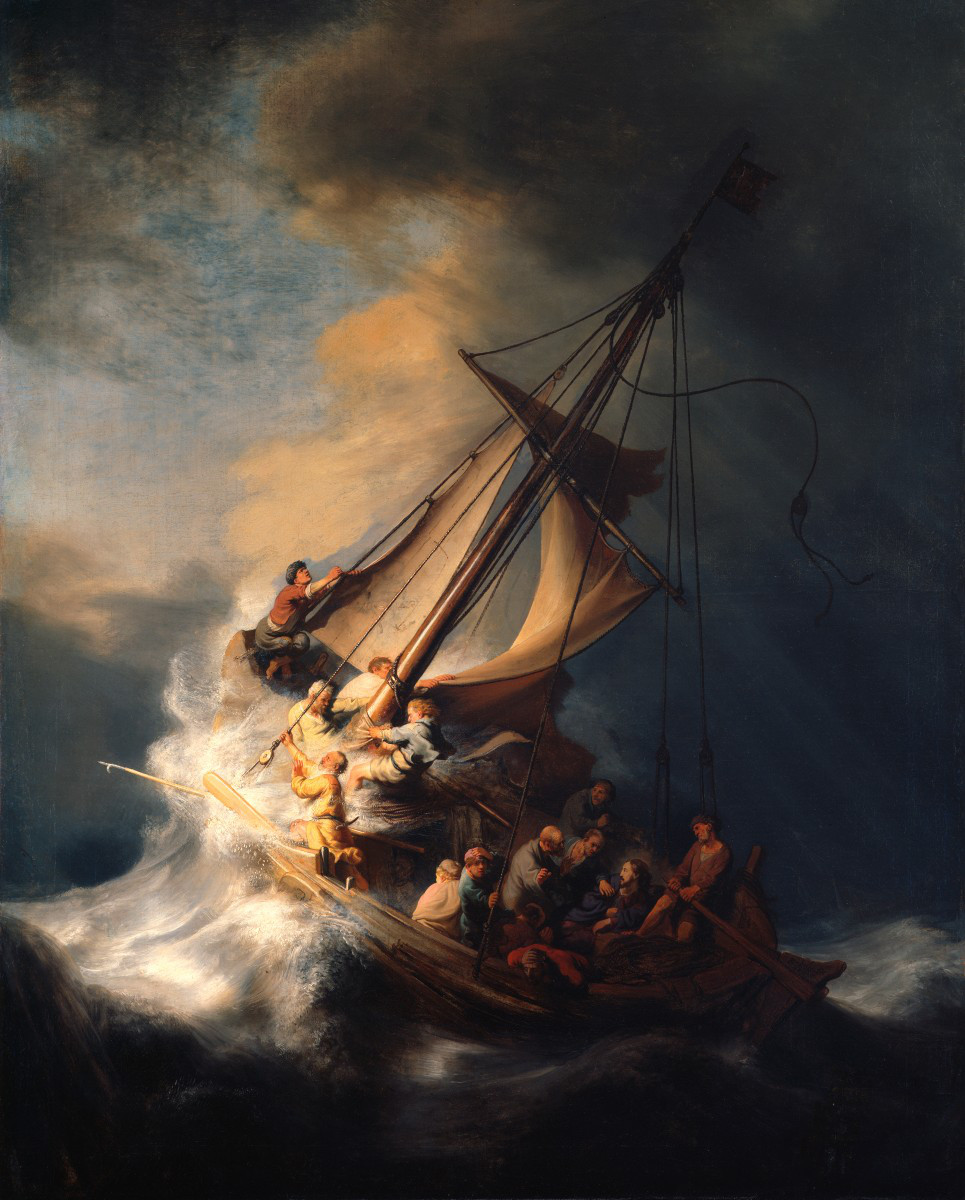
The Storm of the Sea of Galilee; Rembrandt Harmensz. Van Rijn

Chapter Four. The Trauma of  Holiness

“Hence the dread and amazement with which, a Scripture uniformly relates, holy men were struck and overwhelmed whenever they beheld the presence of God… Men are never duly touched and impressed with a conviction of their insignificance until they have contrasted themselves with the majesty of God”
John Calvin

God you are Holy. Let me never forget this, O Lord, please!

Sproul leads us through this chapter to different scenes, places, the first one is the Sea of Galilee. It was the night in which Jesus calmed the storm with His Word, yes, this is the event we all love to read about while trials and storms raise against us with fury. However, this time this event seems to be written to teach me more that the power of Jesus to calm storms. It is there to teach us about God’s holiness.

Jesus was waked up by his disciples who were in panic.

“Teacher, don’t you care if we drown?” (Mark 4: 38)

and in Sproul’s words,

“Their question was not really a question. It was an accusation. Their suggestion was thinly veiled. They were actually saying, “You don’t care if we drown” They were charging the Son of God with a lack of compassion. This outrageous attack on Jesus is consistent with mankind’s customary attitude toward God.”

Jesus did not say a word to them, instead He raised Hos voice and rebuked the wind and waves. Then He turned and asked His disciples “Why are you so afraid? Do you still have no faith?” (Mark 4:39-40)

And for some reason it seems that we have memorized only this part of the story. A powerful Jesus willing to calm the raging sea even when we have little faith. But the story hasn’t finished and Sproul encourages us to look at the reaction of the disciples, now that the sea was calm:

“They were terrified and asked each other ‘Who is this? Even the wind and waves obey Him!” (Mark 4: 41)

The storm was calmed and now, for the first time, Mark tells us that the disciples were terrified.

“The storm had made them afraid. Jesus’ action to still the tempest made them more afraid. In the power of Christ they met something more frightening than they had ever met in nature. They were in the presence of the Holy…
It is one thing to fall victim of the flood or to fall prey to cancer; it is another thing to fall into the hands of the Living God

We all have fall into some kind of desperation and fear in the midst of storms, rumors of cancer, tumors, broken finances, etc. and we seek desperately to the Master, we call Him, but truly, do we really want to see His Holiness in the storm? Maybe we will find out that the most terrible storm is not the one outside, but the one in our heart.

Now Sproul takes us to the same lake, however, the scene is another one (Luke 5:1-7). Luke tells us of the day when Jesus, the carpenter, told Simon, the fisherman, how and when to cast the nets to fish. And the question here that we must ask is this:

“How did Peter react? How would you have reacted? …
When the nets were bursting, Peter couldn’t even see the fish. All he could see was Jesus. Hear what he said ‘When Simon Peter saw this, he fell at Jesus’ knees and said, ‘Go away from me, Lord; I am asinful man!”

Again, we love this story because it tells us about a Jesus who provides miraculously, but why we always stop recalling the story when we feel we can’t benefit from it?

My country is plagued with the so called “Prosperity Gospel” and the “Modern Evangelical Christianism” of TV shows and praise and worship meetings, and what they have missed (among so many other things) is always the “next verses” those that bring us to our knees before the Holy One.
I feel rage when I see many looking after the gifts, the power, the provision, but run away before they meet the Holy One.

Our response to God’s power, to the manifestation of the Holy One, should be falling on our knees “undone”, crying “I am a sinful man”.

“We notice that Jesus did not lecture Peter about his sins. There was no rebuke, no word of judgment. All Jesus did was to show Peter how to catch fish. But when the Holy is manifest, no words are need to express it. Peter got the message that was impossible to miss. The transcendent standard of all righteousness an all purity blazed before his eyes. Like Isaiah before him, Peter was undone”

The chapter goes on, and Sproul warns us about the fake holiness of the Pharisees and Sadducees; I will not extend into that but you can read other comments on this chapter here, at Challies.

Today, as I consider all these, I can’t but be thankful for Jesus Christ. It is only through Him that I can come before a Holy God and not be consumed.

May we see Him as He is. May we find Him today as we consider His Word.

Related Posts:

The Holiness of God -Chapter One-
The Holiness of God -Chapter Two-
The Holiness of God -Chapter Three
The Holiness of God -Chapter Five-

>The Holiness of God – Chapter Three-

>

Can I tell you a little secret? I do not want to write my review on this chapter because I did not like the second half of it!

Yes, I feel terrible saying this, but I just can’t help it. I read it twice and the third time I skimmed over it, and still, my thoughts were the same.

I enjoyed the first part of this chapter in which Dr. Sproul deals with the definition of holy:

“The primary meaning of holy is “separate”. It comes from an ancient word that means “to cut” or “to separate…
“God’s holiness is more than just separateness. His holiness is also transcendent. The word transcendence means literally “to climb across’… God is above and beyond us. Transcendence describes His; supreme and absolute greatness…”

This definition is just great, to think that He is higher than me, than the rest of us, helps my ego fall down and remember that I am clay made alive.

The author continues explaining how in the Word of God we find the word holy; used to express “something other than a moral or ethical quality”; In order for something to be holy, it first needs to be consecrated or sanctified by God.

“Only God can sanctify something else. God alone is holy Himself”

I learned in this chapter that when we speak of God as holy, “it doesn’t signify one single attribute. On the contrary, God is called holy in a general sense. The word is used a synonym for his deity. That is the word holy calls our attention to all that God is.”

If holy means transcendent, then worshiping idols made of wood, silver, gold, worshiping the moon, the sun, or anything else is nonsense because all these are not transcendent, “they; do not go above and beyond the creaturely. They are not holy”, says the author.

And now comes the part I did not like of this chapter. Dr. Sproul talks about a German scholar, Rudolf Otto, and how he tried to study the holy in a scientific way. This man “coined a special term for the holy. He called it mysterium tremendum…’awful mystery'”  (My first doubt, question, objection is this, can one really study the holy in a scientific way? how? I just could not follow along.)

The author goes on to explain that we have mixed feelings about the holy,

“There is a sense in which we are at the same time attracted to it and repulsed by it. Something draws us toward it, while at the same time we want to run away from it. We can’t seem to decide which way we want it. Part of us yearns for the holy, while part of us despises it. We can’t live without it, and we can’t live without it”

This is so true, this is why we need so desperately Jesus, a mediator.

But why does the author chooses to explain us such truth comparing it with his wife’s feeling when watching horror movies; why using the images of  scary radio programs? This I did not like. I just couldn’t understand it. How can we compare our relationship and feelings towards the Holy with our feeling towards scary radio  programs or horror movies. I felt lost.   

What are your thoughts about this?

Praising Augustus*

*”Augustus”; Sproul says that “only God could properly be called the augustus one. To be august is to be awe- inspiring, or awe-ful. In the ultimate sense only God is awe-ful” (p.44)

I am grateful to Tim Challies for inviting us to read along this book; it has proved a blessing for me to join a group of great people and thinkers.

The Holiness of God -Chapter One-
The Holiness of God- Chapter Two-
Holy, Holy, Holy 
The Holiness of God- Chapter Four- The Trauma of Holiness-

Living a Simple Life

********************************************

>The Holiness of God -Chapter 2-

>

We are reading at Challies the book The Holiness of God by Sproul  today we are conversing about chapter 2; Holy, Holy, Holy.

Here is where my thoughts find their place.

Isaiah’s calling started with  an encounter with the Holy One. An encounter in a real moment. A life changing moment: A man and His Holy creator meeting alone. Once God called Isaiah, he  couldn’t resist the calling. The man couldn’t say no to such irresistible grace, he did not have a choice. “The call was sovereign” says Sproul, and I just nod as I read, I think on how The Holy One called me. Who can say no to the Sovereign One? Who thinks that we actually have the power to choose to come to him or not?

To come before the Holy One is to see your sinfulness. Isaiah cried “Woe to me!” And before the Holy, Holy, Holy God, he knew he was “guilty, guilty, guilty”

But once the Holy One calls us, we come and we meet Grace.

And what else can we long for once we have been called to Him but to see His face?

“[Isaiah] had heard the voice of God speaking to him out of the burning bush. He had witnessed the river turned into blood. He had tasted manna from heaven and had gazed upon the pillar of cloud and the pillar of fire. He had seen the chariots of Pharaoh inundated by the waves of the Red Sea. Still he was not satisfied. He wanted more. He craved the ultimate spiritual experience. he inquired of the Lord on the mountain, “Let me see your face. Show me your glory”. The  request was denied…”

Exodus 33:19-23, tells us that Isaiah was only allowed to see God’s back, never His face and Sproul reminds us that even by just gazing at His back, Isaiah’s face was so radiant that people were terrified when they saw him.

How then, after reading this, I still long to see His face?

Sproul explains what I could not:

“The final goal of every Christian is to be allowed to see what was denied to Moses. We want to see Him face-to-face. we want to bask in the radiant glory of His divine countenance. It was the hope of every Jew, a hope instilled in the most famous and beloved benediction of Israel: ‘The LORD bless you and keep you; the LORD make his face shine upon you and be gracious to you; the LORD turn his face toward you and give you peace’ ” (Num. 6:24-26)

This hope, crystallized in the benediction of Israel, becomes more than a hope for the Christian-it becomes a promise…”

We shall see Him as He is. (I John 3:2)

Yes… 
WE SHALL 
SEE HIM
AS HE IS.

One day, if He has called us into His family we will SEE HIM!

What a promise!

What a joy!

Not only His back, but His face!

Not to find a judge but a Father.

Today we are still in a sinful body, we are abiding in a dark world, we are still defiled.

“None of us in this world is pure in heart. It is our impurity that prevents us from seeing God. The problem is not with our eyes; it is with our hearts. Only after we are purified and totally sanctified in heaven will we have the capacity to gaze upon Him face-to-face”

I just loved how Sproul says, that we are to be like Isaiah, who “measured himself by the ultimate standard” and the moment he did so “he was destroyed -morally and spiritually annihilate. He was undone. He came apart. His sense of integrity collapsed”

This is where I see Grace, the Holy One, the only Holy, Holy, Holy God calls us sinners into his presence, we meet with Him alone, we are undone. And just when we see our sinful nature, just when we come apart before Him, He washes our sins away and give us the gift of repentance, and promises us that one day, soon, we will see Him face- to-face.

Under his sun and by His Grace,

The Holiness of God – Chapter Three- The Fearful Mystery-

*************************************

Related Posts:

The Holiness of God Chapter One.
God’s Sovereignty in the Gospel of Luke
In Silence
Woven

****************************************