
About Becky Pliego

I am grateful because God, in His grace, called me out of darkness and into his admirable light. When I did not look for Him, He found me. When I was in a pit of sin, He rescued me. I am not walking this road alone, my family is always with me, and we love Him, because He loved us first.

Doctrine is to be Believed and Lived

>

The series Doctrines in the Kitchen continues and I have been so blessed by each of the posts our hosts have served us. At the same time I am very grateful for each one of you, our readers. Thank you for coming and taking the time to feast with us.
Today is Thursday of Borrowed Words and what an excellent opportunity we have to read a few quotes from a book that at a certain point of my life, I would have never dreamed to buy: Systematic Theology: An Introduction to Bible Doctrine by Wayne Grudem, and now I enjoy so much.
When you have a big book like this one (1245 pages) that will lead you by the hand through different doctrines taught throughout the Bible, it is very encouraging to read these words in the first chapters:
 
“Nowhere in Scripture do we find doctrine studied for its own sake or in isolation from life. The biblical writers consistently apply their teaching to life. Therefore, any Christian reading this book should find his or her Christian life enriched and deepened during this study; indeed, if personal spiritual growth does not occur, then the book has not been written properly by the author or the material has not been rightly studied by the reader…”
These words are so important to consider, please, read them again  “Therefore, any Christian reading this book should find his or her Christian life enriched and deepened during this study; indeed, if personal spiritual growth does not occur, then the book has not been written properly by the author or the material has not been rightly studied by the reader…”
That is the purpose of studying the Scriptures, of reading the “big books”, of digging deeper into the Word: to grow spiritually. Our goal is never to know more for the sake of knowing more, but to know more for the sake of wanting to grow more.
This is another quote that speaks of my own experience, and it is of great weigh when considering getting deeper into the Word:
“…it is inevitable that someone studying a systematic theology text or taking a course in systematic theology for the first time will have many of his or her own personal beliefs challenged or modified, refined or enriched. It is of utmost importance therefore that each person beginning such a course firmly resolve in his or her own mind to abandon as false any idea which is found to be clearly contradicted by the teaching of Scripture. But it is also very important for each person to resolve not to believe any individual doctrine simply because this textbook or some other textbook or teacher says that it is true, unless this book or the instructor in a course can convince the student from the text of Scripture itself. It is Scripture alone, not “conservative evangelical tradition” or any other human authority, that must function as the normative authority for the definition of what we should believe.”
This happened to me. I had learned and learned well so many things that were not grounded in the Scriptures (even though I thought they were), but as soon as I started to dig deep into the Word, I had to put aside most of what I have learned and start aligning my beliefs (and conscience) to the Holy Scriptures, and not only to those few verses I liked and were out of context.  Oh, how I love my Lord and His Word which is forever true!
Grudem lists several reasons on “Why Should Christians Study Theology? Why should Christians study systematic theology? That is, why should we engage in the process of collecting and summarizing the teachings of many individual Bible passages on particular topics? Why is it not sufficient simply to continue reading the Bible regularly every day of our lives? :
On Grudem’s words:
“1.The basic reason for studying systematic theology, then, is that it enables us to teach ourselves and others what the whole Bible says, thus fulfilling the second part of the Great Commission.
2. The Benefits to Our Lives:
* First, studying theology helps us overcome our wrong ideas (rebellious ideas).
* Second, studying systematic theology helps us to be able to make better decisions later on new questions of doctrine that may arise.
* Third, studying systematic theology will help us grow as Christians. The more we know about God, about his Word, about his relationships to the world and mankind, the better we will trust him, the more fully we will praise him, and the more readily we will obey him. Studying systematic theology rightly will make us more mature Christians. If it does not do this, we are not studying it in the way God intends.”
And how should we study Systematic Theology?
Grudem lists 6 ways:
1. We Should Study Systematic Theology With Prayer.
2. We Should Study Systematic Theology With Humility.
3. We Should Study Systematic Theology With Reason.
4. We Should Study Systematic Theology With Help From Others.
5. We Should Study Systematic Theology by Collecting and Understanding All the Relevant Passages of Scripture on Any Topic.
6. We Should Study Systematic Theology With Rejoicing and Praise.

Dear friends, it is our prayer that God will draw us to a deeper relationship with Him. And the only way we can know that we are indeed walking close to Him, in a close relationship with Him, is if we are digging deep into His precious Word, if our soul is only satisfied when we drink from the only fountain of Living Water, the Perfect Word of God, and we are then transformed day after day by its power.

*******************************

>Bread of Angels by Elizabeth DeBarros

>Today my dear friend Elizabeth Debarros , a very special friend to me, shares with us from her heart and from the Word of God a doctrine that in the business of our days we often despise and it is absolutely important in the life of the Christian women.

I long to sit at your table, my friend!

Photo courtesy of Anna Gibson @ akginspiration.com

He rained down manna for the people to eat,
He gave them the grain of heaven.
Human beings ate the bread of angels;
He sent them all the food they could eat.
-Psalm 78:24-25 NIV
Bread of angels for breakfast?
Yes.
For lunch and supper, too.
I’ve never known God to skimp. When He gives, He gives only the best. When He gives, He gives more than enough. Ho-hum is not how I would describe His hospitableness, either. What lessons we can learn from God’s table — take your pick!
I’ve been asking God to teach me how to be generous as He is generous, hospitable as He’s hospitable. To learn from the best is to learn well, but I must be teachable. God’s school is the hands-on-learning type, so I need to be willing, too.
And let my yes be yes.
I also want to hold nothing back, just as He holds nothing back. Why else is Eden still the gold standard for the average backyard gardener? Exactly how many varieties of heirloom tomatoes does a family need? Surely, abundance is indicative of His blessing, but when life doles out only a meager supply, God comes through with a touch of class and, dare I say, invention. Even long-term drought didn’t stop Elijah from having his meals delivered next day air by ravens.
God’s ability to finesse a moment always points to His glory — the multiplying of bread and fish, changing water into wine — all miraculous signs — not to impress but to feed and still a hungry crowd. Perhaps later some would come to understand what Jesus meant when He referred to Himself as the Bread of Life. Meantime, the disciples were learning to trust and obey, give out of their lack. And the wine? Well, for one, God loves a celebration to last a good long while. Eternity never leaves His mind.
But sometimes I wonder if this saying is also true: “Some people can be so heavenly minded that they are no earthly good.” I hope not, but we can spend a lot of time talking about God, learning about God, and even thinking about and praying to God but still find it hard to invite a neighbor over for a cup of tea. “Crazy busy” may well be an excuse, but it’s not a good one. When “the house” and stuff like decorating, dogs and shopping lists become the gauge for frittering away our days, we do well to remember the time when Jesus stuck His head into the kitchen:
“Martha, Martha,” the Lord answered, 
 “you are worried and upset about many things, but only one thing is needed.
Mary has chosen what is better, and it will not be taken away from her.”
-Luke 10:41-42 (NIV)
Let’s learn the lesson here. Jesus wasn’t implying that hospitality was irrelevant. He was letting Martha know that priorities give off a flavor all their own. The difference between preparing a simple meal in a spirit of love and prayer and a lavish spread simmering in fury is evident to all. What goes on in the kitchen is tantamount to what happens in the prayer room, but things go best when the latter serves the former. After all, Mary and Martha were sisters, and probably very good for each other.
From Scripture, we know that God is a God Who ministers to the whole man. And I think it’s reasonable to say that He intends for us to have a prayer life and supper ready. Study His Word and get the laundry done. All in the same day. But to what end, ultimately?
Perhaps to feed and still a hungry crowd, one person at a time.
That’s why I don’t want to know my neighbors only from afar. I want to get close, look in their eyes, breathe the same air, listen to their story, tend their wounds if they’re willing. I want to feed them, pour something hot for them to drink when it’s cold outside, something fizzy over ice when blazing. Talk a while. Tell them about my Jesus.
So often, before I’m aware of what’s happening, before I even mention His Name, I’m inviting them in.
And I’m learning that a cup of tea and a little sympathy goes a long way when bread is offered, too.
“Do not neglect to show hospitality to strangers,
for thereby some have entertained angels unawares.”
-Hebrews 13:2
Elizabeth
__________________________________________
Author’s Commentary: Certain attributes of God, such as holy, righteous and majestic, often take precedence in our minds over the rest, if only for their “otherness.” For He alone is holy, righteous, and majestic. However, it’s important to acknowledge His many other attributes and understand that they are no less important. Based solely on Scripture, both generosity and hospitality also belong on the list of His divine attributes. As we allow a theology of generosity and hospitality to broaden our thinking, we learn to make them accessible, as Scripture exhorts us to practice such. These virtues not only adorn the Christian lifestyle, they’re pleasing sacrifices to God, bringing Him pleasure and much glory. Approaching this topic from a whole Bible theology, we discover that generosity and hospitality are practical expressions of thanksgiving, demonstrating grace to others and reverence for God’s holy Presence.
For further study from the ESV footnotes: Heb. 13:2 hospitality. The virtue of hosting and caring for visitors was especially valued in antiquity since travel was difficult and inns could be dangerous (e.g., Rom. 12:13; 1 Tim. 3:2; Titus 1:8; 1 Pet. 4:9). entertained angels. Cf. Gen. 18:1–15; also Judg. 6:11–24; 13:3–24.
*********************************** 
Elizabeth DeBarros will be hosting a great book discussion starting on May 4. The book is “A place for Weakness” by Michael Horton go here to read the details.
Don’t forget to check the resources’ page and sign in for the giveaway at the end of the month.

Are you just tuning in? 
Read what this series is all about here.

Consider sharing the goodness…
grab a button or join us on facebook.

My Eyes Were Lifted Up by Diana Lovegrove

Today my beautiful friend, Diana Lovegrove who blogs at Waiting For Our Blessed Hope; shares her heart with us, and how the beautiful and powerful doctrine of Christ (Christology) changed her heart.

MY EYES WERE LIFTED UP
Tears in my eyes;
I can’t disguise
The emptiness I feel when I’m far from You;
How did I get this way?
When did I start to stray?
How did I lose that closeness I had with You?
I wrote these words to a song about 10 years ago, in the midst of clinical depression according to my doctor, but which I knew was spiritual depression. I’d been a Christian 7 or 8 years, yet I mourned over the continued presence of sin in my life. I found that as I grew closer to God, the greater my sin became. Yet surely if someone loved God they wouldn’t sin. And what kind of a person wouldn’t love God with all their heart after realising that Jesus laid down His life for them? I developed an eating disorder – punishing myself by withholding food for I didn’t deserve to eat.
Just trying to think back to how I felt then sends shivers down my spine. I was completely bent in on myself, and looking at me made me lose all hope. My mind was trapped in a fog of blackness. I was “stuck” as a Christian, feeling totally, utterly, completely condemned. I was desperate to live a life that would be pleasing to the One who loved me, who I loved dearly, yet my sin appeared to be an insurmountable barrier. The church I attended was sold out to “living the gospel”, which simply accentuated how much of a failure I felt. On the rare occasions that the gospel itself was actually preached in the church, I would look around, desperately hoping to see some unbelievers there, so that the preaching of the gospel wouldn’t be wasted on the Christians! My lowest point was when I ran out of the church mums & toddlers group that I led in tears, as I tried to prepare some food for the children whilst starving hungry, completely overwhelmed at the sense of letting God down as I tried to make God attractive to the non-Christian mums through “my transformed life”, when in reality they were all deeply concerned by my dramatic weight loss.
I recovered somewhat by turning to sport and took up rowing instead of going to church. Then God gave me and my husband the beautiful gift of our precious son, and I returned to church in thankfulness, whilst continuing to hold God at arms length, for fear of my depression returning. In the summer of 2007 I was asked to lead a house-group study on the woman at the well (John 4:1-26), using a Willow Creek resource. As I prepared at home, my husband made the comment that the study wasn’t focused on understanding what the passage told us about Jesus, but rather used the passage as a springboard to discuss ourselves. And something began to click inside – a sense that my focus was completely wrong. Then a verse in Hebrews sprang out at me: “Let us fix our eyes on Jesus, the author and perfecter of our faith, who for the joy set before him endured the cross, scorning its shame, and sat down at the right hand of God” (Hebrews 12:2).
Let us fix our eyes on Jesus. I immediately realised the reason for my inability to move on in my Christian life. My eyes had been fixed on me and my response to Jesus. I had lost sight of Him. I had lost sight of the gospel. I had no understanding of what it meant to be “in Christ”.
So began a study in Christology, a study of the person of Christ. Reading the Word (asking myself in every passage what does this tell me about God? about Christ?), reading books and articles about Him, listening to sermons about Him, attracted to those ministers who preach Christ and Him crucified. And as my eyes have been lifted up to behold Him, the image of the invisible God, and as I have begun to see the light of the knowledge of the glory of God in the face of Christ, I am beginning to experience what it means to “soar on wings like eagles” (Isaiah 40:31). As I have feasted on the nourishing Bread of Life, my empty heart has been filled with hope. As I have drunk the living water that only Jesus can give, the thirst of my soul has been quenched. Eyes that were blinded by my sin have been given sight to see Him who has defeated sin, who has paid the penalty for sin, who has saved me from my sin, who has set me free from the law of sin and death, whose blood purifies me from all sin, and who is my Advocate if I sin. The crushing burden of trying to earn my acceptance before God by my good performance has been lifted, and in its place the easy yoke of Christ and trusting in His righteousness has been fitted, which has freed me to run in the path of His commands. And the more I start to grasp who Christ is, what He has accomplished, and what He is yet to do, the more amazed I become at the gospel, which, yes, has to be preached to the Christian daily.
I wrote this final verse to my song in the midst of depression, holding out some hope that one day it might be true. By God’s grace no words better sum up my relationship with Him now that my eyes are fixed on Jesus, the author and perfecter of my faith.
 
Tears in my eyes;
I can’t disguise
The joy I feel now that I’m close to You;
Here’s where I want to stay,
Don’t ever want to fall away,
You’re the Only One can fill my emptiness.
Diana


 *********************************


The Roots and Stem of my Life

>

Shiloh Photography (Thank you, Rachel)


My little one and I have studying Botany this school year and I was teaching her that just like we have bones to give a strong structure to our bodies, so plants have stems to give them structure. Stems are strong, they rise up looking for the sunlight, they open their way even in the most unexpected places and sprout out life.
And now, as I have been reflecting on the Doctrines taught in the Bible, I have realized that each doctrine in the Word of God is part of the stem that gives structure to my spiritual life. We have always heard that our roots must be grounded in the Word of God, and it is true; but today I want to reflect on the stem. The doctrines (teachings on the Bible upon a particular area) are like the stem in a plant, we can have weak stems or strong stems. When the wind blows hard and the storms of life come, our roots help us not to be blown away, and strong stems help us bend, even bend low and not break.
Today I am grateful for the teachings of the Bible, the sound doctrines that uphold my life, that give structure to my soul. I pray that if I am to live through a strong storm, even through a hurricane, I will be well rooted in the Word and that the stem in my life will be able to bend low but not break.
I am grateful for… (#1247- 1258)
The Holiness of God which reminds me of how sinful I am and how desperately I need His grace.
Where would I be if it were not for God’s patience?
The Faithfulness of God… I am so grateful that His constant love, His faithfulness does not depend on  my performance.
The power of God, to know that He is indeed all powerful!
God’s Grace, His amazing grace, his grace which I cannot comprehend!
The Love of God, eternal, immeasurable, perfect, holy, sovereign… the joy of being loved by Him.
The doctrine of the wrath of God, I would not understand the magnanimity of God’s grace if I didn’t know about the wrath of God.
The immutability of God; I am grateful that He never, never changes.  And because He is immutable His breathed Word never changes.
The Decrees of God… “O my reader, how thankful should we be that everything is determined by infinite wisdom and goodness! What praise and gratitude are due unto God for His Divine decrees. It is because of them that”we know that all things work together for good to them that love God, to them who are the called according to His purpose” (Rom. 8:28). Well may we exclaim, “For of Him, and through Him, and to Him, are all things:to whom he glory forever. Amen” (Rom 11:36).” A.W. Pink


********************************

>Come and Eat!

>

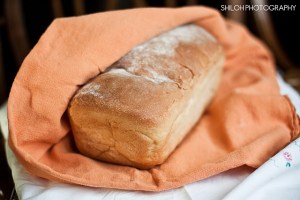
Shiloh Photography

Come and eat!
(Horatius Bonar, “The Bread of Immortality”)
“I am the bread of life.” John 6:48
“I am the living bread.” John 6:51
All food is for the sustaining of life.
Jesus announces Himself as the bread which will sustain
the life of the soul. Not merely some doctrine–but Himself.
He is the bread; not merely bread–but the bread–the one
true bread; without whom the soul cannot grow, nor its life
be sustained. For only by this life-sustaining bread, can
such sickly souls be nourished. As such, Jesus is necessary
to the soul as its food–its bread.
Outside of Him, there is no nourishment, no sustenance.
He feeds–He alone. He feeds us on Himself! All else is
husks, or mere air and vapor. Jesus, in His glorious person,
is our food–the true bread and sustenance of the soul;
the hidden manna.
Jesus applies various names to it:
“bread from heaven”
“true bread”
“the bread of God”
“bread of life”
“living bread.”
All these are names indicative of its excellence, its power,
its suitableness. It is the very bread we need; no other
would do. Jesus is the soul’s eternal food. This
storehouse is inexhaustible–and ever accessible!
Come as you are, poor prodigal, starving on husks–come
and eat! Eat, O friends! Eat, and live! Eat, and be strong!
Eat, and be in soul health!
******************************

May you feast at His table today!

Thanks to Rachel for giving me permission to use her beautiful photography today.

Talking About Doctrine by Norma

>The table is set and today, my sister, my best friend,  my teacher, Norma, will be sharing with us on this banquet, a great entrée, an introduction to Doctrine.

I love you, sis!

Image Katie Lloyd Photography*
We know we are to study Biblical doctrine, but at the same time we hear how doctrine divides, so, what are we supposed to do? God called us to keep the doctrine and live in unity: do they contradict each other? By all means, the answer is no.
I think we first need to understand what doctrine is not. It is not a point of view, an interpretation of Scripture, a movement based on feelings or personal experiences, is not something for theologians only, and is not something that doesn’t really matter “as long as you have accepted Christ as your Saviour.”
What is Doctrine?
It is the basics of Christianity. It is, according to the Merriam Webster dictionary,a set of beliefs, a principle or position, or the body of principles in a branch of knowledge or system of belief.
Doctrine means to understand what the Bible teaches on different topics. It is the duty of every Christian to know what the Bible teaches,  and compare to see if what is being taught at church or the book we like to read agrees with the Bible’s teachings as a whole or not.
“False doctrine”, on the other hand, is what is taught that doesn’t agree with the whole counsel of God.
Doctrine is not only for those who want to be ministers, pastors or missionaries. The study of Doctrine is for new Christians and old, for children and adults, for men and women, for people in the East and the West, for rich and poor,  it is for all of us. And it is our responsibility to study it, and be careful to keep as it is taught in the Holy Scriptures.
How to study it?
First of all read the Bible. Read it all, read each verse in its context within each chapter, each book, and in the overall context of the whole Bible (O.T and N.T).
It is important, however, to point out that today there are so many books and teachers out there that have mixed truth with lies, that it has become hard to know which teachings are correct and which are not. To solve that problem, I recommend you to read commentaries of the founders of the faith. Read their biographies, their books, their teachings along with the Holy Word. Stay away from preachers that attract masses. Know who they are before you buy their materials or trust their teachings. Just because a book is sold at a Christian bookstore it does not mean it’s Christian. Or because many are reading it, doesn’t necessary mean that it is a good book that teaches sound doctrine.
Be jealous of the Biblical doctrine and defend it in your heart so that it may not bring shame to the Gospel of Christ. Self-help books are packing today’s Christian culture. Many churches are social gatherings and the basic doctrines of the Bible are seldom taught. Women, have respect for the Lord and fear Him. Fear Him enough to know why you believe what you say you believe! Practice having a quiet and gentle spirit, which is of great worth in God’s sight. And instead of living for the day, live for heaven, for eternity.
Does it matter?
Yes. The more you study it, the stronger you foundation will be and the harder will be to fall, although you will fall. You’ll have a greater understanding of His love, mercy, grace, patience, goodness. The more you dig deeper into the Word, the more you will love Him and the more you will want to live for Him. Your view of Christ, His sacrifice, His atonement, His life, His resurrection, His priesthood, His sovereignty, His glory, His holiness, my wretched condition without Him,  prayer, mortification of sin, my dependence on Him, the role of the woman in her house, at church, with her children, with other women, all these will come into place. It will be easier to spot lies from truth (no matter how sweet they may appear) because you will know the truth. The truth will be your daily bread, and the lie will quickly taste as food not prepared at home. You will identify it with God’s grace.
Does doctrine divide?
Yes. It will separate. It will bring light where light is not wanted, because darkness is much more comfortable and more palatable for many. There are no stands where they need to stand, there are neither blacks nor whites, every situation is assessed according to the circumstances or the person involved, with no base to judge right from wrong. (1 Cor. 5:12) Doctrine will bring you to an understanding of the Scripture as a whole, but many will not like it. Many will disagree and will not like “your” God, the God of the Bible. But those appointed for Salvation will hear and receive it.
Please, listen to Paul’s plea today,
“Work out your salvation with fear and trembling”
Norma