An Advent Lesson on Gratitude

Some words from John Calvin to meditate on this season, which for us should be a season marked primarily with thanksgiving:

“For he that is mighty hath done to me great things; and holy is his name. And his mercy is on them that fear him from generation to generation.” Luke 1:49-50

“If our hearts and minds were truly stirred by the thought of God’s particular gifts and mercies to us, we would most certainly be led further, to the point where we would praise him overall for his power and goodness.” “When, however, we are dealing with God, thee is nothing about Him which does not humble us in the presence of his transcendent majesty, and which does not testify in some way to his glory. His power, wisdom, infinite kindness, and righteousness are brilliantly displayed both in heaven and on earth. God’s name will always be holy. Only our ingratitude stops us giving the honour he deserves, and our ingratitude will not go unpunished.”

“All of us, I repeat, must not only praise God for the good things he has given us and for the blessings he has poured out on us; we must also take a longer view, and observe the evidence of his kindness on every hand, so that our mouth may always be open to glorify him. This should also be the mark of our common unity. We prove that we are true members of the church when we rejoice in our neighbor’s prosperity, just as we ought to show sympathy when they suffer trouble. For whoever rejoices in another’s prosperity is at the same time led to glorify God. This is the proper way to apply Paul’s injunction in the first chapter of 2 Corinthians: ‘Let thanks from many lips be given to God when good is done to any of his servants.’ “


“We can thus be sure that God’s goodness is always open to us, and that He will not cease to guide us both in life and death, until he has accomplished our salvation. This is because God cannot be defeated. his purpose is constant: always he continues to do good for us, for his generosity knows no bounds, and his gifts and graces are without repentance, as Paul assures us in the eleventh chapter of Romans.

In order to share in God’s gifts, we must first begin with the promise he holds out to us. We must lay hold of it by faith, and allow it to take firm root within us. For only through faith can we remain obedient to God and walk in his fear… The fear of God which Mary speaks about here is the fear that keeps covenant with God.”


“The fact that God takes and chooses instruments at will does not undermine our claim that it is he who does all things. We humans, however, are so wicked, that whenever we see lesser means operating we assume that God is idle in heaven! And we are so mindless that when our hunger is fully satisfied by the bread that comes from the earth, we do not have the wit or wisdom to look up and give God thanks!”

May we be drawn to walk this Advent season with wide-open eyes and grateful hearts. This is the only response for all of those who have seen Him, the Son of God, in the Garden of Eden, in the Wilderness, in Bethlehem, on the Cross and in our daily lives reigning with glory.

Peace, 

Becky

Declaring War on Anxiety -A Meditation on Job-

Canon Press

Continuing with more wise words from Toby J. Sumpter’s book, A Son for Glory (the context is Job 2-3):


 “Paul himself disagrees with a stoic passivity to every event in our lives, and he does not contradict himself. He says, “Be anxious for nothing, but in everything by prayer and supplication, with thanksgiving, let your requests be known to God; and the peace of God, which surpasses all understanding will guard your hearts and minds through Christ Jesus” (Phil. 4:6-7). Paul does not say that we should not be anxious because God is in control and does whatever he pleases (though there is a sense in which that is true). Paul says that we should not be anxious because we are constantly pouring out our anxieties to God. Paul instructs the Philippians about how to fight anxiety through prayer. This is the same exhortation that Peter gives his readers. They ought to cast all their anxieties on God, because He cares for them (1 Peter 5:7). Paul is making the same point. There is to be thanksgiving, but faithful prayer does not ignore anxieties and pain. Faithful people will let their requests be made known to God; they will cast their anxieties upon Him. Also notice the goal of voicing these fears and pains and anxieties to God: the peace of God… Crying out to in anguish and fear to the God of heaven is not giving in to anxiety; it is declaring war on that anxiety. It is refusing to give up the fight.

Job is going to go on fighting for the rest of the book. Job is a warrior… Faith looks to God in hope, but faith is not blind, and faith is not lifeless. Faith doesn’t pretend it doesn’t hurt, and faith isn’t apathetic about the gifts -friends, family, health- that God has given us. Faith loves those gifts of God, and when they are threatened or taken away, faith cries out to God, “Why are you doing this?” Faith is hungry for goodness and justice and mercy. Faith is the woman who won’t stop bringing her requests to the master, because he is the master and because he is the Lord.”

Praying without ceasing and giving thanks…

Becky

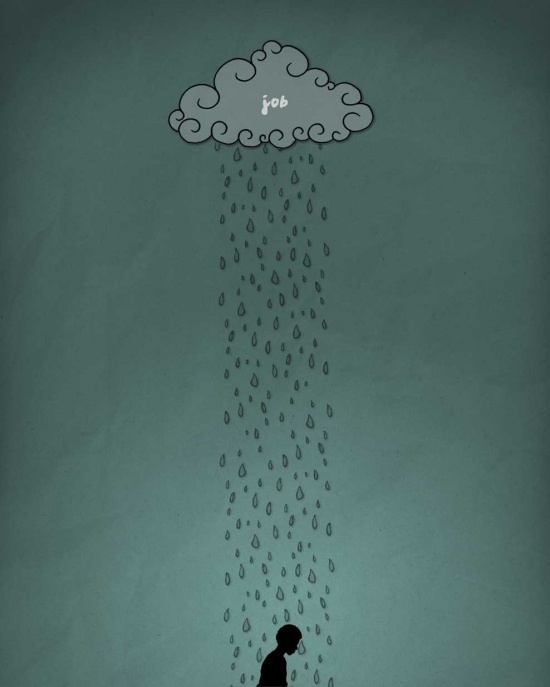
Job Consecrated His Children Daily to God- A Meditation-

“His sons used to go and hold a feast in the house of each one on his day, and they would send and invite their three sisters to eat and drink with them. And when the days of the feast had run their course, Job would send and consecrate them, and he would rise early in the morning and offer burnt offerings according to the number of them all. For Job said, “It may be that my children have sinned, and cursed God in their hearts.” Thus Job did continually.” Job 1: 4-5


Jim LePage Art and Design

Toby J.Sumpter in his book, Job through New Eyes: A Son for Glory says,

” [S]in is also a directional thing, a geographical reality, a sort of teleology. Literally, the verb in the Hebrew means “to sin” means “to miss the mark”; it means you’ve veered off the path. To sin is to be going in the wrong direction, to be in the wrong place.


So what does Job do? Job is saying, God, I’m not sure what my sons have been doing, but want to reorient them to you again. I’m not sure where they’ve been , I’m not sure what they’ve said. I’m not sure what’s going on their hearts, so I’m offering them back to you again. This one for my firstborn son, this one for my secondborn son, this one for my thirdborn, and I am offering them up to you. I remind you of them. Consider my sons, and draw them into your presence…Job did this regularly.”


And so do I.


Amen.

Becky

Elisabeth Elliot and Nancy Wilson on Journal-Keeping

This very much summarizes what I believe on journaling…

“I was very cautious about what I put in the journals. I don’t think it was because I feared someone else would discover my secrets. I think I was afraid to articulate, even for myself, feelings I might have to get rid of. Better to stick  with what God was saying to me than what my heart was saying. It seemed the safer course. I do not repudiate it now. The only way to build a house on the rock is to hear the Word (I couldn’t have heard it if all I listened to was my feelings) and then to try to do it…”

Elisabet Elliot, Passion and Purity (p. 54)

Nancy Wilson also wrote a while ago two posts on journal-keeping that are worth considering:
Part One. Part Two (if you only have time to read one, read part two. It is excellent -a must I would dare to say-.

“[W]e should and must guard our tongues in all things spoken and written: “He who guards his mouth preserves his life” (Prov. 13:3). Psalm141:3: “Set a guard, O Lord, over my mouth; Keep watch over the door of my lips.” Our pens need watchmen and guards just like our mouths. And the fact that a journal is “private”does not mean the words can be left unguarded.” -Nancy Wilson


“Life is short. Write good words.” -Nancy Wilson

Becky

When God Surprises Us


©Annie Pliego Photography

Sometimes our good Father surprises us with situations that we have been praying for: the job we asked for, the marriage we dreamed about, the children we asked for after years of waiting,  the announcement that the adoption papers were finally ready, the scholarship for college, etc. But many other times He, our good Father, surprises us with the most unexpected circumstances: the death of one of our children, a sickness, a “no” to one of our prayers, a divorce, suffering. But no matter how God “surprises us,” we must never forget that He is a good Father, and He always gives us what our soul needs the most.

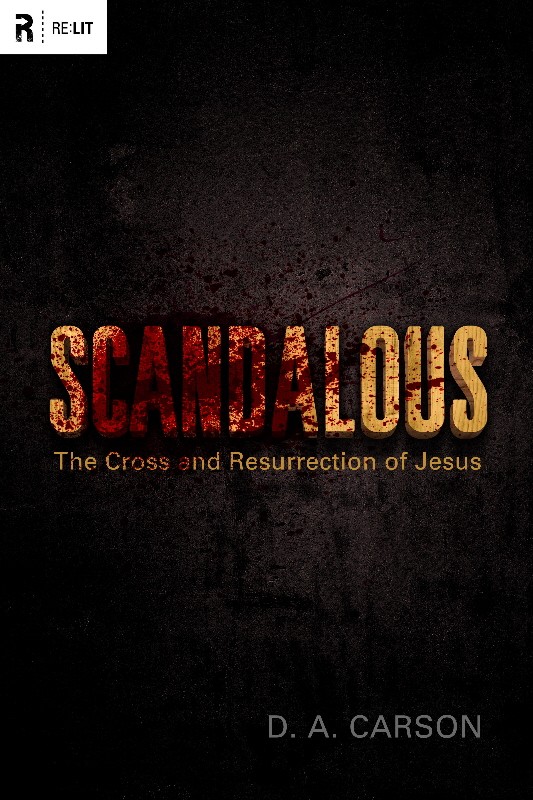
D.A. Carson writes in his book Scandalous,

“This is a truth not to be passed over lightly: God often surprises us; he is not to be domesticated by reductionistic theology; he takes the common things and turns them into surprising things. That is why large swaths of the Bible are written with various kinds of twist: you think you know where the words are going, and then the text jumps in another direction. Could anyone have predicted how the story of Job would turn out? Or how Habakkuk would turn out?”

 I don’t know the twists that my story, or my children’s story will have. How many things that I am “sure” will happen in a certain way will turn out differently? I don’t know. But it is so incredibly comforting to know that my Father in Heaven is good, perfectly good and He has promised that all things work together for good for those who love the Lord, for those who have been called according to His purpose. 

We don’t know the words in each one of the chapters of our lives, but we sure know the ending:

“And they lived happily ever after in the arms of their Heavenly Father and sin and death were no more.”


Resting under God’s Sovereign hand,

Becky

From My Reading Corner – The One Wrong Thing to Say-


Reformation Heritage Books

What a great book Jessalyn chose this month for the book club at Desiring Virtue. I don’t want to put it down!

Here is a good quote that got me thinking…

“We live in an age where the one wrong thing to say is that somebody else is wrong. One of the impacts of postmodern epistemology is that we all have our own independent points of view, and we look at things from the perspective of our own small interpretive communities. What is sin to one group is not sin to another group. But not only does the Bible insist that there is such a thing as sin, it insists that the heart of its ugly offensiveness is its horrible odiousness to God—how it offends God.

And this other one is powerful too:

 “The cross spectacularly displays God’s love, but it also displays God’s wrath against sin; it massively underscores God’s condemnation of sin…We are all guilty before God, and the cross is our only hope.”

Maybe you would like to join us at the book club this month as we dig deeper into the powerful message of the Cross and the Resurrection of our Lord. We would love to see you there.

Under His sun and by His grace,

Becky