
The Doctrine of Love: Our Identity as Christians

©Annie Pliego Photography


“A new commandment I give to you, that you love one another: just as I have loved you, you also are to love one another. By this all people will know that you are my disciples, if you have love for one another.” Jesus

Having a strong, biblical foundation based on solid doctrine is essential in the life of all Christians. It keeps us humble to know, for example,  that we have been saved by God’s grace and that we did not choose Him, but that He chose us. It help us not despair in our daily battle against sin the wonderful doctrine of the Perseverance of the Saints. He will not let us go. He who has called us will never leave us nor forsake us. He who began a good work in us is able to complete it. Our salvation, from A-Z depends only in the work of Christ Jesus, and that is strong, comforting doctrine. The doctrine of the Sovereignty of God is what gives us hope when all seems to be falling apart, when there are many questions and a few answers. That He is ruling this world and that he knows the number of the hairs on my head, makes a whole world of a difference. The way we approach God in prayer, the way we live our lives, the way we respond to sin, the way we deal with the desires of our hearts, all we do depends on the doctrines on which we stand.

There is one doctrine, however, that we sometimes leave on the side. We know it is there and we pretend to know it well until differences arise and conflict comes our way, I am talking about the doctrine of love.

Maybe because it has been abused in so many Christian traditions in which love has been preached without a biblical backbone, with no doctrinal frame, we tend to minimize its importance. We know we must love, but in reality we care more about being zealous for truth than in laying down our lives for others.

We pass by the wounded and do nothing because we are too busy defending our doctrinal righteousness.  Jesus, our model to follow, did both: He touched the unclean,  and sat and ate with the sinners while preaching Truth, while preaching repentance of sins. Paul and Silas helped the sick and the widows while defending Truth.

The first Christians were persecuted for preaching the Truth without compromise, while at the same time they were known by the love amongst themselves. Tertullian (c. A.D. 200) wrote,

“It is mainly the deeds of a love so noble that lead many to put a brand upon us. “See,” they say, “how they love one another,” for they themselves are animated by mutual hatred. “How they are ready even to die for one another!” For they themselves will sooner put to death… . No tragedy causes trouble in our brotherhood, [and] the family possessions, which generally destroy brotherhood among you, create fraternal bonds among us. One in mind and soul, we do not hesitate to share our earthly goods with one another. All things are common among us but our wives. (Apology 39)”

We should pay more attention and study with more zeal the doctrine of love; while praying earnestly that the Lord will lead us into repentance for the many times we have not shown true love for Him (and His Word) because of our lack of love for those around us. Our identity as Christians, the way we should be known even today, must be the way we  deeply love and care for one another. It is not an option; just as it is not an option to believe in the importance of salvation by faith and not by works.

In the past few months I have been digging deep into this, searching the Scriptures and my heart. And it is not easy to find the balance needed to live this out. It is not easy because we love Truth, and because we want to defend it. It is not easy because we know that false teachers do destroy families, and churches, and lead many astray,  and we do not want to compromise the Truth of God, we want to stand firm on the Word of God and reach out to those whom we see in danger. But Jesus (and his disciples) taught us that it is possible to do both. We can love our neighbors and our enemies without compromising the Truth of God. And it is possible to do so, because that is exactly what we have been commanded to do.

My husband and my children are witnesses of the struggle of my heart as I have been learning these lessons, as I seek answers to these questions. I love Jesus and I want to love my neighbors as well as my enemies. I want to be known as a Christian.

If you want to dig deeper into this doctrine I would suggest that you study in depth (get an expository commentary) 1st John, the Sermon of the Mount, and the epistle to the Galatians. Two other books that have helped me to understand all this (and have made me cry more than once) are: Loving the Way Jesus Loves by Ryken, and If You Bite and Devour One Another: Biblical Principles for Handling Conflict by Alexander Strauch.

May God draw us to Him, so that we may be drawn to love those around us.

Still learning,
Becky

Do You Love Jesus or Your Robust Theology?

 To think about:

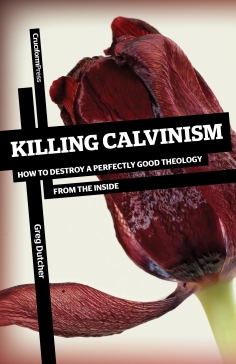
“A disciple is a student of Christ -someone who spends time with the Savior in order to come to know him better and resemble him more closely. As a pastor, I have found that many Christians simply assume that learning more and more about Bible and theology -Reformed theology in particular- is the same thing as growing as a disciple. It isn’t. Robust theology can be a powerful catalyst in this process, but like anything else, we can turn it into an idol. The danger is that, while we may begin with Reformed theology as the framework by which we more coherently understand  and appreciate our faith, over time it can become the substance of our faith. At that point, daily living is more about mastering Reformed doctrine than being mastered by Jesus and his total claim over every area of life.

When does one’s attention to theology become too much? It’s not always easy to say…

But we cross the line when we are more focused on mastering theology than on being mastered by Christ.”

Greg Dutcher, Killing Calvinism: How to Destroy a Perfectly Good Theology From the Inside

Editing Our Lives

I cannot thank God enough for the summer He has given us; for each one of the wonderful friends that have blessed us with their visit -our home is still full and my heart overflows with gladness!- I am also grateful for the family that opened their home and hearts to some of us for a week. My heart is content, it has pleased the Lord to be gracious to us.

The conversations have been many around the table. We have talked about music, movies, arts. We have read many books and excerpts of books aloud. We have conversed about marriage, and men and women and their biblical roles. We have had long conversations trying to define important words such as masculinity and beauty. We have laughed and cried. We have hugged and sang together. We have shared meals and, coffee and tea. And in all these, I have been stretched and challenged in so many ways.

All these moments plus all the books I have been reading (especially those on writing) have made think of something that I want to consider carefully.

When an author writes a book she has to come, like it or not, to the point in which she has to turn her manuscript, her precious work, to someone to edit it -most of the times, that means to tear it apart.-  If she wants to become a very good writer, she won’t choose the kind of editor that is easy and merciful. She wants the one that tells the truth, even when it hurts.

Our life is made up of many short stories, all within a bigger story. And we are inside the story, many times entangled in the plot. We simply don’t understand complex characters that come into scene; we can’t figure out why Mr. D has the power to deceive many and hurt families. We can’t understand why Mrs. T said such a thing. We don’t even know at times how in the world we got to the place we are now. Other times we forget that our story is part of a bigger one. We are not the main characters. We are here to bring glory to God in all we do and say. We are not ours but His.

And when we are in the middle of the story, when we can not see clearly through all the many words, sentences, through all the lines that are happening around us. When we feel that there is no way out of that climax. When we don’t even know what is our role in the play and have forgotten all our lines and are speechless, it is time for us to bring our manuscript to the editors.

First we must come to the main editor who is God the Father. Laying our lives before Him in prayer, literally bowing down and crying out to him, we must open the pages of our lives there, at His feet. Hiding nothing, not a comma, not a word, not an event. Let us ask Him forgiveness for our sins, and light for our paths. Let us ask Him to give us eyes to see what we don’t necessarily want to see. Ears to hear what we have refused to hear. Hands to act. Hearts to love. Mouths that speak what edifies and always proclaim truth.

Secondly, we need to find another kind of editor: a friend, a pastor, a brother or sister. But let us be careful, our tendency will be to try to find one that thinks just exactly like we do; one that agrees with all we say. But we must beware. Let us remember that a flattering mouth works ruin and that the man who flatters us is really spreading a net for our feet (Prov. 29:5). We need someone who is not part of the same scene to help us see clearly, to give us advice, to ask us the hard questions and say the hard words. And we must be willing to believe that many times, we are messing things up.

God is the God of Grace who can turn the impossible into possible, the meaningless into something beautiful. He can turn our sorrow into gladness. He is the Light and no darkness can prevail against Him. As I read once, He is in the business of making new hearts. And I love to believe that.

Becky

The Greatest Temptation in the Wilderness

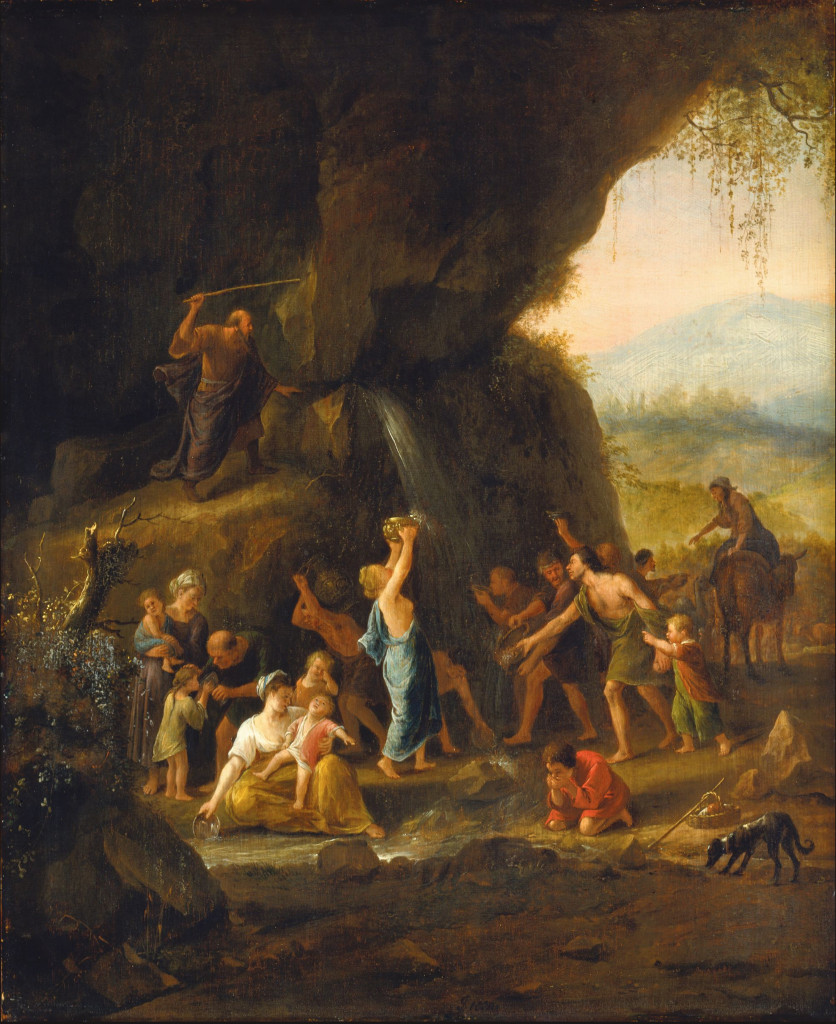
Jan Havicksz c.1660

These are some reflections I gleaned this morning while reading Psalm 78 (especially verses 18-24 ).

We are just like Israel, whose greatest temptation in the desert land was to test God. We are like them when we are led by the Spirit to the wilderness and found ourselves starting to demand from Him food,  pleasures, and the same kind of satisfactions that the world, in which we were once enslaved, offers us. It is that longing in our heart, deep within, that rebels in the quiet, and speaks against God saying, “Can God spread a table in the wilderness?” that reveals our sin.

See what is there? We doubt God’s goodness, His sovereignty, His promises. We start craving for the world because the satisfaction it offers is immediate. We forget that even in the wilderness He sustains his own. We forget that He has said that we are engraved in the palm of His hand, and that we are the apple of His eye.

How can we forget  that He has already provided Jesus, the Living Water, so that we won’t thirst anymore? Our Lord Jesus was struck on the cross just as the rock in the desert and life, living water,  gushed out and streams overflowed. Why do we long to drink water from broken cisterns, from poisoned rivers?

How can we forget that Jesus himself said that He is the Bread of Life? How can we long for something else? Only He has words of eternal life. Only when we come to Him and eat at his table is that we will be truly satisfied. Only and only then.

How easily it is for us to stop believing in God and in His saving power. He will never, never, never let His people die in the wilderness. Never.

The Lord is our Shepherd,
we shall not want.

The Lord is our Father,
we shall never be abandoned.

The Lord is our Life,
we shall not die.

The Lord is our Hope,
we shall not despair.

The Lord is our Refuge,
we shall not fear.

Come to the table, grab your bible, read it, mediate on it, pray over it. It is food to your soul, medicine to your bones. Goodness and life. It is Living Water, come drink, my friend, and thirst no more.


Becky

Hope in the Midst of the Consequences of Our Sin

Annie Pliego Photography

My children and I are reading together Ezra after lunch and most of the times, with a bowl of ice cream out in our back yard.

Yesterday we came to Ezra 9, this is the passage in which Ezra gets the news that “The people of Israel and the priests and the Levites have not separated themselves from the peoples of the lands with their abominations, from the Canaanites, the Hittites, the Perizzites, the Jebusites, the Ammonites, the Moabites, the Egyptians, and the Amorites. For they have taken some of their daughters to be wives for themselves and for their sons, so that the holy race has mixed itself with the peoples of the lands.”

Ezra’s response to the sin of his people was like the one Jesus talked about on the Sermon of the Mountain, “Blessed are those who mourn…”  Ezra tore his cloak and even pulled hair from his head and beard in great distress. Ezra fasted as he mourned, and when the evening came, he fell on his knees and prayed spreading out his hands to God.

The faithlessness of the people, their sin had been great, and Ezra knew it. He confessed their great sin before a Holy God. No excuses, nothing else to add, it was but the cry of a repentant heart. A mourner.

“O my God, I am ashamed and blush to lift my face to you, my God, for our iniquities have risen higher than our heads, and our guilt has mounted up to the heavens. From the days of our fathers to this day we have been in great guilt.”

Ezra keeps crying on his knees to God, he knows that all the affliction that has come upon them has been a consequence of their great sin. And then these words come out of his mouth, and it was here where I found myself reading aloud with a lump on my throat:

“For we are slaves. Yet our God has not forsaken us in our slavery, but has extended to us his steadfast love before the kings of Persia, to grant us some reviving to set up the house of our God, to repair its ruins, and to give us protection in Judea and Jerusalem.”

Even in the midst of the terrible consequences of our sin, we can find hope. Even there we find His grace. His grace towards his people never ceases. His mercies are new every morning. His steadfast love reaches to His own even when we have sinned.  He repairs what we have torn down. He revives our broken hearts. He frees us from the slavery. He protects us.

“And after all that has come upon us for our evil deeds and for our great guilt, seeing that you, our God, have punished us less than our iniquities deserved and have given us such a remnant as this, shall we break your commandments again and intermarry with the peoples who practice these abominations? Would you not be angry with us until you consumed us, so that there should be no remnant, nor any to escape? O Lord, the God of Israel, you are just, for we are left a remnant that has escaped, as it is today. Behold, we are before you in our guilt, for none can stand before you because of this.””

Ezra did not see the end of the story then. Jesus came and took our guilt, our punishment on his body on the cross. All the suffering that we deserved he bore in our place.

David knew this as well when he said,

“He does not deal with us according to our sins, nor repay us according to our iniquities.” Psalm 103:10

“Behold, we are before you in our guilt, for none can stand before you because of this.” Certainly we cannot stand before a holy God if we have not seen our desperate need for Him and have not repented from our great sins. We do not have hope to stand before God and not be consumed, apart from Jesus who came and died and rose again, and is now sited at the right hand of God interceding for us. He is the Way, the Truth, the Life.

Because of His great love towards His people, we have eternal hope even in the midst of the consequences of our great sins: We will indeed be comforted. The night will be gone and the day will arise. Our tears will be dried out, the fighting will be over. He will give us “beauty instead of ashes, oil of gladness instead of mourning, a garment of praise instead of a faint spirit” (Is. 61)

“Blessed are those who mourn, for they shall be comforted.”

Becky

Love is Easy Until it Demands Something from Us

It may seem absurd to say that love demands something from us;  but this morning as I was reading 1Corinthians 13: 4-7(ESV)  I could not think otherwise.

Please read these verses with all attention as if you had never read them before:

“Love is patient and kind; love does not envy or boast; it is not arrogant or rude. It does not insist on its own way; it is not irritable or resentful; it does not rejoice at wrongdoing, but rejoices with the truth. Love bears all things, believes all things, hopes all things, endures all things.”


Love is easy until…
It demands from me patience,
Until it demands from a me kind attitude,
Every day, every time, over and over again.
Love is easy until…
It calls me not to envy,
Or boast.
Love is easy until…
It demands from me humility,
And not arrogance.
It is easy until it doesn’t call me
To ask for forgiveness,
And set aside all rudeness.
Love is easy until…
It demands that I should die,
That I should not insist on my own way of doing things.
It is easy until it calls me to leave aside
my own “rights” for the sake of the ones I love.
Love is easy until…
It demands self control from me,
Until it calls me not to be irritable,
Until it calls me not to be resentful.
Love is easy until…
It demands that I should not rejoice at any wrongdoing,
It is easy until it calls me to love truth,
Even though this would mean admitting
That I am wrong.
Love is easy until…
It demands from me to bear all things,
yes, all things,
every one of them.
Love is easy until…
It demands from me to believe all things,
To Hope all things,
To Endure all things.
This is the only kind of love that never ends.

Becky