>The Marital Cup -by Elizabeth DeBarros-

>Today we celebrate the gift of marriage, today we stop and intentionally kiss longer the one our soul loves; today we give thanks for the gift of marriage!


Today is special too, because it’s Monday, the day this space is dedicated to give thanks to the Lord for His never ending mercies, so today, I give thanks for the gift God has given my dear friend, Elizabeth, a gift with words and and a passionate love for The Word. 

Thank you, Elizabeth,  for sharing today with us.
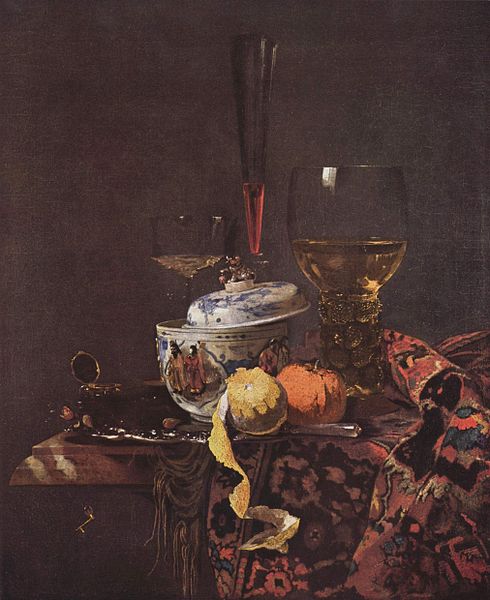
Still life with glassware and porcelain covered bowl, Willem Kalf 1662

Marriage is like handblown glass, delicate in substance but strong in construction. It can hold the vintage of years gone by. A cup blessed and preserved by God.

While love is as strong as death, marriage is fragile if only for the fact that two fallen individuals, a man and a woman brought together as one, commit to an exclusive bond for the rest of their days, come what may. Knowing that a covenant designed by God has His backing brings much-needed assurance.

But no marriage is unlike the first, where sin crept in to take its toll. Adam and Eve endured the worst — one son murdered the other, with God presiding as Witness and Judge. I imagine that as parents, partners and lovers, they fell into each other’s arms that night, searching for consolation from an unbearable wound, already aware that bitter herbs change the taste of things.

What keeps a marriage? Sustains it through life’s trials, cares and woes? Certainly not the froth left over from an elaborate wedding ceremony. As exciting and wonderful as the customary fanfare, wedding attire, rich foods, lavish gifts and honeymoon are, eventually helium dissipates, styles change, dishes break and pictures fade. None last, except perhaps in memories, a grace given when clouds ensue. And when they do, the strength of man proves weak indeed.

And apart from inviting family and friends to witness the ceremony and share in the festivities, what compels a man and a woman to stand before a crowd and declare that they will stay together, “to have and to hold from this day forward, for better or for worse, for richer, for poorer, in sickness and in health, to love and to cherish; from this day forward until death do us part?”

Only the nearness of God.

Our culture trends toward having the greater focus be on the wedding event — the more outlandish the better — ceremony only secondary to the trappings.Whether staged in a desert, on a rollercoaster, suspended from bungee cords or underwater, it’s all but forgotten that when vows are exchanged, God is the unseen Officiate. Even Christians need reminding of this in a day when selfishness runs rampant in the streets, and “freedom of choice” seeks to permeate our thinking to the point of abandoning all reason for the sake of pleasure and the pursuit of happiness. As comforting and wonderful as marriage can be, it’s ultimately a sacrifice and a crucible and less often a pleasure dome.

Without strong Biblical encouragement, we leave ourselves open to temptation by subtly diminishing the gift He sewed into the fabric of society to remind us of the mystery between Christ and the Church:

“Therefore a man shall leave his father and mother and 
hold fast to his wife, and the two shall become one flesh.”
This mystery is profound,
and I am saying that it refers to Christ and the church. 
-Ephesians 5:31-32 (ESV)

Ultimately, marriage is for the glory of God. It’s not about happiness as much as it’s about holiness as He works through life’s circumstances to mold and shape us, conforming us into His image. Not only this, but He’s the third strand in the cord, serving as our strength and very present help. He whose eye is upon the hearts of all men isn’t blind. He sees every sacrifice, gesture, trial, hardship, desire, hope and dream. And He collects every tear in His bottle, storing them up in remembrance, keeping watch on the covenant made in His Name.

So lift up your marital cup to the Lord. Reflect through the glass on His faithfulness and the memories you’ve made, even the ones that stretched you in all directions, and ask yourself, “By Whose design?” Then bow lower still. Bless the partner of your youth by recounting your vows and enjoying one another. Understand that God is just as near today as He was when you both stood upon the altar before a future unknown — except for certain grey hair.

And remember that the cup belongs to Him. Ever the expert viticulturist patient to make perfect the bouquet of a fortified wine, let Him refresh it, fill it anew, pour out a blessing. Savor the long finish. He reserves the best for last.

Elizabeth

Details on Painting

©Elizabeth DeBarros. If you wish to use these lines please contact the author at Finding the Motherlode

Another guest post by Elizabeth:

Celebrating the Incarnation of Our Lord

***************************

>Have You Included Latin in Your Homeschool Schedule?

>Classical languages matter and let me tell you that it is worth to invest time, effort and yes, some money into them.

We are part of a great community, Veritas Press Scholars Online, and we receive a monthly Epistula (letter) featuring a very interesting article every month.  Joanna Hensley, one of the favorite teachers at Veritas Press Scholars Academy and a precious friend of mine,  wrote a fabulous article on the importance of Classical Languages. I asked permission to post it here for you. Enjoy and think seriously about it….

My Daughter started last year with Song School Latin (she was 5 years old.)

Why Classical Languages Matter
A Latin teacher, like me, asked to write a newsletter article on “Why Classical Languages Matter” is tempted to peddle her wares like a fair barker with a megaphone: “Step right up! Get five languages for the price of one! Feel smarter in just fifteen minutes a day! Absolutely guaranteed to raise your SAT!” While all these promises regarding the study of Latin may be true, and while these may be the very reasons some students study Latin in the first place, there is something far more valuable and far less self-serving in the importance of studying classical languages. Classical languages are necessary for understanding ideas, and to illustrate the point, I will put down my megaphone and tell you the story of St. Isidore of Seville.
Born to a Christian family in Spain in A.D. 560, Isidore was a student at the Cathedral School of Seville, the first school of its kind to be structured around the trivium and quadrivium. In other words, he was one of the first boys in medieval Spain to receive a classical Christian education, not unlike the one offered by Veritas Press Scholars Academy. While the Spanish culture around him was disintegrating with the spread of anti-intellectualism and illiteracy thanks to the barbarian Goths who had taken over the government, the young Isidore was studying Latin, Greek, Hebrew, and the liberal arts, holding on to classical influences which were all too quickly disappearing in Europe.When Isidore grew up, he put his classical education to work in service to his culture. After his older brother Leander died, Isidore became an archbishop and boldly fought against Arianism, that heresy popular among the barbarian Goths which rejects the biblical understanding of the Trinity by saying that Jesus was just a man and not true God. It took courage to tell those powerful barbarians they were wrong. (Remember what had happened to poor Boethius? If you don’t, take Omnibus V.) Yet, Isidore stood fast to Scripture, and through him, God converted many.As an archbishop, Isidore presided over several church councils, including the educationally significant Fourth National Council of Toledo in 633. At that council, Isidore encouraged everyone there to open classical schools like the one he had attended as a boy, based on the trivium and quadrivium, in all the Cathedral cities. Again, this was a bold move, quite counter-cultural. Through this spread of classical Christian education, Isidore stalled the influences of barbarism and ignited an educational renaissance throughout Spain. Wondering what this has to do with classical languages? I’m getting to it.
In addition to fighting heresy and spreading education, Isidore wrote a gigantic encyclopedia-the first to be published during the Middle Ages-called the Origines (also known as the Etymologia and some of which students translate in my Latin II class). All 448 chapters of this 20-volume set were dedicated to understanding the origins of words. That Isidore could write such an encyclopedia is a tribute to his fine education. That he cared so much about etymologies illustrates his belief that knowledge comes to us through words, and the meanings of words come to us through study of classical languages. Isidore argued that the very existence of ideas depends upon understanding the origins of words, something you learn through the study of classical languages.
Why, then, do classical languages matter? Unless we know the origins of words, we cannot understand ideas. Since 90% of English words of two or more syllables come from Latin, English relies upon classical languages to express ideas. Take for example the phrase liberal arts. These are the arts which set a man free, not the arts which are particularly generous or best align with the Democrat Party. One understands the true meaning of liberal arts when he recognizes that the word is derived from liber, the same Latin word which gives English liberty and deliverance. This is just one example of thousands, but it shows how right Isidore was to think that understanding word origins is necessary for understanding ideas. This is why the study of classical languages is so important in becoming a well-educated person.
It makes sense to reasonable folk that words are connected to ideas. We express our ideas through words, and we read words in order to understand other people’s ideas. And yet, today’s postmodernism is challenging this basic connection between words and ideas. Our culture, like Isidore’s, is becoming more and more barbaric. Our church, like Isidore’s, is battling against heresy. Our postmodern world, like Isidore’s, needs to be reminded that words have true, objective meanings. What Isidore did to revive medieval Spain-namely, the spread of classical Christian education, the defeat of heresy, and a renewed appreciation for words-can revive our culture as well.
When words hold no significance, ideas simply do not flourish. I daresay this is why postmodern America is having trouble keeping up with the Great Conversation of western civilization. Knowledge does not advance when people argue what is is. Ideas do not flourish when words have meaning only for the individual. Debates do not resolve when no one even cares to define terms, and education is pointless when universal truth is replaced by relativism.
Let us instead commit ourselves and future generations to appreciating words. Let us love words so much that we study them all the way back to antiquity. Let us know exactly what is is, to the point that we can rattle off that irregular verb chart in languages millennia old. When someone tells us, “Sure, that’s what it means for you,” let us know with confidence that words do have objective meaning, going back to the days of Cicero and before. Let us read Cicero, while we are at it, and let our goal for studying classical languages be to enjoy the great books written in their original great languages. That goal is not far off. My Latin Readings students are doing that even now.
With classical languages under their belts, our children and their children actually can keep up with-even lead-the Great Conversation of western civilization. Knowing words is knowing ideas, and we need good ideas these days. So study Latin to improve your SAT score, master romance languages, and feel like an all-around smart person, but do your culture a favor and be like Isidore. Use your understanding of the origins of words to battle heresy in the church, spread classical education, and transform the culture through a renewed appreciation for words, and in this way give all glory, laud, and honor to the Word Made Flesh.
Joanna Hensley

Joanna teaches Latin and Omnibus at Veritas Press Scholars Academy, 
you can find the 2011- 2012 schedule here.

So yes, you have plenty of time to plan and include Latin in your homeschool schedule!

A repost from the archives of my old blog with few changes.

>Planning a Menu for Many -Great Tips-

> Today I am so happy to introduce you to my friend Kay, she is our sister in Christ and a great cook. Kay is a professional caterer turned Church Cook finding a great joy feeding His sheep, literally!”  You can follow her at her place, The Church Cook, where she shares great recipes, cooking tips, her favorite kitchen gadgets and much more.

**************************

It is such an honor to be able to do this for Becky. This is my very first guest post; we’ll see how it goes! Thank you Becky for giving me this opportunity.

After 15 years of large-volume cooking, I have done things instinctively. So, I had to stop and consciously think about each step that had to be written down. This is a long post but I hope it will be helpful to you all!

(IPC’s Ladies Luncheon for 100)


(Wedding Reception for 150)
                                                     

Whether I am planning my children’s birthday party for 20, my church’s ladies tea for 100, or a wedding reception for 450, the planning and food preparation method is the same.

1. Plan a menu: 

 This is where it begins. Here are some guidelines for planning a good menu.

*Choose a menu which are appropriate for your guests. It’s not about what you want to cook to impress, but what your guests would enjoy.
*Choose one or two food items which can be frozen ahead: breads, cakes, many baked goods can be frozen before baked.
*Want to try a new recipe? Try one new recipe at a time. This way if the new recipe flops, you have your tried and true dishes to back you up.
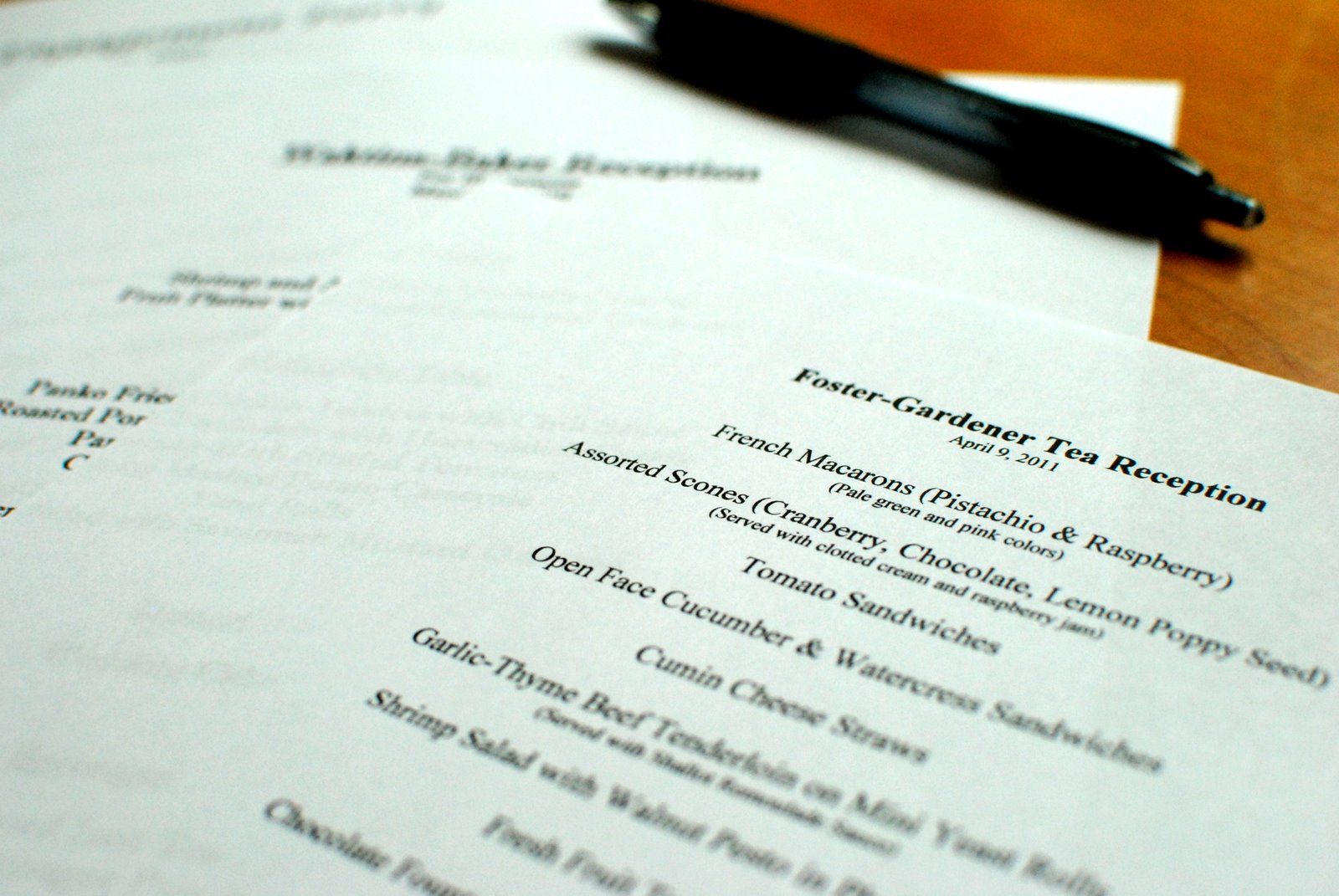
*Write on the menu the quantity and size of serving dishes and platters and serving utensils you will need
*Don’t have too many last minute to-do food items, like sushi for 150, unless you can hire someone to do it for you at the party.

2. Gather recipes

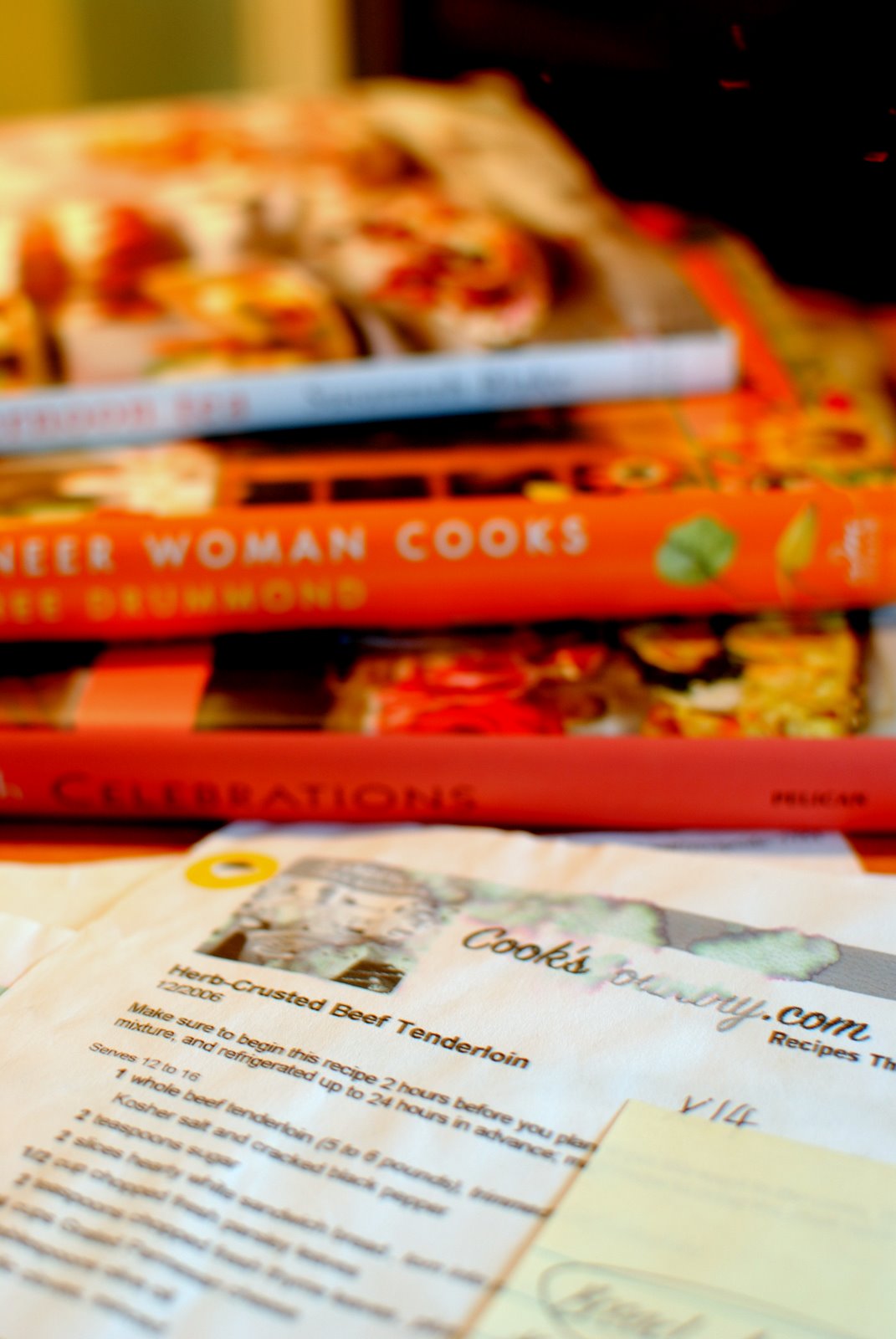
*Copy all the recipes on the menu on 8 1/2″x 11″ paper and make a folder

*In the folder, have all the contact numbers you will need for the party: bakery, florist, rental company, etc.

*Have an envelope to keep receipts for food/supply purchases

3. Convert the recipes : 

 This is the hardest part for many novice event planners. Making too much food is the most common mistake. Here are some hints to avoid excess food .

*Recipe for a side dish which serves 6 will serve twice as much when serving in a buffet with other foods.
*Calculate about 1 to 1-1/4 pound of food total per person for buffet; more for sit-down dinners with multiple courses
*Main meats: 6 oz total cooked meat per person for buffet, more for sit-down dinners
*Young adults, all men groups eat 10% more

*Here is a great, helpful website: Ellen’s Kitchen (her calculations are slightly more than what I would prepare per person, reduce 20% of her recommendations)

4. Grocery List and Shopping
*After the recipe conversion, write out the grocery list. Go over each recipe and list every ingredient you will need. Check your pantry before you go to the store.
*For Sam’s Club business members, Sam’s Club has Fax ‘n’ Pull or Click ‘n’ Pull service is where you send in your grocery list and the store will gather the items and have it ready! It’s a great time saver. Check if your local grocery or warehouse store offers similar services.
*Most of your groceries (non-perishables) can be purchased a week or more ahead. Don’t wait until last minute to shop.

5. Prep List:  

This is a must to keep your sanity in the kitchen while you are prepping. A prep list also guides your helpers/staff.

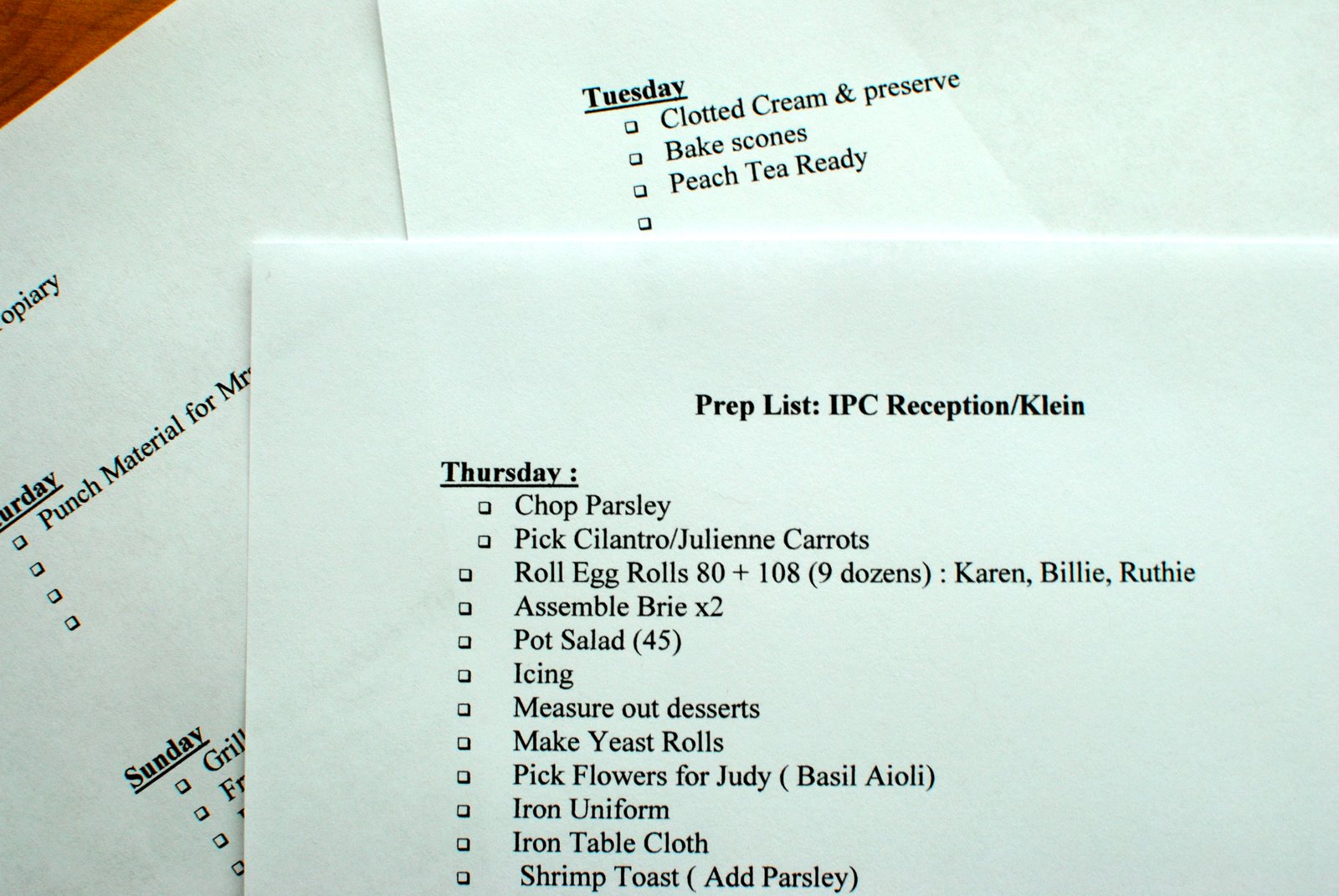
*Before I enter the kitchen, I write down and organize the prep list. If you have a large event, make foods a week or two ahead and freeze. Many sauces or dressings can be made several days ahead.

6. Prep Work: 

Do it ahead! I usually do the bulk of my prep work two days prior to the event. Ideally, the day of the event should only be last minute assembly, cooking, and garnishing! I try to avoid prepping on the day of event. Click Here for more Cooking Tips from my blog.

Baked Goods: breads, rolls, and pie crusts and be made and frozen unbaked. Bake on the day of event for freshest taste.

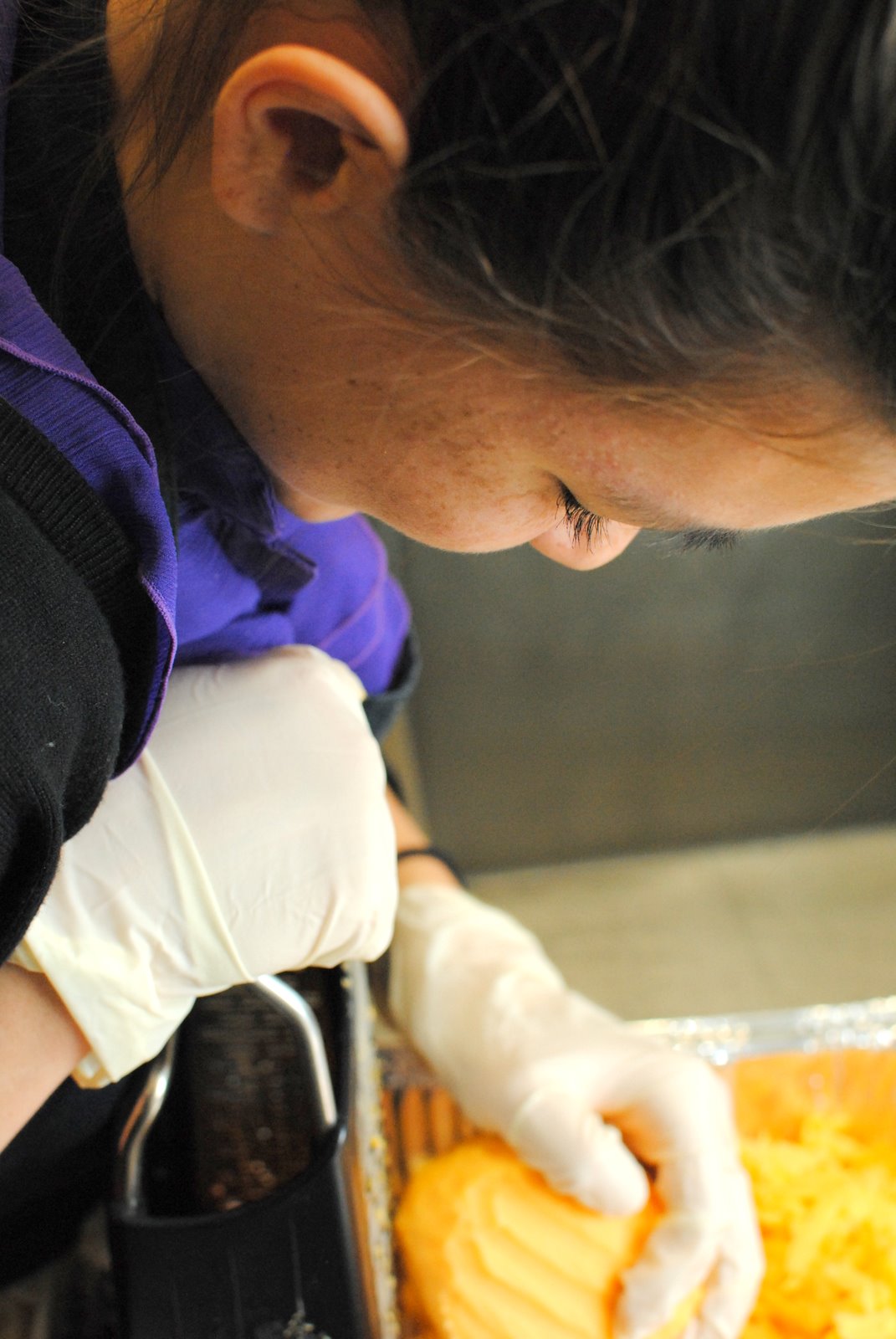
Grate cheese ahead…

If you can’t freeze baked goods ahead, measure out dry and wet ingredients beforehand. So on the day of, you will assemble and bake without having to convert recipes and measure ingredients.

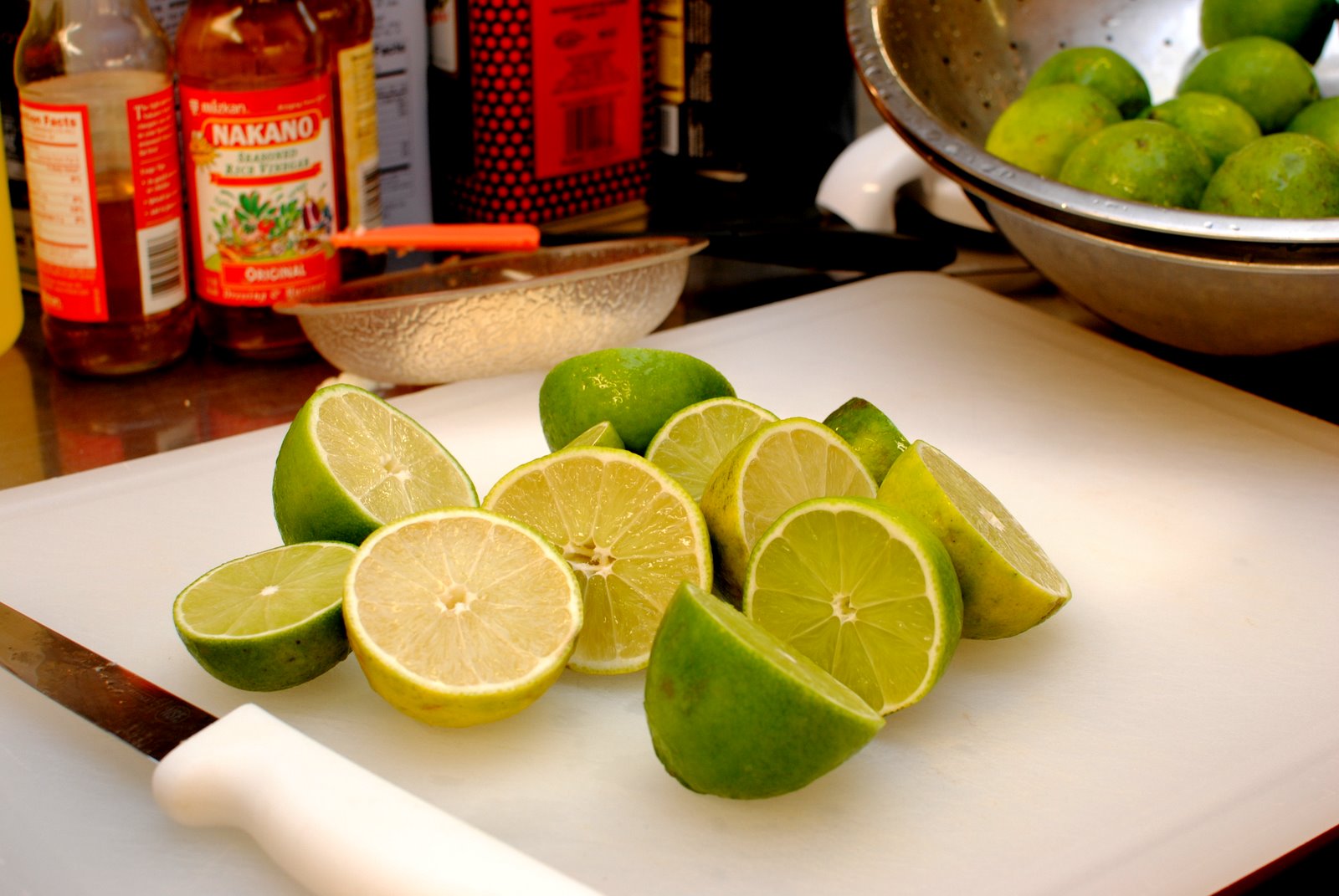
Limes and lemons can be juiced up to five days ahead.

Most veggies and fruit can be prepped two days prior. Delicate greens like herbs can be trimmed and washed early but chopped last minute.

Everything made ahead should be stored in containers or storage bags and labeled.

*Prep veggies and fruit before prepping meats. Be aware of cross contamination. Wash your cutting boards, utensils, and equipment well during prep.
*Don’t try to prep by yourself. Have a person or two to help in the kitchen.

7. The Day Before…

Don’t wait till last minute to set the table…

Or do flower arrangements…

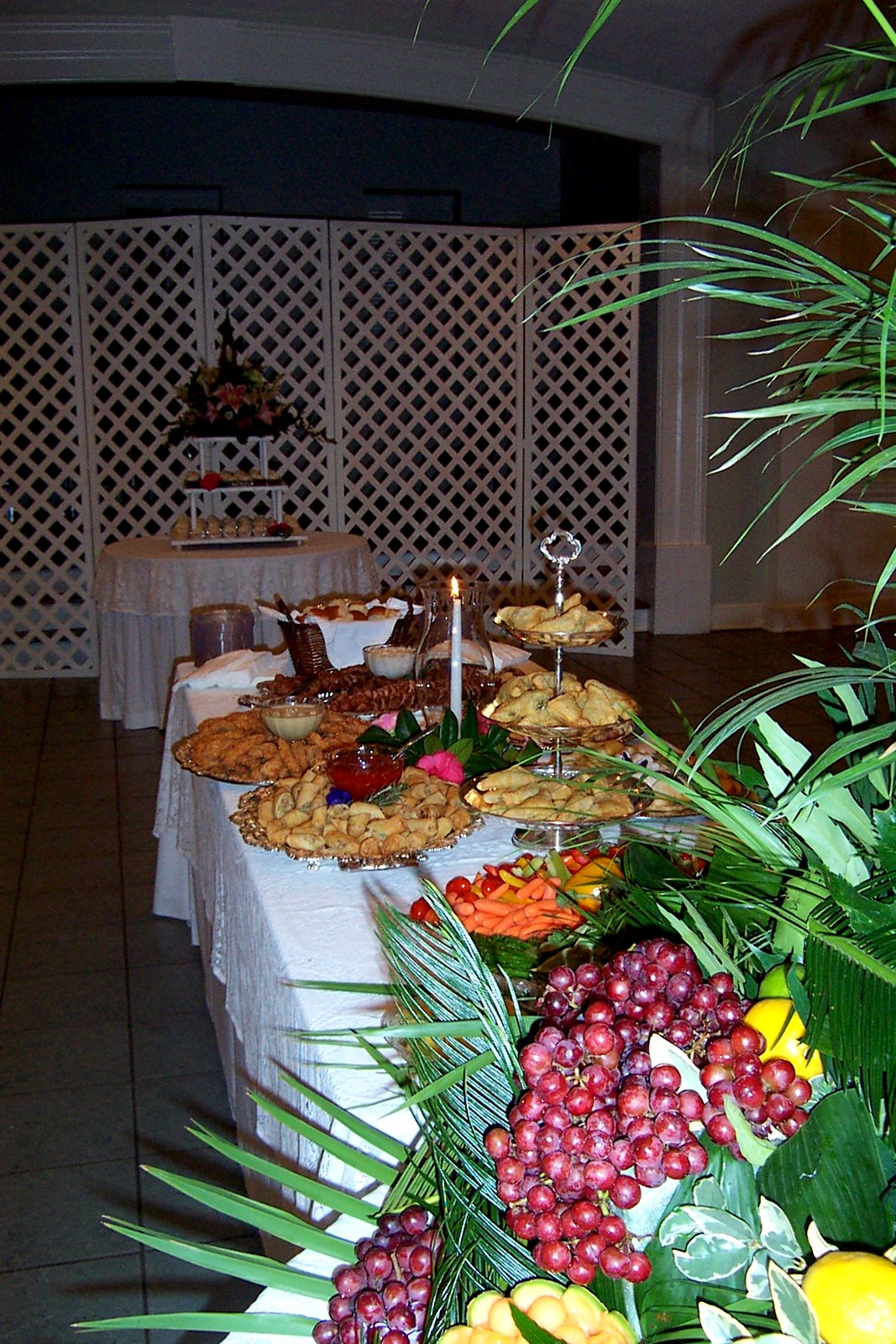
or decorate the buffet table…..just make it less stressful for yourself and prep as much as you can!

8. On the day of event: 

This is the fun part! Most of the hard work is done and now it is the day where you put it all together. This is where you do final baking, heating up, or assembling of the foods already prepared.

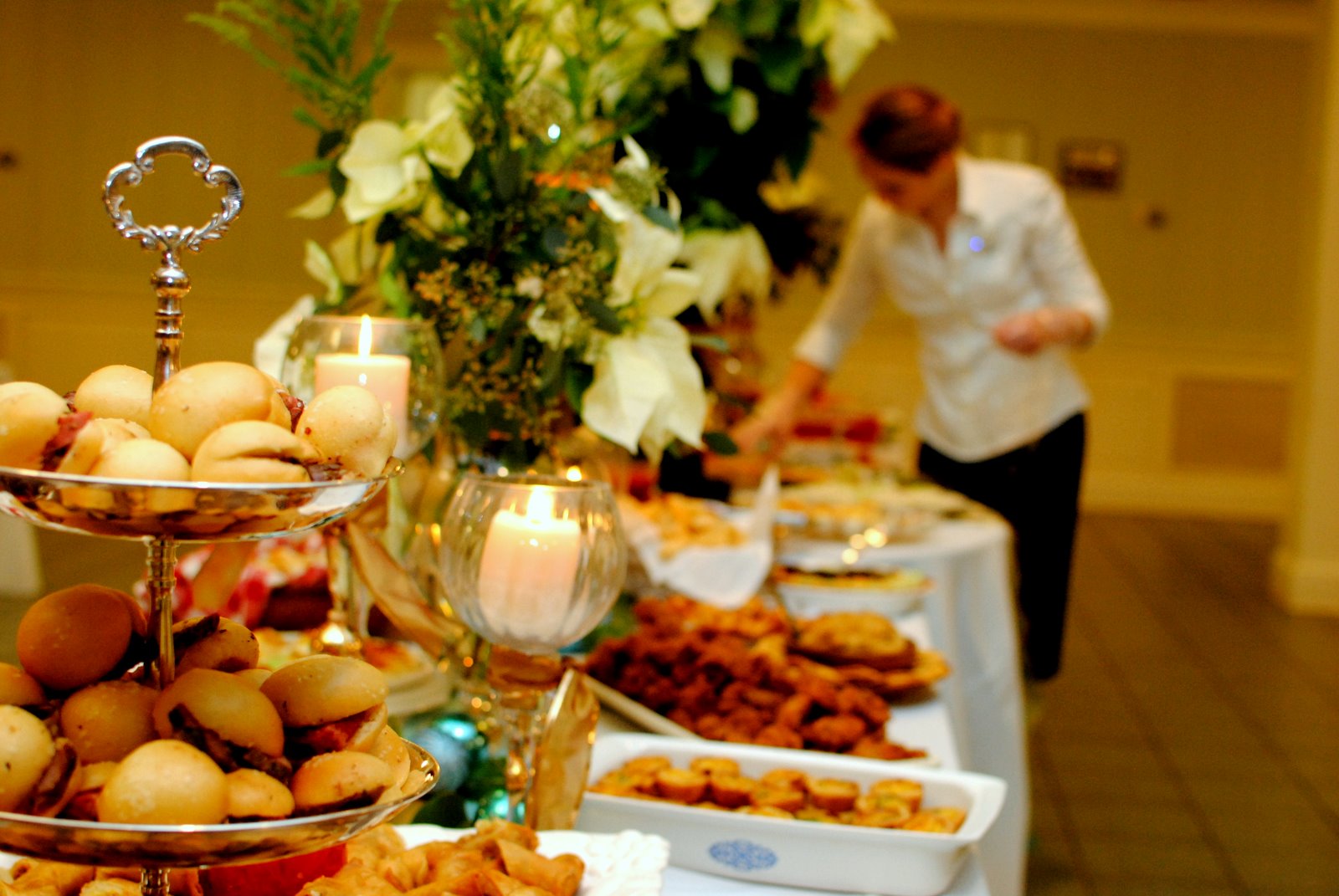
Food is put on pretty platters and garnished

Candles are lit, and tables readied.

And your friends will say, “This is beautiful! You make it look so easy!” Of course they are seeing the result of your labor of love: numerous hours of planning, shopping, and preparing.

9. After event

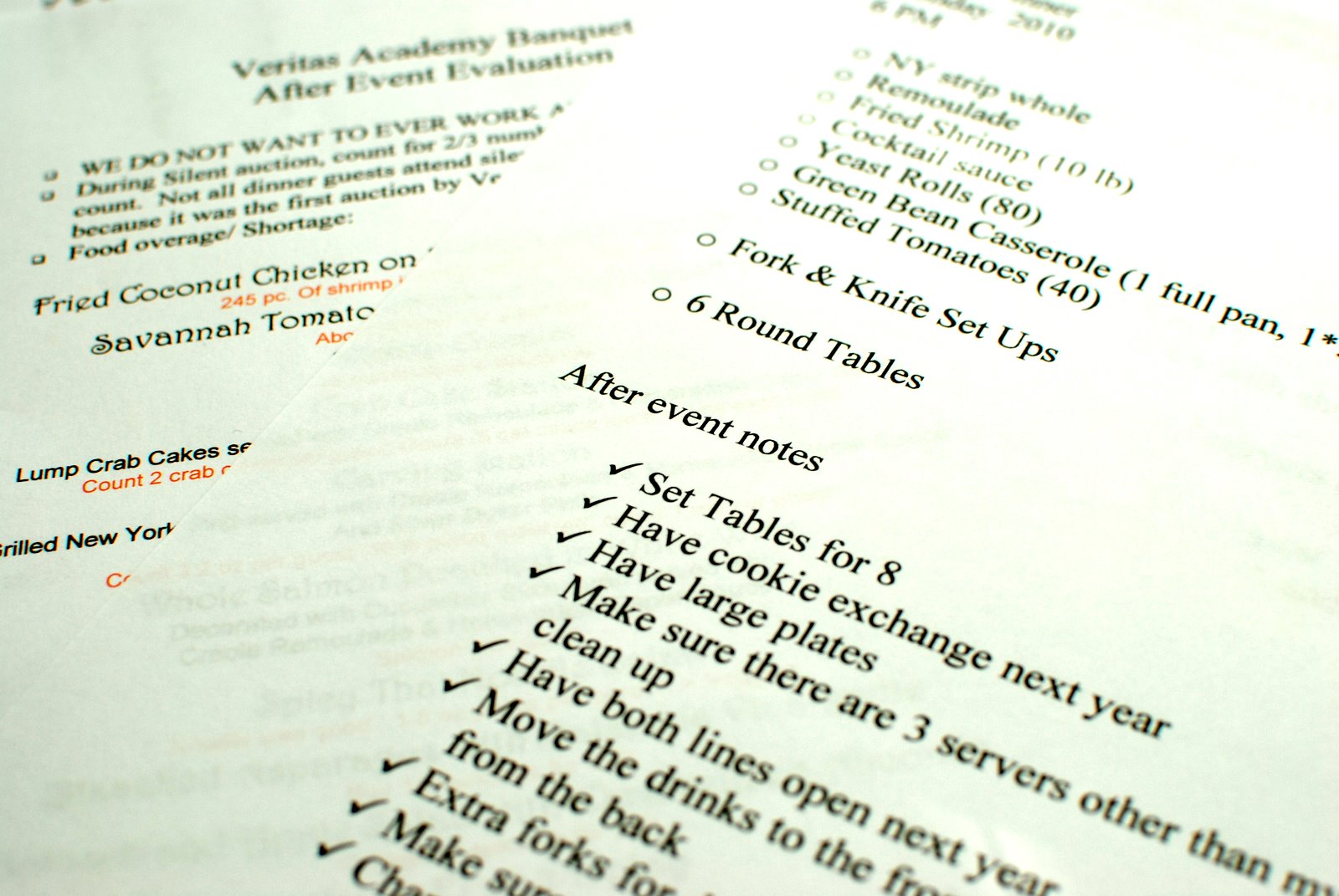
Make a note for yourself.

*Too much, too little food?

*What can be done next time to improve?

*How much did this menu cost? Tally up your receipts.

This is a lot of information to digest, isn’t it? I wish I had this knowledge back 15 years ago! But I am so grateful to share it with you. I pray this little bit of knowledge will bless your family, friends, and your church.

Kay
********************

Around the corner:

Peek into My Daily Journey -through my lens- ; today St Andrews Castle, the castle where John Knox preached in Scotland.

This entry is linked to Raising Homemakers.

>A Poem to Ponder

>I read this beautiful poem and it touched my heart; I asked permission to the author, JD from Poems to Ponder, and he say I could share it with you. For this I am grateful

A Savior, the Christ

 
a teaching rhyme
by JD Collier

a marriage vow
an angel dream
a virgin blessed
a promised King
a troublesome word
a “how can this be?”
an “overshadow”
“may it be to me”

a Caesar decree
a census to run
an inn with no room
a feed trough
a Son
a stable to house
a manger to hold
a swaddling cloth
to ward off the cold

a shepherds night watch
an angel appears
a message of joy
a “peace and good cheer”
a heavenly host
a sky all ablaze
a Savior
the Christ
a chorus of praise


the regal robed kings
a star to behold
incense and myrrh
a gift of pure gold
the kings from the east
worship and part
the mother of God
her pondering heart

the words—all familiar
the story—quite old
the tone—amazement
the setting—bold
the subject—a Child
a mystery—the theme
the narrative—holy
the purpose—redeem
~~~~~~~~~~~~~~~~~~~~~~~~~~~~

Luke 2:11
Today in the town of David a Savior has been born to you; he is Christ the Lord.

John 1:10-14
He was in the world, and though the world was made through him, the world did not recognize him.  He came to that which was his own, but his own did not receive him.  Yet to all who received him, to those who believed in his name, he gave the right to become children of God– children born not of natural descent, nor of human decision or a husband’s will, but born of God.   The Word became flesh and made his dwelling among us. We have seen his glory, the glory of the One and Only, who came from the Father, full of grace and truth.
NIV

Other beautiful poems by the same author are, Did You Know?Heaven, and God’s Repertory

*********************************

>Celebrating the Incarnation of our Lord II -Guest Post by Elizabeth DeBarros-

>

Christmas time is a season in which you invite friends into your home to celebrate with you the greatest miracles of all, the Incarnation of our Lord! This blog is not my home, but it is, in a sense, a cozy room with a coffee table where I share with you, my friend, my journey. Today a special friend of mine, Elizabeth DeBarros, is sitting at this coffee table, would you like to grab a cup of coffee and join us?

Gifts We Bring

I stall. I look out of the window. Sometimes, wandering around the house affords me a glimpse beyond the horizon. I wait.

To distill into words the Incarnation of Christ does two things: Brings me to my knees and causes me to question whether I have what it takes to approach such mystery. Is this something of what it means to tremble? It’s no light matter to discuss the glory of God in the face of Jesus Christ. Who is worthy of such a task? To pontificate over Deity come down is to tread upon holy ground, a place where even angels fear to go.

Great indeed, we confess,  is the mystery of godliness:
He was manifested in the flesh,
vindicated by the Spirit,
seen by angels, 
proclaimed among nations,
believed on in the world,
taken up in glory.

I Timothy 3:16 (ESV)


Indeed, He has come. The Promised One, in the form of a helpless baby, appeared before men, kings and angels under a Sovereign sky. Heaven and Earth rejoiced. Immanuel, God with us. The One who, for our sakes, descended among the ranks of flesh and blood and by whose account we may now approach.

But how? How do we approach?

We’re all little drummers boy at heart, eager to bring our finest gifts to lay before Him something worth. Even if it’s just a rum pum pum pum on our lowly drum, we long to give something that will please Him.

But if we examine ourselves aright, we have nothing to bring, in and of ourselves. We are all weak, vile creatures before this Holy One, this God who need. As it says,

“Who has ever given a gift to Him that he might be repaid?”
Romans 11: 35 (ESV) 

He bids us to come, nonetheless. So we offer Him our yearnings and flailings of heart, reveailing our frail estate. We acquiesce to the fact that we are but dust. Our souls heave a sigh. Do we dare allow God to be God?- the One who renders a righteous judgment by convicting us of our need of Him, but here is where we must break: under the fragile yet unbending beauty that he doesn’t condemn us for our humanity, for He made us in His image.

“What is man that you are mindful of him,
and the son of man that you care for him?”
Psalm 8:4 (ESV)

This is where God brings us face to face with our plight, our utter need for Him. And He spreads a table before us in the midnight fields of our desiring and feeds us with Himself.

This Advent season, there is something far more glorious to consider than how we might approach Him. Let us acknowledge that it is He Who first approached us. Then we may come, humble in spirit, bowing before Him in truth with gifts to bring.

O Holy Night! The stars are brightly shining,
It is the night of the dear Savior’s birth.
Long lay the world in sin and error pining.
Till He appeared and the Spirit felt its worth.
A thrill of hope the weary world rejoices,
For yonder breaks a new and glorious morn.
Fall on your knees! Oh, hear the angel voices!
O might divine, the night when Christ was born;
O night, O holy Night, O night divine!
O night, O Holy Night, O night divine!


By Elizabeth DeBarros
December 2010

Historical background on O Holy Night:

The words and lyrics of the carol ‘O Holy Night’ were written by Placide Cappeau de Roquemaure in 1847. Cappeau was a wine seller by trade but was asked by the parish priest to write a poem for Christmas. He obliged and wrote the beautiful words of the hymn. He then realized that it should have music to accompany the words and he approached his friend Adolphe Charles Adams (1803-1856). He agreed and the music for the poem was therefore composed by Adolphe Charles Adams. Adolphe had attended the Paris conservatoire and forged a brilliant career as a composer. It was translated into English by John Sullivan Dwight (1812-1893).

Text and image of a Glorious Sky are property of © Elizabeth DeBarros
Used with permission.

If you know of another post worth visiting to Celebrate the Incarnation of the Lord, please, feel free to add the link into the comment box. 
Related Posts:


Quotes that Nourish
Celebrating the Incarnation- Part I-
On the Incarnation

>Time to Study Philippians -Week Eight-

>p.MsoNormal, li.MsoNormal, div.MsoNormal { margin: 0cm 0cm 0.0001pt; font-size: 12pt; font-family: “Times New Roman”; }h1 { margin: 0cm 0cm 0.0001pt; page-break-after: avoid; font-size: 12pt; font-family: “Times New Roman”; }span.Ttulo1Car { font-weight: bold; }div.Section1 { page: Section1; }

Greetings to the ladies of our Philippians study~
Welcome to Week Eight – our final week!
This study, and the homework from our previous study, is a condensed version of Mining God’s Word – How To Study the Bible; Foundation Series by Bethlehem College and Seminary Press. I highly recommend that you purchase your own workbook at www(dot)bethlehemcollegeandseminary(dot)org – it would be a great tool for you to have.

“The angel answered, ‘The Holy Spirit will come upon you, and the power of the Most High will overshadow you. So the holy one to be born will be called the Son of God. Even Elizabeth your relative is going to have a child in her old age, and she who was said to be barren is in her sixth month. For nothing is impossible with God.’
             ‘I am the Lord’s servant,’ Mary answered. ‘May it be to me as you have said.’ Then the angel left her.” Luke 1:35-38

May our spirits be as willing as Mary’s when God calls on us!
Let’s start with our homework assignment #1
Here is what I have written for the main point of Phil. 3:1-16:
            All of Paul’s abundantly Jewish heritage and his qualifications as God-fearing Jew won’t save him – only Christ and His righteousness can! Therefore, Paul’s hope rests in Him and Him alone. To have Christ, or to belong to Christ, is more valuable than any else this life has to offer.

Homework assignment #2

The main point of Phil. 3:17 – 4:9

            Paul encourages the Philippians to follow his example in Godly living – to put it into practice, because they belong to God’s kingdom. He also is very bold with them by repeating his commands to rejoice, to have unity, and to stand firm. He also commands them to train their thoughts to be Godly.
I had also asked you to read through the entire book of Philippians and record all the instances where joy, or rejoice is found. Whose joy? Why is there joy? etc.
Here is my list of the joy theme:
1:4 – joy – Paul has joy while praying because of their partnership in the gospel
1:18 – rejoice  – Paul rejoices because the gospel is proclaimed
1:18 – rejoice – Paul continues to rejoices because of the hope of his deliverance (future-looking)
1:25 – joy – refers to the Philippians’ progress and joy in the faith.
2:2 – joy – Paul’s joy will be complete when they are like-minded; live in unity
2:17 – rejoice – Paul will rejoice with the Philippians, even while in chains, when they stand firm, so that all his labor with them has not been in vain. 
2:18 – rejoice – Philippians should rejoice with Paul whether or not he is suffering
2:28 – rejoice –Philippians to rejoice upon seeing Epaphroditus again (don’t hide their feelings from him)
2:29 – joy – the Philippians are to have joy and honor men like Epaphroditus.
3:1 – rejoice – Paul tells them to rejoice “in the Lord”. Don’t get side tracked by the circumcision laws.
4:1 – joy – Paul refers to the brothers as his “joy and crown” (Isn’t nice to know when we give someone else joy?)
4:4 – rejoice – Paul is commanding them to rejoice, again and again. Don’t stop rejoicing! Be anxious for nothing…
4:10 – rejoiced – how Paul felt or reacted when the Philippians were able to renew their concern for him.
For the Written summary of the theme of joy, I would like to quote directly from the Mining God’s Word workbook (pg. 93) because what the authors’ have said is excellent, and worth having you read:

The theme of joy in Philippians is striking for several reasons. First, it is clear that joy can survive and even flourish in the context of suffering. Paul rejoices despite those seeking to afflict him (1:18); he rejoices even though he is being poured out as a drink offering (2:17); he commands the Philippians to rejoice even thought hey are suffering (1:29). Second, it is striking that joy is commanded. This is a repeated and emphasized injunction of the letter (2:18, 3:1, 4:4).

It is assumed that the Philippians have the capacity to obey Paul’s command. Third, Paul places joy at the center of Christian life. He will continue his ministry to the Philippians for their “joy in the faith” (1:25), he sets himself up as a model of joy (2:17 – 18), and as we already stated, he repeatedly command s the Philippians to rejoice. Fourth, seeing joy cannot be an impure pursuit because Paul desires it (2:2) and sends Epaphroditus for the joy of the Philippians (2:28), and unabashedly commands it. Fifth, and most importantly, joy is rooted in God. Paul uses the phrase “rejoice in the Lord” three times (3:1, 4:4, 10). Although the Philippians are often what prompts Paul’s rejoicing (whether it be their partnership or faith or help), the context of the letter makes it clear that Paul’s rejoicing is over the way in which God is being exalted in them as a work of grace (1:6, 2:13). So at every turn Paul shatters the common ideas about joy. Joy can exist in the midst of suffering, it can be commanded, it is at the center of Christian life, it should be pursued, and it is rooted in God alone.

Isn’t that a fabulous summary?
For today’s class, I will attempt to wrap up the rest of Philippians (4:10 –23). Please read these verses now and then come back.
OK, here is my summary:
Paul tells the Philippians that he rejoices greatly in the Lord and then explains why. He wants no misunderstanding between them. He acknowledges that they have always cared for him even though they may not have had the financial means to do so.  He seems to draw similarities between ‘being in need’ and also ‘having all of his needs met’, by the fact that he always relies and trusts in God no matter what circumstances God has placed him in. A sign of true contentment – an example he wants them to imitate. However, he wants them to know he is grateful and thankful that they remembered him and blessed him. He even calls to mind how many times in the past they have come to his aid. He equates the ‘fragrant offering’ that is acceptable to God, to the pleasing aroma of the OT sacrifices that were also acceptable to God. He reminds them that, as God has supplied his needs through them, that God will also supply their needs. He draws to a close with a Doxology (a liturgical expression to praise God), and then sends the final greetings from the saints with him, making a special point of mentioning the saints within Caesar’s household. This is a rather bold statement that lets the saints at Philippi know that the gospel message had spread even into Caesar’s household! Nothing can thwart the movement of the spirit of God.
That’s it. We’re finished with Philippians. Do you know more about the book of Philippians than when we started 8 weeks ago? Can you explain the reasons why Paul wrote this letter to the Philippians? Is being in prison a blessing or a curse? Can it be both?  Should it be both? Should we allow doubts/controversies into our hearts that are different from the gospel? Do we need more than Christ and His love and sacrifice to make our lives complete? Are your thoughts aligned with Christ Jesus? Do you want to be remembered as a Godly woman or one who is chastised for bickering? Can you grasp the idea of joy as a command? Is joy another emotion, like anger, that can come and go, or is it a reflection of the Holy Spirit living within each of us? (“The fruit of the spirit is love, joy, peace, patience, kindness, goodness, faithfulness, gentleness, and self-control.” Gal. 5:22)
Thank you for working through this Epistle with me. I have enjoyed the time thinking through Paul’s teachings while writing it down for you. It has solidified what I already know, and reminded me of things I had forgotten.  May God be honored and praised by our lives from this day forth. Remember, the gospel of Christ is tidings of comfort and joy.
Blessings on your homes! Bye, bye~
Yours sister in Christ,
Eileen