About Becky Pliego

I am grateful because God, in His grace, called me out of darkness and into his admirable light. When I did not look for Him, He found me. When I was in a pit of sin, He rescued me. I am not walking this road alone, my family is always with me, and we love Him, because He loved us first.

Time to Study Philippians -Week Two

Dear Ladies of the Philippians study,
Greetings to Week Two of our study! (week one is found here)
This study and the following lessons, for the next seven weeks, will be a condensed version of Mining God’s Word – How To Study the Bible; Foundation Series by Bethlehem College and Seminary Press. I highly recommend that you purchase your own workbook at www(dot)bethlehemcollegeandseminary(dot)org – it would be a great tool for you to have!
Please pray for our study habits, for God’s wisdom to be upon us, and that we would be known as women who love our Lord and Savior, Jesus Christ.
To begin our time today, we will start with going over our ‘homework’. I realize that some of you will have different answers from me and from each other. What I want you to notice, or to observe, are clearly in the text. At this point, record what has been written and use that. Don’t go too deep, and assume things that aren’t written.
Here are a few examples of mine taken from each chapter:

Observations of author 

Paul and Timothy are servants of Christ Jesus (1:1)
Paul thanks God for them (the Philippians) (1:3)
Remembers them in his prayers (1:4)
Paul holds the Philippians in his heart (1:7)
He is imprisoned for Christ (1:13)
He rejoices that Christ is proclaimed regardless of motive (1:18)
He has joy (2:2)
He hopes in the Lord (2:19,23)
He trusts in the Lord (2:24)
He thinks it is necessary to send Epaphroditus back to the Philippians (2:25,28)
He has already written to them about similar things (3:1)
They (Paul and the Philippians) are of the real circumcision (3:3)
Paul says he of all people should have confidence in his Jewishness, if that is all that is needed to belong to God (3:4-6)
He considers his Jewish lineage “a loss” in light of who Christ is. (3:7-11)
He loves, and longs for the Philippians (4:1)
He entreats the women Euodia and Syntyche to stop arguing with each other (4:2)
He rejoices in the Lord greatly now that the Philippians are able to help him again (4:10)
Through the hardship and persecutions he has endured, he has learned to be content in all his circumstances (4:11-14)
He is well supplied from all of the things they sent to him with Epaphroditus (4:18)
He sends greetings from the other saints to the Philippians (4:22)

Observations of those receiving the letter


They are considered saints (believers in Christ Jesus) (1:1)
They are partners with Paul in the gospel from the first day they were converted (1:5)
They are partakers with Paul of grace, whether or not he is in prison (1:7)
They pray for Paul (1:19)
They have always obeyed Paul whether he is with them or away from them (2:12)
They know of Timothy’s devotion to Paul and the gospel (2:22)
They are part of the real circumcision with Paul and put no confidence in the flesh (3:3)
They, like Paul have a citizenship in heaven (3:20)
Euodia and Syntyche, women who previously had worked with Paul, now bicker and quarrel (4:2)
They have observed/witnessed first hand the life of Paul (4:9)
They share in Paul’s troubles (4:14)
The Philippians were the only ones who sent supplies/aid to Paul (4:15)
They repeated sent help to Paul when he was in Thessalonica (4:16)

Relationship between Paul and the Philippians

This letter sounds like the saints in Philippi are very dear to Paul’s heart (1:7,8), and uses terms of endearment often: brothers (1:12, 3:10, 4:1), beloved (2:12), whom Paul loves and longs for (4:1), his joy and crown (4:1).
Paul is torn between wanting to die and be with Christ and wanting to live so that he may continue to encourage, teach and pray for them (1:21 – 25).
They both encourage one another by sending news through the saints to reach Paul. (Timothy and Epaphroditus)

What is the Occasion(s) for writing this letter to the Philippians?

He is in prison which they have heard of; they sent Epaproditus to Paul and then heard Epaphroditus was very sick, they sent gifts to help supply Paul’s needs.

Summary of the Purpose of Paul’s letter


One of the first issues Paul discusses is their concern for him since he is in prison. He tells them that being in prison is a good thing because it has further enhanced the gospel (1:12, 1:18), and that his imprisonment has made the other saints more bold (1:15). There are even believers within Caesar’s household! (4:22)     (Emphasis is mine J)
He exhorts them that their manner of life should be worthy of the gospel, standing firm in one spirit, and to not be frightened by those who oppose them. They should expect to suffer since Christ suffered (1:27-30).
He also conveys the idea of joy because of Christ, to be humble, to have unity with one another, to model their lives after his, to care for one another.
He does warn them about ‘those dogs, the evildoers, the mutilators of the flesh’ who want to lead the saints at Philippi back into the works of circumcision. He reminds them that the Sprit has circumcised their hearts, and that they worship by the Spirit of God and glory in Christ Jesus.
He also warns them against false teachers who ‘walk as the enemies of the cross of Christ’ and then exhorts them to stand firm in the Lord.
He asks his ‘true companion’ to work with Euodia and Syntyche and restore their fellowship.
He does let them know that he is hoping to send Timothy to them, so Timothy can return to Paul with the news of the Philippians (2:19-24). Paul does want to thank the Philippians for the gifts they sent along with Epaphroditus (4:17-18) and let them know how much their partnership with him is a joy (1:3-9).
It is a letter filled with hope, love, the joy of Christ, and encouragement.
Again, you may have some, or parts of all of these. These are just to guide your answers.

This Week’s Lesson:

When we study any book within our Bibles, we must always remember that the author was writing in a certain period of time in history, and that that history flavors their words and actions. Just as you would write a letter now, what is happening in your town, your city, your nation would influence what you wrote about. Therefore, it is always helpful to remember the historical context while we read our Bibles.
To help us with this, here is a quick historical timeline to think about the world in which Paul was living, and to remember what had happened in the recent past, and what would occur in the near future of this letter to the Philippians.
63 BC – Roman general Pompey invades Jerusalem
44 BC – Julius Caesar is assassinated
40 BC – Herod is crowned King of the Jews
27 BC – Augustus becomes Emperor of Rome
20 BC – Herod begins to rebuild the Temple
6-4 BC – the Birth of Jesus
4 BC – King Herod dies
14 AD – Emperor Augustus dies and Tiberius assumes power
26 AD – Pontius Pilate is appointed procurator of Judea
30/33 AD – Jesus dies and is resurrected (Amen!)
37 AD – Emperor Tiberius dies
47 AD – the start of Paul’s first missionary journey
50 AD – approximate time the New Testament books are written
64 AD – approximate time of the martyrdom of Peter and Paul
70 AD – the destruction of the Temple and the Fall of Jerusalem
Some of these dates may not agree with all historians – see H. Wayne House, Chronological and Background Charts of the New Testament (Grand Rapids: Zondervan, 1981)
To give us an idea of what I would like you to do this week in Philippians, let us go back to our copy of Philemon. As you read through Philemon, I want you to notice areas within the letter that Paul switches  from one subject to another. The easiest way to find these divisions is to repeatedly ask your self, “What is Paul saying now?” If he has changed course or changed the direction of what he is speaking about, then mark that area of division with a diagonal line (/).  I’ll help you with one of them.
The first three verses in Philemon are one division. When you arrive at the 4th verse, Paul changes what he was previously saying and now begins with, “I thank my God….”
So put a forward slash between the end of verse 3 and the beginning of verse 4. Out in the left-hand margin of verses 1-3, write down a brief summary of those verses.  We call that part of his letter The Greeting, so in my margin I would make a note that says ‘Greeting’. You should be able to find 3-5 divisions within Philemon depending on where you think Paul has changed what he is saying. Do that now, and include your notes in the margin and then come back to class.
Great! I’ll tell you what I have, and you tell me what you have (just kidding J).
I found a division between vs. 7/8, a division between vs. 17/18 and a division between vs. 22/23. My margins say ‘Greeting’, the next one indicates ‘Paul’s prayer of thanksgiving’, the next says ‘appealing to Philemon to receive Onesimus as a brother’. The following margin note says ‘further instructions’ and lastly ‘closing’. This is a quick summary of the parts of the letter.

Homework:

Day 1 – To gain an historical perspective on Paul’s letter to the Philippians please read Acts 16:6- 17:1 and 1 Thessalonians 2:1-2. Keep Philippi in mind while you read. Next read Acts 28:16-31. What is this describing? Also, it might be interesting to you to find these geographic regions/cities on your maps in the back of your Bibles.
Day 2 – Use the “What is the author saying now?” as you read through the book of Philippians and find the divisions within this book. Put your forward slash where you think a division ends and begins.
Day 3 – Review your divisions and see if you still agree with what you first thought. Change them if you need to. Then make your notes in the margins for each division.
Day 4 – Write on a separate piece of paper each division by labeling them with your margin notes. Under each division, write a few items addressed within that division.
ie: Phil.1:1-11 is The Opening
1)    Senders, blessing, encouragement
2)    Paul speaks of his affections
3)    Prays that their love would abound.
That is all for your homework.
This was a bit of a long post, but I thank you, ladies, for keeping up and working through it! May your hearts be encouraged as you continually read of Paul’s love of the brethren, and remember that you will get to meet these people when you see Jesus face to face!
Becky, my dear sister, as always THANK YOU!
Blessings upon your homes,
Eileen
Becky’s note: I found this website with neat on line maps, in case you would like to study more about the geography  on Day 1

************************************


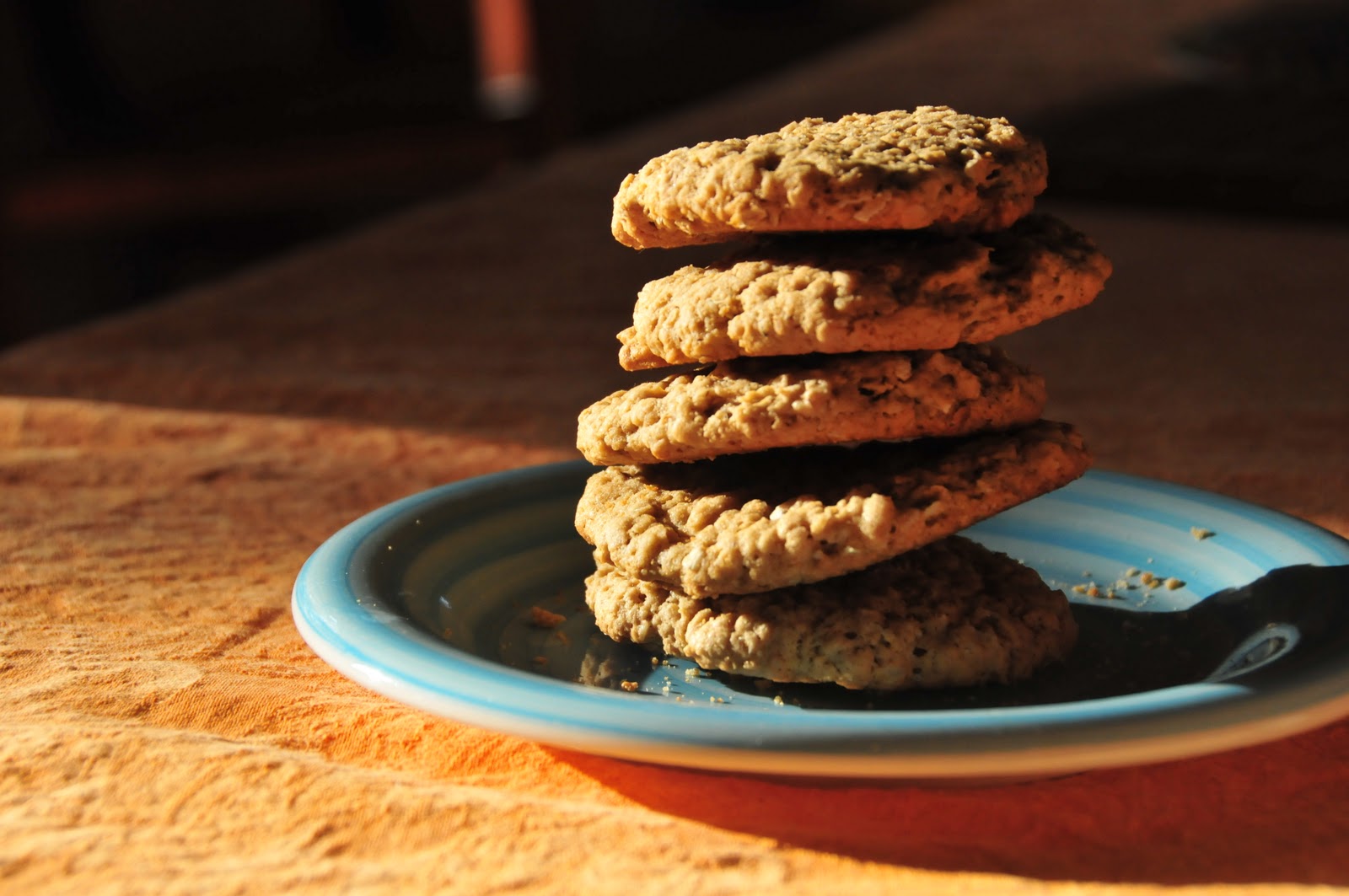
>What About Some Oatmeal Cookies?

>When you bake cookies, you are not just baking sweets, you are building memories, you are sharing the goodness in the every day ritual of our lives.

I learned this recipe when I was around sixteen yo. and was visiting with my dear friend Sandy in Dallas; She taught me how to make these delicious, old fashioned oatmeal cookies and since then they have been a favorite treat in our family.

I thought you might enjoy the smell, the taste, the goodness, so here is the recipe for you to try in a cold afternoon, with a good cup of coffee.

Old Fashioned Oatmeal Cookies
What you need to gather:

3/4 c. of butter (room temperature)
1 c. brown sugar
2 large eggs
1 tsp vanilla (Mexican please!)

1 3/4 flour
1 tsp baking soda
1 tsp baking powered
1 tsp salt

3 cups oatmeal

 Call your little ones and have them follow the instructions:

 1. Mix all the blue ingredients in a large bowl, until you have a creamy, nice and smooth batter.

 2. Sift together all the pink ingredients.

3. Put together the blue batter with the pink dry ingredients. Add the oatmeal  and mix them all with a wooden spoon. It will be hard to do it!

4. If you wish you can add 1 cup of chocolate chips, walnuts, pecans, raisins, dried cranberries, or white chocolate in little pieces.

5. Drop by teaspoonfuls onto greased cookie sheet.

6. Bake for about 8-10 min. at 350ºF (200ºC)

   The Secret for Success: 

DO NOT LEAVE THE KITCHEN, LEST YOU FORGET ABOUT YOUR COOKIES!

  Yes, the secret is to take them out of the oven when they are still “bubbling” but cooked already. DO NOT OVER BAKE because if you do so, they won’t be soft and chewy, but hard.

Happy baking!

>The Holiness of God -Chapter One-

>

I am joining again a great group of readers at Challies. It has been a joy get to know some great bloggers, thinkers and God lovers through this “reading- along” group; so if you are visiting this place  from Challies, please leave a comment; I would love to “meet” you!

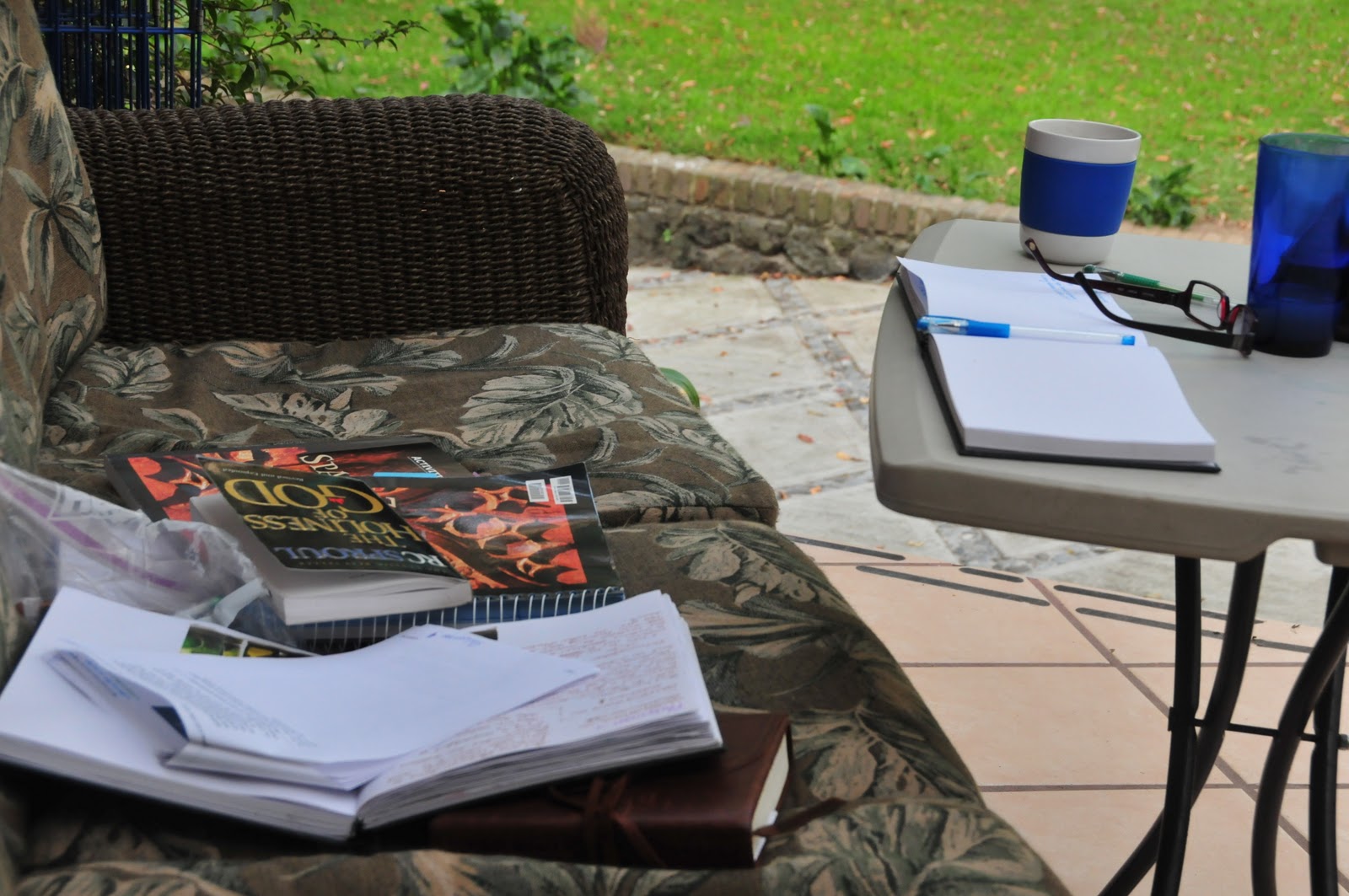
This time the book we are reading is The Holiness of God by R.C Sproul, a great pick, a book already known as a classic in the Reformed faith. Today we are talking only about chapter one.

Chapter One. The Holy Grail

One thing, that is it, only one thing I will share of this chapter that I do not want to forget never. One thing in chapter one that every one needs to know.

We all need a specific moment in our lives, a “life transforming” moment:

“Being alone with God. A Holy God. An awesome God. A God who could fill our lives with terror in one second and with peace the next”

 This is the way to eternal life. Meeting alone with a Holy God, spiritually naked, on our knees, in awe and knowing  that we are not worthy of Him.

Living a moment like this changes our eternal life. Meeting alone with a Holy God in the quietness is what we need in order to live.

Have you been alone with God; a Holy God?

Other posts that you might enjoy reading:

When Light Meets Daily Life III and the Bruised Reed Ch. 3
The Bruised Reed Part 1 (at the former blog)
While in the Quietness…

The Holiness of God -Chapter Two- (Holy, Holy, Holy)

>The Fruit of Her Hands -part 1-

>

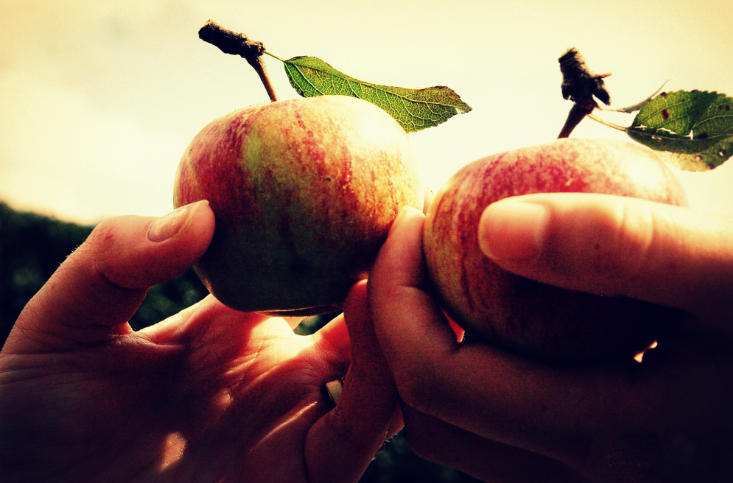
The Fruit of Her Hands, Apples © Pixels and Stories

Today is our first day of getting together to share our thoughts on this encouraging book, The Fruit of Her Hands, by Nancy Wilson. I am glad you are here, grab a cup of coffee and let us encourage one another; “let us consider how to stir up one another to love and good works.” Hebrews. 10:24.

This book opens with a short forward by Douglas Wilson, but it is there that I see the key to understanding how are we to fulfill our duties, our God given role in our home; he says,

“When two people are so compatible, it is very easy to coast on the strength of the natural affection. The problem with this is that it becomes easy to neglect the  essential thing in a good marriage, which is reliance on the grace of God”

This is the starting point, reliance on the grace of God.

So, I would suggest, before tackling the rest, to consider if we have been trying to be the woman God has called us to be on our own strength. Maybe you have read several books on how to be a better woman, mom, wife, but it seems that you are not walking forward; well, this is the starting point in our Christian calling, reliance on the grace of God every day, all day.

Chapter One. A Woman’ s Orientation to Marriage

Nancy opens the book with a Bible verse that shows us, like on a mirror, our sinful inclinations, 2 Tim 3:1-6.

“But understand this, that in the last days there will come times of difficulty.  For people will be lovers of self, lovers of money, proud, arrogant, abusive, disobedient to their parents, ungrateful, unholy,  heartless, unappeasable, slanderous, without self-control, brutal, not loving good,  treacherous, reckless, swollen with conceit, lovers of pleasure rather than lovers of God, having the appearance of godliness, but denying its power. Avoid such people. For among them are those who creep into households and capture weak women, burdened with sins and led astray by various passions, ” ESV

Everywhere we see it, it is clearer in some scenarios, but is hidden in others: Love yourself, love money, live for pleasures.

We are easily deceived. We are women, just like Eve.

The author mentions two areas in which the modern woman has been”led away by her own lusts”

1. From her God-given domain. (the home)

2. From her God- ordained responsibilities. (her husband and children)

Instead of pursuing these, women today are pursuing freedom and happiness. The world has offered up these as “rewards” to all those who are willing to forsake their God- given domain and responsibilities.

The second aspect this chapter deals with is “A Home With a View”, what does this mean? First and foremost having a biblical view of our husband.  Mrs. Wilson says,

” A woman must cultivate a very high view of her head both the position God has given him over her, as well as the authority God has given him”

 Yes, we have learned that we should submit to our own husbands, and that we are called to be home-centered, but what about this:

“Women have often been vulnerable to deception, and frequently they are self-deceived. The woman who sacrifices her own home, while teaching othe women to be respectful and submissive wives, has been deceived and is deceiving others…she has torn down her house with her own hands (Prov 14:1). By the time she recognizes the trap she is in, it is often too late”

Nowadays, we don’t have to be outside from our homes to be absent from our homes. Where are you all day? Are you in your home really? What about the time we all spend behind this screen?

Let us be careful on how we manage our time “at home”. Let us be women of our home!

Chapter Two. Walking With God

This is I guess, why I love this book so much. It is a book that goes beyond giving you good tips on how to be a godly woman. It challenges Christian women to STUDY the Word of God.

Studying the Bible, not only reading it and crossing out our “One-Year Bible Reading chart”, is what we must do. We must walk with God in prayer and in the Word. What a challenge! But isn’t this our calling as wretched sinners saved by a Merciful God?

I like how she says this:

“Not all women are natural students. It takes discipline to read the Scriptures.”

And she carries her argument on to say:

“Christian wives tend to leave the ‘fat books’ and theology to their husbands. While this may look “submissive” to some, it is actually disobedience. It is not enough that we know Proverbs 31, Ephesians 5, I Peter 3, and I Corinthians 1 and 14. We have to know more than how to be a good wife. After all, our first calling is to be good Christians, and if we are good Christians, we will be good wives and mothers…”

The second issue Nancy Wilson deals with in this chapter is :The Woman and the Serpent.

Eve was deceived in the garden, and we are daughters of Eve; we can fall in the lies of the devil pretty easily.

The author mentions some of the lies we women fall into:

1. The popular idea that our problems are all our parents’ fault.

2. We are not responsible for own faults.

3. We should search back into our past to resurrect old hurts and wrongs (“to be healed”).

What are the antidotes against all the devil’s lies?

* Asking ourselves: “What does the Bible says about such and such issue?”

-No wonder why is it SO important that we study the Bible diligently.-

* Going to our husband first.

*Not sharing our spiritual problems with all our friends. The world tells us that speaking out is always beneficial, but I agree with the author when she says, “Sometimes talking about it [our problem] just makes things worse”

“In many situations, it is no wonder we don’t know what to do -we aren’t in the Word. How can we know what God requires if we are not reading what He has written (Deut. 8:3)?

“Stay away from  the books {and I -Becky- will add blogs…} that get you look inward instead of away from yourself to Christ. He is all-sufficient for all the problems a married (or single or widowed or divorced) woman might have (Heb. 8:1)….

And finally, pray that your mind will not be led into deception and corruption, but will stay, remain, and dwell in the simplicity that is found in Christ” 

But this is meant to be a conversation, the coffee is ready, my sister brought some cookies and we are here to share… what do you have to say?, What books have helped you grow in your Christian life?, How do you find time to study the Word and set apart a time to pray?, What are those lies that still try to penetrate your heart regarding your God given domain and responsibilities?  If you did not read the book, please, feel free to comment as well… no worries!

Leave a comment or a link to your post (in case you decided to blog about these first two chapters).

Are you just coming in? Maybe you want to catch up with our reading and join the conversation. Learn about our reading schedule here.

You can follow the conversation in Spanish too! Visit us today at Delicias a Tu Diestra Para Siempre.

Related posts:


When Light Meets Daily Life II
Thoughts For Wives
Yes, I Will Open the Box

Marriage and Wine (at the former blog)
One +One = One (at the former blog)


***************************
>My Favorite List -Every Monday-

>

“…but when they had grazed, they became full,
they were filled, and their heart was lifted up;
therefore they forgot me.” Hosea 13:6 ESV

This is why my family and I keep a gratitude journal, because we are sinful by nature, because we tend to forget  that we do not deserve anything and yet we have fullness. It is when we forget that ALL we have, that ALL we are is a gift from Above  that we become ungrateful. That we sin of ungratefulness and pride.

“and when your herds and flocks multiply and your silver and gold is multiplied and all that you have is multiplied,  then your heart be lifted up, and you forget the Lord your God, who brought you out of the land of Egypt, out of the house of slavery, who led you through the great and terrifying wilderness, with its fiery serpents and scorpions and thirsty ground where there was no water, who brought you water out of the flinty rock, 16 who fed you in the wilderness with manna that your fathers did not know, that he might humble you and test you, to do you good in the end. Beware lest you say in your heart, ‘My power and the might of my hand have gotten me this wealth.’ ” Deut. 8:13- 17

We jot down the deeds of the Lord among us, we count His blesings; we have the journal on our family table, a pen always ready… so we won’t forget. The Lord said that if we forget, we will most likely come to say in our hearts “‘My power and the might of my hand have gotten me this wealth.’”

But our God keeps on saying,

You shall remember the Lord your God, for it is he who gives you power to get wealth, that he may confirm his covenant that he swore to your fathers, as it is this day.” v.19

We do not want to forget, so we write down, we keep  an account of God’s deeds among us because that is the only safe way to look back.

Gratitude is the antidote against a prideful heart. Gratitude recognizes that we are not worthy to be at His table and receive benefits from His hand, yet He calls us, clothes us with washed clothes and sets a table before us.

This is my list today, so I won’t forget.

801.  Two of our children exposing with clarity the Doctrines of Grace

802. A new guitar and a beautiful young lady practicing.

803. Bag pipes, a teacher, a big smile.

804. Books on my nightstand.

805. Bible study – being able to set apart a time to do it-

806. My Beloved cooking with our little one.

807. A nature table, for our study of Botany.

808. Oatmeal cookies (I will post the recipe this week for you)

809. Tears shed for friends.

810. Helping hands.

811. The privilege of intercession.

812. Tired bodies.

813. Cares cast upon You, my Lord.

814. Dreams shared in the night, under the covers.

815. My parents’ safe return.

816. Eileen’s Bible Study

817. This ministry.

818. Books with sound doctrine in Spanish.

819. The mystery of love found in a storybook read aloud.

820. Thank you for giving the opportunity to teach Spanish.

821. Thank you, God,  for my husband’s job, for tough months and your faithfulness to us.

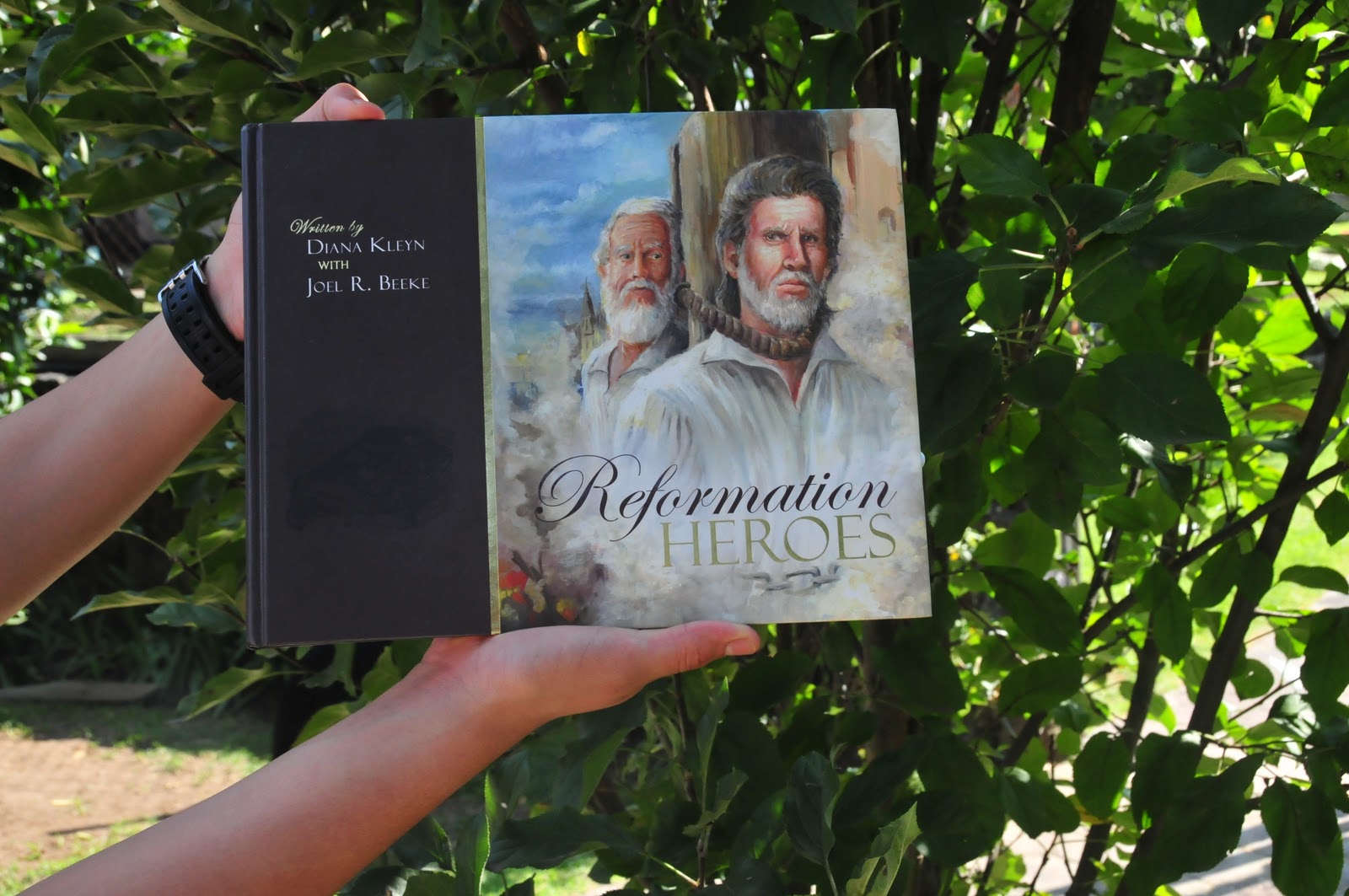
822. Thank you for The Reformation Heroes.

823. You, journeying with me.

Write and count His deeds among you , so you won’t forget.

What are you grateful for today?

>Hallowed be Your Name

>

Thomas Watson. Read His Biography at Monergism

The Lord taught us how to pray and the first petition is this,  “Hallowed by your name” Matthew 6:9
 Thomas Watson explains us how we should sanctify God’s name, and among his teaching, he says:

We hallow and sanctify God’s name when we hallow his day.

“Hallow the sabbath day.” Jer 17:22. Our Christian Sabbath, which comes in the place of the Jews’ Sabbath, is called the Lord’s day. Rev 1:10. It was anciently called a day of light, wherein Christ the Sun of Righteousness shines in an extraordinary manner. It is an honor done to God to hallow his Sabbath.

(1) We must rest on this day from all secular works. “Bring in no burden on the sabbath day.” Jer 17:24. As when Joseph would speak with his brethren he thrust out the Egyptians; so when we would converse with God on this day, we must thrust out all earthly employments. Mary Magdalene refused to anoint Christ’s dead body on the sabbath day. Luke 23:56. She had before prepared her ointment and spices—but came not to the sepulcher until the Sabbath was past; she rested on that day from civil work, even the commendable and glorious work of anointing Christ’s dead body. 
(2) We must in a solemn manner devote ourselves to God on this day; we must spend the whole day with God. Some will hear the word—but leave all their religion at church; they do nothing at home, they do not pray or repeat the word in their houses, and so rob God of a part of his day. It is lamentable to see how God’s day is profaned. Let no man think God’s name is hallowed, while his Sabbath is broken.” (source@ Grace Gems)
Let us set apart this today to sanctify His name in all we do!

Related Posts:

 Sunday’s Psalm – Psalm 19-
A Prayer for Today
The Lord’s Day

Visit Rebecca for more hymns and devotionals for the Lord’s Day.

************************