About Becky Pliego

I am grateful because God, in His grace, called me out of darkness and into his admirable light. When I did not look for Him, He found me. When I was in a pit of sin, He rescued me. I am not walking this road alone, my family is always with me, and we love Him, because He loved us first.

>Psalm 5:3

>

O Lord, let this be my manner of life, waking up in You, to You, seeking your face. Let your name be the first thing my mouth speaks every day.

What can I say as soon as I wake up, as soon as my eyes are granted to be opened to a new day, and I found breath in me? What else can I say, but, thank you, thank you, O LORD, for sustaining my life through the night. Even though life is so fragile, you upheld me through the night; even though I sin day after day, I find mercy in you morning after morning.

Lord, may I live this day in You, for You; not for myself. Help me today to walk in your Word, meditating in Your commandments and loving your statutes more that anything on this world. Help me today to live loving my husband, my children, my neighbor from the rising of the sun to the going down of it.

Lord, let the mediations of my heart from the moment I open my eyes in the morning to the moment I close them at night be pleasing unto you.

In Jesus’ name, in whom I am reconciled with you.

Amen

See the Scripture & Snapshot at my Photography blog too; Genesis 3: 17- 18
Remember that you can always download the images posted on Sundays and use them as your wallpaper. I just ask that you leave a comment telling me you will do so.

>On Imperfections, Cracks and the Gospel -P2R week 5-

>

“Only let your manner of life be worthy of the gospel of Christ, so that whether I come and see you or am absent, I may hear of you that you are standing firm in one spirit, with one mind striving side by side for the faith of the gospel, and not frightened in anything by your opponents. This is a clear sign to them of their destruction, but of your salvation, and that from God. For it has been granted to you that for the sake of Christ you should not only believe in him but also suffer for his sake, engaged in the same conflict that you saw I had and now hear that I still have.” Philippians 1: 27- 30 ESV

I repeat these words several times a day, it’s week 5 of the P2R project; and I just can’t do it fluently. I stop and see my imperfections, the cracks in my own life. I not always live my days, my minutes worthy of the gospel of Christ. The Holy Spirit reminds me of some hidden sins in my heart (some of omission). The light of the Word pierces into those corners of my life where darkness has found a place; God grants me the gift of repentance and darkness is overcome. Sanctification is a gift from God; the Father has not only called us to be His own and justified us; but He is working in us day by day; His Light piercing the darkness in our hearts. This is the Gospel, good news for sinners who repent and believe in Him who on the Cross conquered death. (And here I would add… If you don’t read your Bible, if you don’t expose your soul to the Light, how would you expect to grow in Him?)

What are those words that come next? “…It has been granted to you that for the sake of Christ you should not only believe in Him but also suffer for His sake”  Why they can’t be found in a “Book of Promises”?

At the table I tell my children and my Beloved, with a lump on my throat, “I have never suffered for the gospel… I pray, O how I pray, that if such a day comes to me; I will be joyful, and count it as a blessing, as gift granted by God.”

I mutter all the words in chapter one; and I can clearly see that the only way for me, for you, to count every trial, every suffering as a gift from God is to live beyond the time line in which we are bound. We must live with our eyes fixed on Jesus; longing to be with Him…“for that is far better”, far better than anything this world could offer us; far better than anything we could have ever imagined!

Under His Sun and by His grace,

Read my friend Anne’s reflections on her memory project here.
and listen to Aaron recite chapter one here.
Be encouraged, dear friend, you can start today! Read about P2R here.

This post is linked to the photography {word} prompt at Three.

>Gift Wrap Respect for Your Husband

>

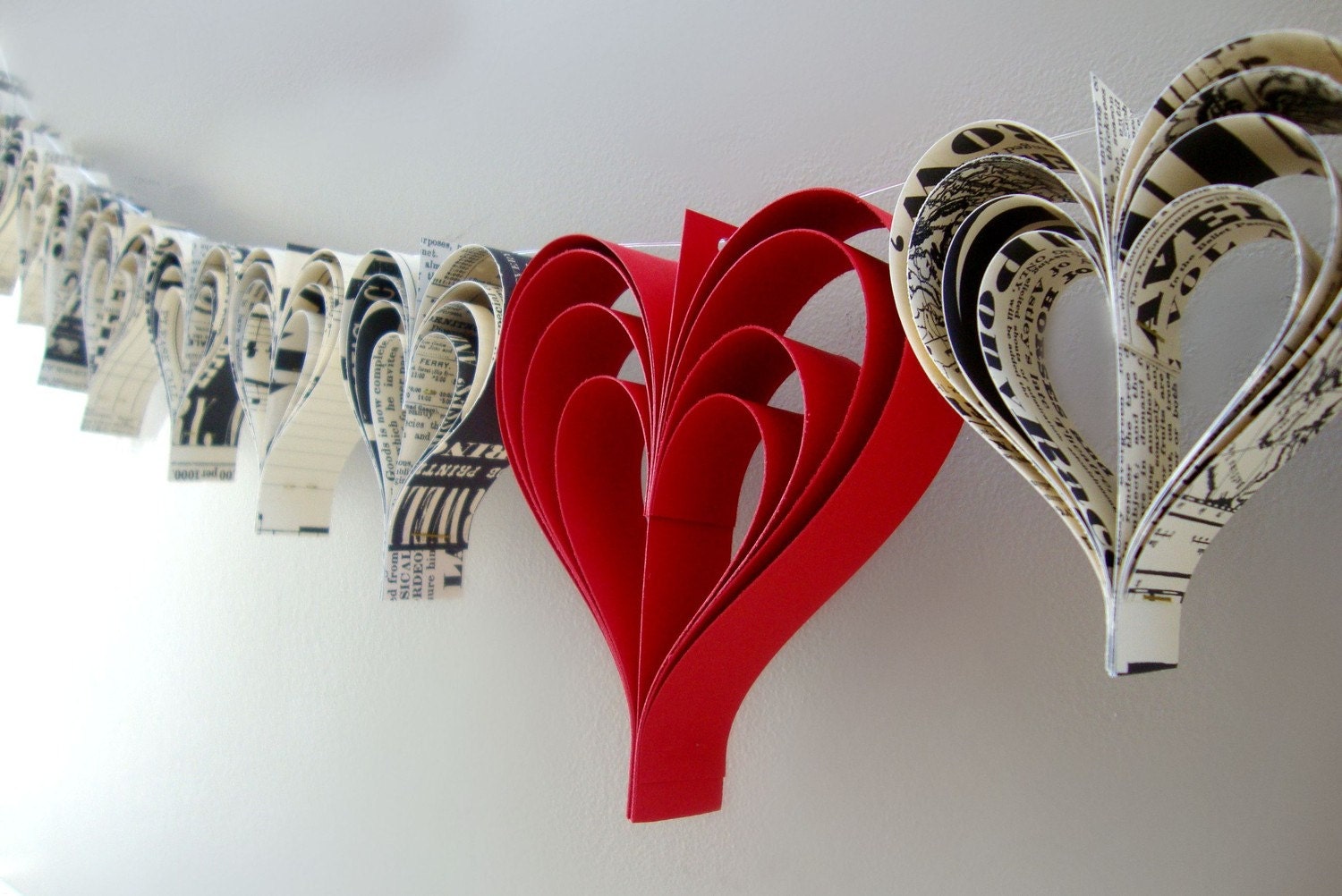
Image from Twig and Thistle

“let the wife see that she respects her husband.” Ephesians 5:33

What about giving our husband the gift of respect?  There are different ways in which we could communicate respect for our husband and in doing so we obey God who commands us to do so. Today, however, I want to focus on one specific area in which I have seen so many women lacking a respectful attitude towards their husband: the coffee table.

It seems the natural thing to do, girl friends around the coffee table chatting about the kids, shoes, laundry that needs to be fold, books, nails… and all the shortcomings of their husbands. All these ladies are friends from Church.  Why no one seems to bother?

Etsy Shop

Dear sisters, we must learn that we are called to be respectful with our husband. We must see that we honor him in his presence and in his absence; in front of our children, parents and friends as well as in our room when the door is closed. This is pleasing to God; this is what God wants us to do; we cannot walk from coffee table to coffee table sharing the weaknesses of our husband.

Isn’t this grace? Covering his shortcoming with love? Isn’t this the warmest hug we could give him? Isn’t this love making, too?

Don’t fall in the game, run away from those “friends” whose greatest joy seems to be exposing their husbands in public, even behind the “spiritual” scheme of a “petition of prayer”.

O that we may learn to love our husband passionately with our words, in private and in public;  that we may find it a joy to give him respect and honor every day.

May the words of our mouth be always pleasing to our Father in Heaven; may our words love passionately.

>Celebrating the Mystery of Marriage -Borrowed Words-

>February is here and also beautiful paper heart garlands and boxes of chocolates wrapped in red festive paper; why not then, take this time to consider what is the Christian marriage. I will be posting several entries on this topic through out  this month (I will  also have some guests posting here too!), and I would love for you to join me, to join the conversation as we consider the great and beautiful mystery of marriage.

All Thursdays of Borrowed Words, during February, we will consider what other saints have said about marriage.

Gary Thomas in his book, Sacred Marriage, says:

“Christianity involves believing certain things, to be sure, but its herald, its hallmark, its  glory is not merely ascribing to certain intellectual truths. The beauty of Christianity is in learning to love, and a few life situations tests so radically as does marriage.
Yes. it is difficult to love your spouse. But if you truly want to love God, look right now at the ring on your left hand, commit yourself to exploring anew what that ring represents, and love passionately, crazily, enduringly the fleshy person who put it there.
It just may be one of the most spiritual things you can do.”

What about writing a letter to your husband telling him what does that ring that he put in your finger means… Yes… “it may be one of the most spiritual things” you could do this day.

“Giving respect is an obligation, not a favor; it is an act of maturity, birthed in a profound understanding of God’s grace”

Why not start TODAY looking for evidences of grace in your husband’s life? Why not falling in love again? Why not start focusing again on what God has done in him? Why not today?

“Contempt is conceived with expectations. Respect is conceived with expressions of gratitude. we can choose which one we will obsess over -expectations, or thanksgivings. That choice will result in a birth- and  the child will be named either contempt, or respect”

If you keep a gratitude journal maybe this month would be a great thing to focus in giving thanks for all that God has done and is doing in your husband; for all that he is; for all that he does for you and your children; for all that he means to you. Let us be obsessed with giving thanks for him!

“Marriage can force us to become stronger people, because if we want to maintain a strong prayer life as married partners, we must learn how to forgive. We must become expert reconcilers. Friction will inevitably develop. Anger will surely heat up the occasion. So we must learn to deal with conflict as mature Christians -or risk blowing off our prayer life in the process (see Matthew 5: 23-24)

Before saying that your prayer life is “missing something”, ask yourself if you have resentment against your husband; maybe your prayer life is weak and limp because of the lack of forgiveness towards your husband.

“Ask yourself this question: Would I rather live a life of ease and comfort and remain immature in Christ or am I willing to be seasoned with suffering if by doing so I am conformed to the image of Christ?…
Don’t run from the struggles of marriage. Embrace them. Grow in them. Draw nearer to God because of them. Through them you will reflect  more of the spirit of Jesus Christ. and thank God that he has placed you in a situation where your spirit can be perfected”

What do you do when struggles come to your marriage? Run away in despair or run to God asking Him to change you, to make you more than Christ? Struggles in marriage as in any other area in the life of the Christian have the purpose to help us grow in our sanctification and mortify the sin still trying to rule in us. If we are aware of this we will definitely deal differently during the hard times.

Being the wife I know God wants me to be and working towards that goal, is also part of what it means to Live in the Sacred, naked before a Holy God,  don’t you think?

Under His sun and by His grace,

>Have You Included Latin in Your Homeschool Schedule?

>Classical languages matter and let me tell you that it is worth to invest time, effort and yes, some money into them.

We are part of a great community, Veritas Press Scholars Online, and we receive a monthly Epistula (letter) featuring a very interesting article every month.  Joanna Hensley, one of the favorite teachers at Veritas Press Scholars Academy and a precious friend of mine,  wrote a fabulous article on the importance of Classical Languages. I asked permission to post it here for you. Enjoy and think seriously about it….

My Daughter started last year with Song School Latin (she was 5 years old.)

Why Classical Languages Matter
A Latin teacher, like me, asked to write a newsletter article on “Why Classical Languages Matter” is tempted to peddle her wares like a fair barker with a megaphone: “Step right up! Get five languages for the price of one! Feel smarter in just fifteen minutes a day! Absolutely guaranteed to raise your SAT!” While all these promises regarding the study of Latin may be true, and while these may be the very reasons some students study Latin in the first place, there is something far more valuable and far less self-serving in the importance of studying classical languages. Classical languages are necessary for understanding ideas, and to illustrate the point, I will put down my megaphone and tell you the story of St. Isidore of Seville.
Born to a Christian family in Spain in A.D. 560, Isidore was a student at the Cathedral School of Seville, the first school of its kind to be structured around the trivium and quadrivium. In other words, he was one of the first boys in medieval Spain to receive a classical Christian education, not unlike the one offered by Veritas Press Scholars Academy. While the Spanish culture around him was disintegrating with the spread of anti-intellectualism and illiteracy thanks to the barbarian Goths who had taken over the government, the young Isidore was studying Latin, Greek, Hebrew, and the liberal arts, holding on to classical influences which were all too quickly disappearing in Europe.When Isidore grew up, he put his classical education to work in service to his culture. After his older brother Leander died, Isidore became an archbishop and boldly fought against Arianism, that heresy popular among the barbarian Goths which rejects the biblical understanding of the Trinity by saying that Jesus was just a man and not true God. It took courage to tell those powerful barbarians they were wrong. (Remember what had happened to poor Boethius? If you don’t, take Omnibus V.) Yet, Isidore stood fast to Scripture, and through him, God converted many.As an archbishop, Isidore presided over several church councils, including the educationally significant Fourth National Council of Toledo in 633. At that council, Isidore encouraged everyone there to open classical schools like the one he had attended as a boy, based on the trivium and quadrivium, in all the Cathedral cities. Again, this was a bold move, quite counter-cultural. Through this spread of classical Christian education, Isidore stalled the influences of barbarism and ignited an educational renaissance throughout Spain. Wondering what this has to do with classical languages? I’m getting to it.
In addition to fighting heresy and spreading education, Isidore wrote a gigantic encyclopedia-the first to be published during the Middle Ages-called the Origines (also known as the Etymologia and some of which students translate in my Latin II class). All 448 chapters of this 20-volume set were dedicated to understanding the origins of words. That Isidore could write such an encyclopedia is a tribute to his fine education. That he cared so much about etymologies illustrates his belief that knowledge comes to us through words, and the meanings of words come to us through study of classical languages. Isidore argued that the very existence of ideas depends upon understanding the origins of words, something you learn through the study of classical languages.
Why, then, do classical languages matter? Unless we know the origins of words, we cannot understand ideas. Since 90% of English words of two or more syllables come from Latin, English relies upon classical languages to express ideas. Take for example the phrase liberal arts. These are the arts which set a man free, not the arts which are particularly generous or best align with the Democrat Party. One understands the true meaning of liberal arts when he recognizes that the word is derived from liber, the same Latin word which gives English liberty and deliverance. This is just one example of thousands, but it shows how right Isidore was to think that understanding word origins is necessary for understanding ideas. This is why the study of classical languages is so important in becoming a well-educated person.
It makes sense to reasonable folk that words are connected to ideas. We express our ideas through words, and we read words in order to understand other people’s ideas. And yet, today’s postmodernism is challenging this basic connection between words and ideas. Our culture, like Isidore’s, is becoming more and more barbaric. Our church, like Isidore’s, is battling against heresy. Our postmodern world, like Isidore’s, needs to be reminded that words have true, objective meanings. What Isidore did to revive medieval Spain-namely, the spread of classical Christian education, the defeat of heresy, and a renewed appreciation for words-can revive our culture as well.
When words hold no significance, ideas simply do not flourish. I daresay this is why postmodern America is having trouble keeping up with the Great Conversation of western civilization. Knowledge does not advance when people argue what is is. Ideas do not flourish when words have meaning only for the individual. Debates do not resolve when no one even cares to define terms, and education is pointless when universal truth is replaced by relativism.
Let us instead commit ourselves and future generations to appreciating words. Let us love words so much that we study them all the way back to antiquity. Let us know exactly what is is, to the point that we can rattle off that irregular verb chart in languages millennia old. When someone tells us, “Sure, that’s what it means for you,” let us know with confidence that words do have objective meaning, going back to the days of Cicero and before. Let us read Cicero, while we are at it, and let our goal for studying classical languages be to enjoy the great books written in their original great languages. That goal is not far off. My Latin Readings students are doing that even now.
With classical languages under their belts, our children and their children actually can keep up with-even lead-the Great Conversation of western civilization. Knowing words is knowing ideas, and we need good ideas these days. So study Latin to improve your SAT score, master romance languages, and feel like an all-around smart person, but do your culture a favor and be like Isidore. Use your understanding of the origins of words to battle heresy in the church, spread classical education, and transform the culture through a renewed appreciation for words, and in this way give all glory, laud, and honor to the Word Made Flesh.
Joanna Hensley

Joanna teaches Latin and Omnibus at Veritas Press Scholars Academy, 
you can find the 2011- 2012 schedule here.

So yes, you have plenty of time to plan and include Latin in your homeschool schedule!

A repost from the archives of my old blog with few changes.

>What Gratitude Won’t Do In You.

>This week we reached counting 2000 gifts from God’s hand in our family gratitude journal. I have learned so many beautiful things on this journey, things I have been sharing with you every Monday. Today, however, I want to tell you few things I have learned that having a grateful heart won’t do in you or for you.

Some of my favorite things to buy are journals, so I have always loved to look through them in the shops and more than often I buy just one more. But I remember one day in one airport that I found lots of handmade gratitude journals, but no matter how pretty each one of them was I did not buy any. Why? because they were all related to the New Age movement, Yoga, Tao, and things similar to these. I realized that being grateful, that keeping a gratitude journal is not only something that we Christians do.

So, what is the difference? The difference is that we give thanks to GOD because we know that it is from His merciful hand that we receive every single thing we have and do not deserve.

But wait… there is still more. If we dig up a little bit deeper, we’ll see that many  Christians think that through gratitude you can find God. Haven’t you heard  something like this  before? “Count your blessings and you will see God clearly”, or “Having a grateful heart is what will draw you closer to God”  I don’t see in the Scriptures anything that supports this. I do believe, because it is written, that we need to come with a grateful and humble heart before God THROUGH the blood of Christ, through His saving grace. A grateful heart is what God expects from his children but it is not because we are grateful that we can come before God.

Gratitude is not The Way to the Father, only Jesus is!

So, my dear friend, if you keep a gratitude journal, don’t be surprised that the pagans also do that! It will be very profitable to search our hearts and in the light of the Scriptures consider why are we doing this, and let’s be sure that it won’t replace our communion with God through His Word.

Lord, today I am thankful for….

1100.  The beautiful discipline we have learned while keeping a family gratitude journal.

1101. For the wind blowing with might.

1102. For godly women around me.

1103. For the song of the birds.

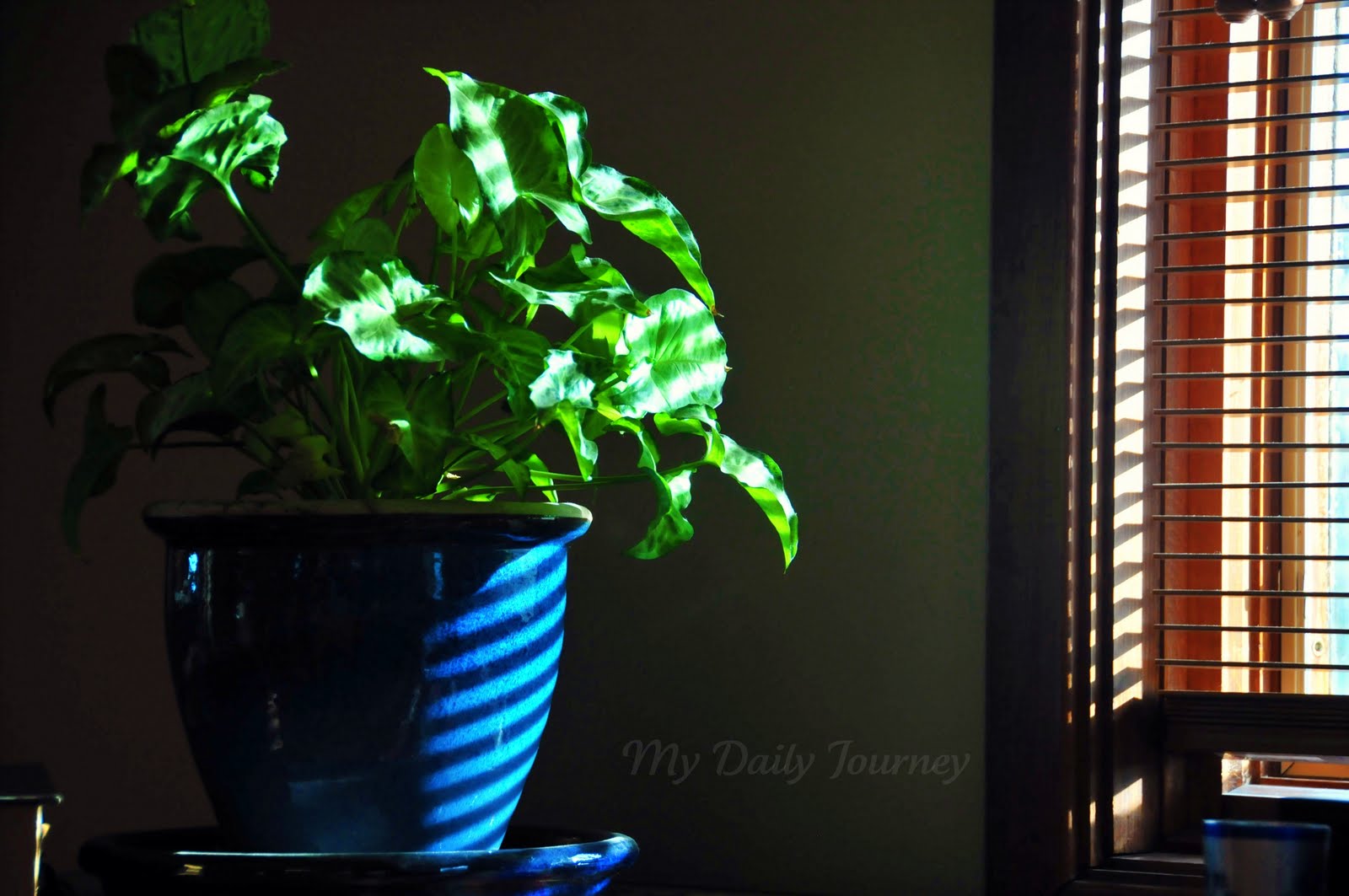
1104. Sunlight coming through my bedroom window.

1105. Grades, students, teachers and classes.

1106. Planning our summer.

1107. Not knowing (more than often) what is going to happen but resting in God’s Sovereign will.

1108. God’s promises upholding us.

1109. Knowing that our times are in His hands…. is there a better place for them to be?

1110. My little girl’s grateful heart.

1111. My son… always loving much.

1112. Crepes with our friends from church.

1113. My sister’s baby growing in her womb.

1114.  A simple knots that reminds me that the only one who can untie the knots of sin in my heart is God.

1115. Paper work … and all that it means.

1116. Family in Christ in another country.

1117. Thank you, Lord…. for your sanctifying grace today!

What makes you sing for joy today? What are the words of your Grateful song today?