Plucking Bird by Bird -Why I Don’t Recommend These Books: Part 3: On Writing and Living


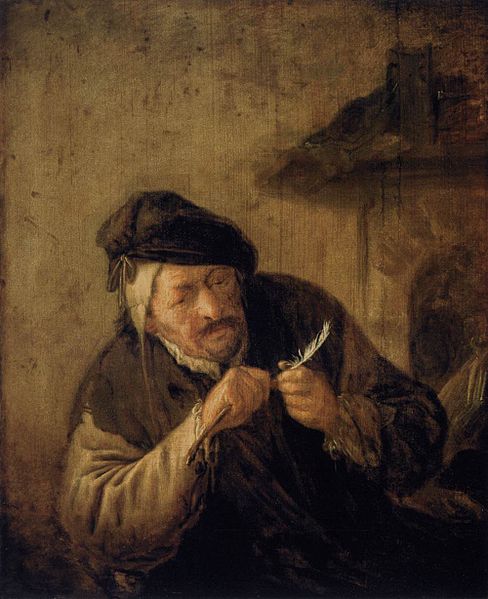
Adriaen van Ostade. Cutting the Feather

Early this summer I came across a quote by Anne Lamott that disturbed me greatly: “If you want to make God laugh tell her your problems.”  And one of the many reasons it really disturbed me was that it was quoted by a professing Reformed Evangelical Christian.* At that time, I had not read any of Lamott’s books or articles, so I  decided to do some research and one of the first things I found out is that Lamott, a very good writer indeed, was highly popular among many Evangelical Christians who admired her not only because of her writing advices, but also because of her theology and approach to life, which sadly to say, is very far from the Biblical Historical Christianity. Albert Mohler had also seen this problem before, and in 2006 he even wrote an article exposing Lamott’s support of euthanasia and abortion.

Normally I would just stop there and I would keep calm and carry on with my life enjoying a cup of freshed brewed coffee along with a good book. This time, however (for some personal reasons that I cannot share here), I decided to get a couple of her books and read them. Yes, I know my fellow brothers and sisters in Christ, at times it seems that if you have not read the entire book, or if you have not read more than one book of the same author, you have no right to write a serious review. And as you can imagine, I want to be taken seriously.


Bird by Bird: Some Instructions on Writing and Life, is the first book I read and is the book from where the quote that started all this happens to be (it appears more than once). It is a book with some excellent advices on writing, on how to develop your characters, on how to start a piece, and on how to keep a good plot among other things. But to read this book trying to find those great writing advices without getting pretty dirty in the filth is not an easy thing.  Keep in mind the title of the book: Bird by Bird: Some Instructions on Writing and Living. Did you get that? That is where the danger is. Lamott purposely writes to teach us about writing and living. She wants the reader to embrace her approach to life, her worldview. It is not as simple as some would say, “C’mon, just take the good writing advice she gives and spit the rest.” You cannot do that easily when the writing instructions are deeply interwoven with her worldview and theology; with her instructions on living this life.

So let’s take a closer look at her worldview, at her life instructions, at her faith.

Lamott professes to be a Christian and in her book, Traveling Mercies: Some Thoughts on Faith (the second book I read), she tells the story of how she came to live a spiritual life, to have a “deep sense of spirituality.” In this book she shares how the singing in a church attracted her to it, how she loved singing too, but did not want to hear about Jesus until one day she had an experience and became a “Christian” (a type of Christianity that is not defined by any kind of Biblical standards):

“After a while, as I lay there, I became aware of someone with me, hunkered down in the corner, and I just assumed it was my father, whose presence I had felt over the years when I was frightened and alone. The feeling was so strong that I actually turned on the light for a moment to make sure no one was there -of course, there wasn’t. But after a while, in the dark again, I knew beyond any doubt that it was Jesus. I felt him as surely as I feel my dog lying nearby as I write this…

This experience spooked me badly, but I thought it was just an apparition, born of fear and self-loathing and booze and loss f blood. But then everywhere I went, I had the feeling that a little cat was following me, wanting to reach down and pick it up, wanting me to open the door and let it in. But I knew what would happen: you let a cat in one time, give it a little milk, and then it stays forever.”

“I began to cry and left over before he benediction, and I raced home and felt the little cat running along at my heels… and then I hung my head and said, “F*** it: I quit.” I took a long deep breath and said out loud, “All right. You can come in.

So this was my beautiful moment of conversion.”

As the author continues to grow in her spiritual life, and after her friend Pammy dies she describes how she feels:

“I was terrible erratic: feeling so serene some moments that I was sure I was going to end up dating Dalai Lama…” Traveling Mercies

Lamott never speaks of sin, of repentance, of the gospel. Not even a hint.  The Word of God is clearly nowhere there. It is all about having an experience, about being better people.

“Most of the people I know who have what I want—which is to say, purpose, heart, balance, gratitude, joy—are people with a deep sense of spirituality. They are people in community, who pray, or practice their faith; they are Buddhists, Jews, Christians—people banding together to work on themselves and for human rights. They follow a brighter light than the glimmer of their own candle; they are part of something beautiful.Traveling Mercies

“[B]oth feminism and Christianity have taught me that I am my spirit, my heart, all that I have survived over the years and all that I have given..” Traveling Mercies

One of Lamott’s main advisors and from whom she gets her most of her theology (she mentions him several times in both books) is Tom, a friend whom she describes as a “slightly overweight alcoholic,” who also happens to be a “gay Jesuit priest.” In Traveling Mercies, she describes him as “an extremely funny Jesuit and sober alcoholic, who drank like a rat for years and smoked a little non-habit-forming marijuana on a daily basis. He also did amyl nitrate, although he adds that this was just to get to know people.” Yes, and I am sure some would say, “But, Becky haven’t you forgotten that Jesus was friend with the sinners? He sat and ate with them? What is the problem with you here?” Yes, yes. But there is a big difference here, Jesus did not learn from the sinners he sat with, they learned from Him. He was not influenced by them, He influenced them. He did not get his theology from them. Jesus did not open a support group for gays and prostitutes who were feeling rejected by the rest (I am getting a little bit off track here, I know. Sorry, but I just couldn’t help it…).

In these two books, and in a consistent way, Anne Lamott shows many times through her words that she is a woman with no fear of God. She makes fun of Jesus and takes the name of God in vain. A few examples:

“I worry that Jesus drinks himself asleep when he hears me talk like this…” Bird by Bird

“If we can believe in the Gnostic gospel of Thomas, old Uncle Jesus said…” Bird by Bird

“If you want to know how God feels about money, look at whom she gives it to.” Bird by Bird

Her god, even though she capitalizes his name, is not the God of the Bible. It is a god of her own making.

Now, let’s move on. What is it that she teaches about motherhood? Read and consider a passage in which she speaks of her relationship with her son, a toddler at that time:

“And the next day Sam was treating me like I was the bunny at his own private Playboy Club and he had run out of drinks half an hour before.” Bird by Bird

“Having a baby is like suddenly getting the world’s worst roommate, like having Janis Joplin with a bad hangover and PMS come to stay with you.”  Bird by Bird

“I would have felt so relieved if there had been a book written by another mother who admitted that she sometimes wanted to grab her infant by the ankles and swing him over the head like a bolo. So I went ahead and started writing one myself, as a present, as a kind of road map for other mothers.” Bird by Bird

Really? Can we really spit all these and keep on reading and learning from her?

Now, what do we do when you want to use a real life person as one of the characters in your story without defamation? Here is her advice:

“I tell my students that they should always write of vengeance, as long as they do it nicely.” Bird by Bird

“If you disguise this person carefully so that he cannot be recognized by the physical or professional facts of his life, you can use him in your work. And the best advice I can give you is to give him a teenie little penis so he will be less likely to come forth.” Bird by Bird

There are through out these books many, many, many more examples of the profanity and crudity of the language Lamott uses, of the way she lives a life far from what the Scriptures teach. How can we learn from her to live a godly life? If she follows a god of her own making, how can we quote her in theological issues?  I still don’t get it, and it burdens me to see that some brothers and sisters do.

I pray God will help us grow in discernment. We need it so desperately.
Becky

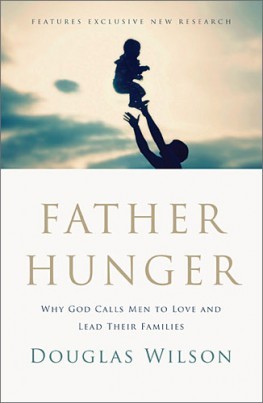
*I am assuming that I won’t have to explain to my readers the reason why theologically, Bible in hand,  this statement is a lie that goes against the way God has decided to call and manifest himself to us. If you still want to read more about this, I strongly recommend Douglas Wilson’s book, Father Hunger. In the first chapters he deals in a brilliant way with the theology of God as a Father.
Why I Recommend These Books -Part 2: Living the Gospel-

¡Hola! Greetings from South Carolina! One of my daughters and I are visiting our dear friends in Greenville -a gorgeous city, by the way-, and let me tell you that waking up to a hot cup of French pressed coffee and many good conversations in the porch with my good friend have been the reason why this blog has been put on hold these past days.

So today, while my friend is in the gym and I am still in my pj’s -and not feeling guilty at all-,  I am taking the time to put together my second post on the book recommendations I promised to share with you this summer (the first part -on fiction books- can be found here).

The two books I would like to recommend to you today are books that help us live the gospel in our day to day life. It is my hope that you find these short reviews helpful.


 Ligonier Ministries

First, the kind of devotionals that I would strongly recommend to you above any other are expository commentaries -those that walk you verse by verse through a bible book-. I have found that reading a book of the Bible slowly,  praying over it, studying it verse by verse is a wonderful and extremely helpful way to grow in the Word of God.

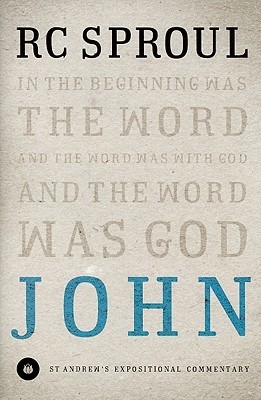
R.C. Sproul wrote a series of expositional commentaries that have been very helpful to me. This summer I am delighting in the gospel of John and Sproul’s commentary has been, once again, a huge blessing to me.

We cannot live the gospel if we don’t know and understand the gospel. That is why it is very important that you may seriously consider putting aside some of the “soul-touching”, tea-friendly books,  and start diving deeper into the Word of God. Commentaries like this one will certainly help you as you do so, and the benefits will be beyond what you expect.


Second, Douglas Wilson’s newest book, Father Hunger, has been a great and very important read for me this summer. Wilson is a wonderful author and teacher that word by word, sentence by sentence makes his points clear, always in a straight and firm way, but never lacking to point to the grace of the gospel.

Why is it important, very important, that all my female friends read this book about fatherhood? Well, I have sadly learned in the past few months that feminism and egalitarianism are finding their way into the church in a very subtle, seductive and effective way, capturing the hearts and minds of many of our brothers and sisters. In his new book, Douglas Wilson explains in a clear and detailed way the theology of fatherhood, and in doing so, he explains why egalitarianism and feminism -and the lack of masculinity thereof- are not conformed to the biblical frame that God has established.

Please, get this book and read it. Pass it along. Have your sons and daughters read it. We need men willing to do everything the Lord has appointed them to do in order to satisfy the father hunger in which we live today.

Desiring God posted 20 quotes from this book that will certainly give you a very good overview of it (you can read them here). You can also go to Canon Wired and listen to some of the lectures Douglas Wilson has given on this topic.

My friend is back from the gym, and we already drank two cups of coffee. Now I can almost hear the peppered bacon calling my name.

Blessings to you all as you enjoy your summer!

Becky

Why I Recommend These Books -Part 1: Fiction-

Hey there! Yes, I am still here. Happy. Busy, but the kind of busy that says, “I am having lots of fun.” I have been enjoying having a full house, many plates on the table, around 25 eggs in the pan for breakfast, and lots of ice cream and Manchego cheese with crackers in the mid afternoon.  All of these around pretty good, thoughtful and also hilarious conversations, long rides in the traffic of this big city, watching a movie in my room or playing “mafia” after dinner.

Hospitality, my husband and I agree, is a gift, a wonderful gift for those who open their home to others. I am grateful to our God for the many opportunities He has given us to be blessed by those who have stayed with us, who have shared our table, who have blessed us and enriched our lives in so many ways.

I have also found free time to read some good books, and that, of course, makes me very happy (especially because I have my oldest son around. He is one of my favorite people to talk with. I truly enjoy our meaningful conversations).

So today I am sharing a few of the fiction books I have been reading with a note on why I consider important reading them (you can see the complete list of books I have read in Goodreads too). In the next days, God willing, I will share some books I have also enjoyed on art and culture, writing, and those that help us and challenge us to grow in the faith.

Once upon a time I did not really like -or care- to read fiction. I was starving for spiritual food, and I thought reading fiction would be a waste of time. I could be reading something else, one more theological “meaty” piece. But as I grew stronger, I found friends and authors I highly respect, and even my own children -and their friends-, encouraging me to pick up some good fiction books. So I did. This year I have read more fiction than ever, and I am richer. It has not been a waste of time at all, as I used to think. I have learned more and grown more. I have understood how God, the Greatest Story-teller, builds our stories, some more complex than others, but all His and I am amazed.

Two great fiction works that I have loved are these:

The Book Thief by Markus Zuzak. This is a great story, with great sentences, wonderful plot, and amazing characters that you grow to love page after page to the point that you cannot but cry with them. The author achieves what I believe is key to good story-telling: He brings you into the world he has created in such a way that you never feel like an outsider. You are in the scenes. You smell the stench, and feel the skin, you can taste the pea soup, the white painting, and the books in the library.

Great book. Highly recommended.

A Note: Do not get the Kindle edition, get the “real thing.” You would like to feel the book in your hands as you read it and trace its pages with your fingertips. I am serious.

Why is it important to read The Book Thief? Because you will feel deep inside you -not only know in your head- the importance of books, stories, lives that come together in a minute and then fall to their knees and cry together when everything else has been torn apart.


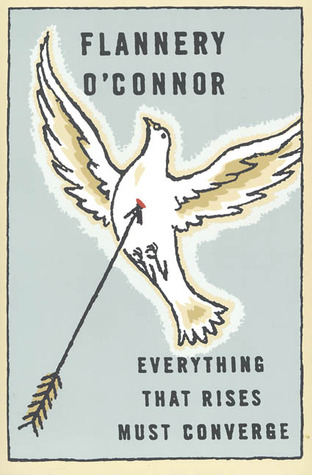
Everything That Rises Must Converge by Flannery O’Connor. This is the first time I have read O’Connor’s short stories. I have been wanting to read her work for a long time now because her name kept popping out in almost every good book on arts and culture, and on writing that I have been reading lately (I’ll share about some of these books in the near, near future). So I was very happy when my daughter’s friend gave her a copy as a gift earlier this summer. As you can imagine, I soon took it and carried it with me to the beach, to the porch, to the living room, and  to my bed late at night -no, never to the bathroom.-

As some one has said, O’Connor’s stories are “beautiful and grotesque.” They plunged me into a reality that at times I wish did not exist. Her characters are real in the sense that you believe them; and each one of them tells us about the sinful, desperate, hopeless, and grievous state of men and women without Christ. Without the Gospel.

I am so looking forward to read Mystery and Manners: Occasional Prose, which is a collection of some of O’Connor’s essays and lectures which were edited and published after her death by her friends Sally and Robert Fitzgerald. Of course I will be reading more of her short stories as well.

Why is it important to read O’Connor? If you are like me, you live -like to admit or not- in a bubble. Surrounded by Christian friends, a lovely church community, and a family that loves you.  I need to read this so I won’t forget what happens in the heart of men and women alike outside my bubble. What might be happening in the next door. And why not, what might be happening inside my heart even now that I was not aware of. The grotesque is there, in me and around me, and only Jesus can bring hope and redemption to the desolate soul.

Now its time to take the buttermilk blueberry breakfast cake out of the oven and take a shower.

I pray today that God will give us eyes to see beyond our circumstances and that He will help us understand how our lives are not isolated. We all are part of a great story, and He is the Author of it. He knows the ending and it will sure be good for those who are His, for those who love Him.

“Trust God, and obey, and leave the consequences to Him. He knows our limitations.” Douglas Wilson, Father Hunger

Have a most blessed day,


Becky

From My Reading Corner: Saving Leonardo

One of the several reasons this blog has not being updated on a daily basis, is that I had so many good books to read, books that were not only in a wish list, but were already sitting on my shelves waiting to be read. Every time I passed by I could feel them staring at me with that reproach look that only a mad book knows how to give. I could not stand the thought,  “What if all those letters decide to come out from the pages and hunt me one night…” Too risky. So I decided to follow one of Wilson’s advice and try start reading about two books a week. So far, so good. And I am very happy. No more books staring at me anymore. I now walk pass by the shelves, and give those books that look and can almost see them smiling at me.

 ************************


Monergism Books

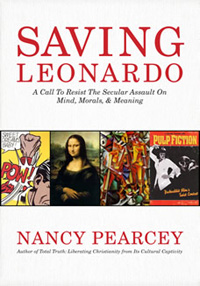
This weekend I finished reading an amazing book, Saving Leonardo: A Call to Resist the Secular Assault on Mind, Morals, & Meanings by Nancy Pearcey. This is a book that if it were a concert, I would have raised to my feet at the end of it to give an ovation to the author. I totally recommend it for every Christian who loves arts but also for those who doesn’t understand the arts. It is a book for thinkers who love the Word of God and live, like the rest of us, in a fallen world where world-views must be discerned. Yes, in short, this is a book for all Christians.

Today I just want to share one quote that I absolutely loved:

“For God’s truth is indeed beautiful -a drama so exciting and intense that we can hardly bear to consider it directly, just as we cannot look at the sun directly. Dorothy Sayers once said, ‘The dogma is the drama.’ That is, biblical doctrine is itself the gripping plot line of universal history. ‘We are constantly assured that the churches are empty because preachers insist too much upon doctrine -‘dull dogma,’ as people call it. The fact is precise the opposite. It is the neglect of dogma that makes for dullness. The Christian faith is the most exciting drama that ever staggered the imagination of man.’ No other religion teaches that the highest divinity, the one who created the universe, entered the human condition, shared its sufferings, and was condemned by his own creatures. ‘The man should play the tyrant over man is the usual dreary record of human futility; but  that man should play the tyrant over God… is an astonishing drama indeed.’ Sayers writes. ‘Any journalist, hearing of it for the first time, would recognize it as news; those who did hear it for the first time actually called it news, and good news at that.’

Even more astonishingly, we ourselves have the opportunity to participate in that drama through our own lives. The Bible’s doctrines are inseparably rooted in the history of ordinary human beings… The implication is that every one of us, though we too are ordinary people, can lead lives imbued with the same world-revolutionary significance as we participate in the unfolding of God’s redemptive plan.

The Church’s artists and writers are those specifically gifted to convey the drama and excitement of the gospel. They should not be tamed or exploited, but nurtured and supported in their vital mission. Through their ministry, they help everyone recognize the beauty and cosmic purpose of their own lives.”

Isn’t this exciting to read?

Isn’t it exciting to know that we are part of God’s story?

Becky

A Wrinkle in Time – A Few Thoughts-

My 8 yo daughter and I finished yesterday, A Wrinkle in Time, the first book in a series by Madeleine L’Engle. As I mentioned in Goodreads, Sci-Fi is definitely not my favorite genre -and this story has its good share of it- because I find it hard to get immersed in the story, to get lost with the characters, to believe I am in it. However, this was the first time my daughter read this genre and was immediately caught up by the story. As I read aloud to her I could see her full of excitement as if she were traveling through time, from planet to planet along with the characters. She was not looking from afar but felt as if she were part of the story. At the end I can say that we had a great time reading it, and we were able to find many important places to just stop and talk about the truths this story contains, the lessons we must learn and the pitfalls we must try to avoid in life.

Madeleine L’Engle said once, “You have to write the book that wants to be written, and if the book will be too difficult for grown-ups, then you write it for children.” I guess she is right. I wish I were more childlike at times.

If you are not familiar with the story, here is an excerpt from the book description:

“Everyone in town thinks Meg is volatile and dull-witted and that her younger brother Charles Wallace is dumb. People are also saying that their father has run off and left their brilliant scientist mother. Spurred on by these rumors, Meg and Charles Wallace, along with their new friend Calvin, embark on a perilous quest through space to find their father. In doing so they must travel behind the shadow of an evil power that is darkening the cosmos, one planet at a time…  A classic since 1962, Madeleine L’Engle’s A Wrinkle in Time is sophisticated in concept yet warm in tone, with mystery and love coursing through its pages. Meg’s shattering yet ultimately freeing discovery that her father is not omnipotent provides a satisfying coming-of-age element. Readers will feel a sense of power as they travel with these three children, challenging concepts of time, space, and the power of good over evil. (Ages 9 to 12)”

Now if you have read the story you can keep on reading (there are some spoilers ahead).

As I was reading I found a resemblance between the planet Camazotz, (a planet in which you may recall all was peace, equality and order, but in which individuality was lost and everyone’s will was subject to IT,  a greater power that controlled all the inhabitants of the planet), and the world in which we live today. Many today have stopped thinking and have bowed down to the god of Tolerance in order to achieve some kind of peace, equality and order.  IT had control over people in Camazotz,  just as Tolerance has taken control over the thinking faculties of people in our day. “Tolerance” has become, in a sense, the IT in our planet. Tolerance is the god many are serving blindly.

The saddest thing is that this god Tolerance has found a niche in the heart of many Christians. They cannot see, they are frozen, they think just as Charles Wallace reasoned, that they can come inside IT and be part of it and not be absorbed into it. We cannot compromise; if we tolerate sin we will soon be absorbed by it. We have not been called to seek “peace, equality and order,” but to seek the Kingdom of God and His Righteousness. We, as children of God, have been called to hold fast to the Word of God, to fight the good fight. We must resist. Mr. Murry and Meg won over IT because they fought it thinking differently. As Christians, we know we don’t win the spiritual battles with our minds, but in a sense we do. What we think is what we believe. And we know that what we believe is what we act. Just look at how many times Paul in his epistles calls us to have the mind of Christ, to think, to reason. He urges us not be conformed in our minds to this world, but to be transformed in our thinking. Christians must start thinking accordingly to the Word of God at all times, in all circumstances. If we don’t, we will soon be absorbed into the world. There must be a clear, distinctive difference in how we see things and how the world sees them. We have the Bible as our standard, they don’t.

At the end, in L’Engle’s story, love wins. But it doesn’t win the heart and mind of all that have been enslaved in Camazotz. I liked that. Love wins the heart of the one special person that, from the beginning we knew had to be rescued. Love always finds its way through the deepest darkness into the hardened hearts of men.

Now I must to go, my little one wants to start reading the second book in the series, A Wind in the Door, so here we go.

Happy reading, my friends!

Becky


Vanilla, The Totonac Lands and The Rest of the World

Source

I think I have not shared with you how much I enjoy reading books about food; so now that you know let me tell you that I am in the middle of a book -with a very beautiful cover- called Vanilla, Travels in the Search of The Ice Cream Orchid. Some facts are interesting enough to share with you, so here they go, enjoy reading them and then go get some vanilla ice cream!

“The vanilla orchid is not a showy flower; it has only a slight scent, with no element of vanilla flavour or aroma… The growing process lasts up to nine months, but only when the pods turn brown after being dried and cured do they develop the distinctive aroma we call vanilla.”


“The Aztecs, like the Maya before them, knew that the black pods could be dried and ground up as flavouring for xocoatl, the bitter liquid made from cacao, which we know today as chocolate. It was a drink reserved for the aristocracy, or for soldiers about to go into battle.”


“The vanilla story begins in the salt-thick air of Veracruz. Here, the first vanilla plants were cultivated and tended by the people who called themselves Totonac. These people found the wild orchids and called them xa’nat. The Totonac say that the flowers and their scented seed pods sprang from blood. Not just ordinary blood, but the blood of a princess who was so beautiful and so pure in spirit that her father decided she would never be possesed by any mortal man… According to the legend… Princess Tzacopontziza and her lover committed a mortal sin, and the priests decapitated them both… after some days a bush sprang from the ground where their blood had spilled. Very soon an orchid was seen growing among its branches. The plant grew… When the beans matured they darkened, eventually emitting an exquisite perfume more beautiful than anything the subjects of  King Teniztli had ever known before. People believed that the scent was the pure sweet soul of the dead Princess and the orchid that grew in the mountains was declared sacred.”


“More than half of all the world’s vanilla beans end up in the United States.”

What about those little specks you get in vanilla ice cream?

“That’s just cosmetic… It’s just a marketing thing; sometimes they don’t use the seeds just tiny specks of exhausted beans.”

“There are more than a hundred different species of vanilla orchid, and they grow all over the tropics with the exception of Australia… but only a few species bear the large aromatic pods which can be used commercially.”


“At the end of her life. Queen Elizabeth I developed a taste for puddings containing vanilla.”


“Vanilla planters cannot rely on natural pollinators to fertilize their orchids. They must do the job themselves.”


“If legend is to be believed, Cortés became the first European to taste vanilla, an ingredient in xocoatl, which Moctezuma presented to him in a gilded goblet carved from tortoiseshell.”

Well, I am off to read some more and find some vanilla ice cream as a mid-day snack.

Hope you are having a wonderful day!

Becky