On Books and Reading, -Suffering and Affliction-

Marsha left a comment on Monday’s post saying,

“Can you recommend some Bible passage and/or books that would give me a foundation on glorifying Him in the midst of suffering? I am having a difficult time with the question who is the author of suffering, etc.

Thank you for your blog which makes me want to dig deeper.”

Marsha is not the only one struggling with these questions; when afflictions come to our lives, if we are not well grounded in the Word of God, our faith trembles and many times it falls, like a fine piece of China, into thousand pieces to the ground.

I was never taught about afflictions in the Church I grew up. For 20 years I only heard from the pulpit about the joyous, peaceful, and victorious life that we should be enjoying as children of the King. I heard all these years how we should confess to receive, and bind and loose; and claim promises and fight for them. How far I was from the teachings of the Word of God! But God had mercy on me and my family; and he opened our eyes to see and our ears to hear, and 9 years ago we started to really learn what the Bible teaches in many areas including suffering and affliction.

Our Father knew what was ahead of us. Last July we experienced the hardest trial ever, the loss of my sister’s precious baby girl, an infant. The suffering and affliction has been hard to bear, but many years before this event, God starting preparing our hearts to endure the fire that tests our hearts, as we learned to abide daily in His Word, as we grew in prayer, and as we studied about the purpose of why affliction and suffering come to the lives of the Children of God.

So Marsha, you are not alone; and even though I don’t you, nor your trials or afflictions, I pray God will give you a humble heart to receive from Him, not only the sweet providences, but also the bitter ones, knowing that even those proceed from a loving God.

Here are some good books and articles that have been helpful to me and my family; hope you find this list helpful.

Books:

How Long, O Lord?: Reflections on Suffering and Evil by D.A. Carson

Surprised by Suffering: The Role of Pain and Death in the Christian Life by R.C. Sproul

Suffering and the Sovereignty of God by John Piper and some friends

Facing Grief by John Flavel (1627-91)

A Place for Weakness by Michael Horton

Help Heavenward by Octavius Winslow

Grieving, Hope and Solace: When a Loved One Dies in Christ by Albert N. Martin

Does Grace Grows Best in Winter by Dr. Ligon Duncan

A Word in Season to Suffering Saints by Thomas Brooks (1675) (ebook)

Voices from the Past: Puritan Devotional Readings

ARTICLES:

Understanding Suffering

Hope in Suffering

Why do we Suffer?

The Faithful Endurance of Suffering

A Refuge for the Weary Soul

Suffering Saints by Arthur Pink

Blessed Suffering by Bonar

In Affliction Look to Jesus by Winslow

Trisha wrote this, words that pierce and bring grace.

Rebecca Writes wrote this post today with some important links that deal with our suffering.

In this Blog:

Seeing God’s Hand in Our Affliction

Preparing Our Hearts for Affliction

Peace Under His Sun

Doctrines in Action -Beyond the Kitchen-

Learning to Count Trials a Joy

Trial a Help Heavenward (on Chapter 5 of Winslow’s Book)


“We also rejoice in our afflictions, because
we know that affliction produces endurance,
endurance produces proven character, and
proven character produces hope.”
Rom. 5:3-4


“But He said to me, ‘My grace is sufficient for you, for My power is made perfect in weakness.’ Therefore I will glory all the more gladly about my weaknesses, so that Christ’s power may rest on me. That is why, for Christ’s sake, I delight in weaknesses, in insults, in hardships, in persecutions, in difficulties. For when I am weak–then I am strong.” 2 Corinthians 12:9-10

May the Lord of all comforts be your Hidding Place today,

Becky

Good Books for Girls and Boys (8-11) -And a Giveaway-

Earlier this week I posted J.R. Miller’s exhortation about how we must be careful on which books we choose to read; and I am pretty sure that this is something we need to teach to our children pretty soon in life. We want them to be readers but wise readers. Readers that grow not only as independent readers but readers that love to read good books, books that challenge them to grow in virtue and character, and having this in mind let us look at these books.

My friend Hollie asked me which books I would recommend for her 9yo girl; so I thought I would share my answer with you all including books for both, boys and girls. But to make this list even richer, I asked some of my friends (most of them Classical educators) to list some their favorite ones, and they did add some good books to the list. Look at it, see what you think and why not, suggest few more in the comments.

The Long List:

Black Ships Before Troy (The Story of the Iliad) is a book that I really enjoyed reading with my girl. We found many good opportunities to talk about love, marriage, and faithfulness in the light of God’s Word. (VP Comprehension Guide)

and also the Iliad retold for children by the same author, In Search of a Homeland.

If you would like to read and enjoy a good book of Shakespeare stories for children, I would really recommend you the series by Leon Garfield (book I and book II). I love the style, and the illustrations. Just wonderful!

Charlotte’s Web (Isabel’s suggestion)

Chronicles of Narnia

The Hobbit (Literature Guide here) Santiago and Isabel read this book together, and it was so much fun to see them enjoying themselves.

From Dark to Dawn. A Tale of Martin Luther and the Reformation

Trial and Triumph: Stories from Church History


These Books from Ligonier

This book is in our wish list; maybe to celebrate Reformation day…

Ligonier Shop

Or this one as a fun introduction to Church History:

See more here

This is a favorite one here:

Ligonier Shop

How important it is to introduce our children to the great biographies of men in the Church History, and Simonetta Carr has done an excellent job writing an amazing series for our children.

Monergism carries all her books.

Another favorite, a rare jewel is Divine and Moral Songs for Children by Isaac Watts, an excellent book for memorization projects, or just to read aloud and reflect on the words. (I wrote more about it here and here)

Elizabeth @ Finding the Motherlode recommends these:

The Redwall Series by Brian Jacques,
The Phantom Tollbooth by Norton Juster,
The Trumpeter Swan by E.B. White,
Benjamin West and His Cat Grimalkin by Marguerite Henry

Elizabeth H. says “I love the historical fiction titles that Christian Focus Publications puts out.”

Brenda likes the American Girl series, and I have to say that Annie enjoyed reading those on her leisure time when she was little.

Amy recommends: The Wingfeather Saga by Andrew Peterson, and anything on Ambleside Online’s reading list!

Katy says, “In addition to the classics like RL Stevenson, Lewis, and Tolkien, we have enjoyed Donita K Paul, most everything by Edith Nesbit, and even the new Theodore Boone by Grisham.”

Norma likes:

Grandpa’s Box,(by Starr Meade, and I would like to mention here that she is one of my favorite contemporary authors for children, who writes from a solid Reformed Theology background. See more books of her here)
The Building on the Rock series (5 books)
The Squire and the Scroll
And some classics like, Where the Red Fern Grows.

Sue, whose children are now in a Liberal Arts college, says,  “My kids liked the Redwall series…over and over again.”

And Amy Lee said she liked, when she was that age, Grandma’s Attic books by Arleta Richardson and Childhood of Famous Americans books (available used or at many public libraries).

Lastly, I must say that I am decided to read more fiction books to my little one, like the ones N.D. Wilson has written. My oldest have read them and love them, so I am thinking that even though fantasy is not my favorite genre, I really want to feed Isabel’s soul with stories. (plus, I enjoyed reading Wilson’s book Notes from the Tilt-A-Whirl, his style is one that captures your attention fully.)

Looking through all these wonderful books, and because in October we celebrate The Reformation and my little girl’s birthday,  I thought I would host a giveaway. This time however, is for your little ones, which means the “rules” will be different.

Your child (8- 11 yo) must choose which book he or she would like to win (yes, call him and show him the options; or call your grandchildren on the phone -or Skype- and ask them which one will they want to read); then leave a comment with your child’s favorite option. If you have more than one child entering the drawing, please leave a separate comment for each one of them.

The options are:

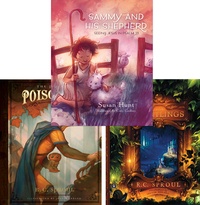
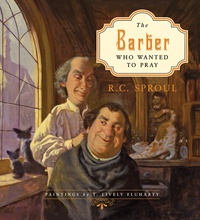
1. The Barber Who Wanted to Pray by R.C. Sproul

2. Boys and Girls Playing by J.C. Ryle

or

3.  Trial and Triumph by Richard M. Hannula

4. The Prince’s Poison Cup by R.C. Sproul

The winner will be announced next Friday, October 21.

Please, feel free to share the goodness with your friends!

May your weekend be full of good books and family time,

Becky

On Books and Reading, an Advice from J.R. Miller

screen shot 2019-01-23 at 8.18.02 am
J.R. Miller wrote an excellent advice regarding the books we read, and it deserves to be read today and a week from today and then a month, and then a year from today. There is so much to read nowadays not only books, articles, newspapers, magazines, but also blogs, Facebook quotes, tweets; but we rarely stop to consider how many of those words are really helping us grow in the Lord and be better wives, moms and sisters in Christ. Today I am sharing an excerpt of this article* by J. R. Miller (1880 a.D).

“It is said, that it would require hundreds of years to read the titles alone, of all the books in the world’s libraries. Even of those that issue each year from the press newly written, one person can read but a very meager percentage. It is therefore a physical impossibility to read all the books which the art of printing has put within our reach. Even if our whole time were to be devoted to reading, we could in our brief years peruse but a very small portion of them. Then it must be considered that in these busy days, when active duties press so imperiously, the most of us can devote but a few hours each day at the best to reading, and very many find, not hours—but minutes only, for this purpose. There are hosts of busy people who cannot read more than a handful of books in a year.

It is settled, therefore, for us all, that we must be content to leave the great mass of printed books unread. Even those who are favored with most leisure cannot read one in a thousand, or ten thousand—of the books that offer themselves. And those whose hands are full of activities can scarcely touch the great mountain of printed matter that looms up invitingly before them.

The important question, then, is: On what principle should we select out of this great wilderness of literature the books we shall read? If I can read but a dozen volumes this year, how am I to determine what volumes of the thousands they shall be?

For all books are not alike good. There are books that are not worth reading at all. Then, of those that are good, the value is relative. The simplest wisdom teaches that we should choose those which will repay us most richly. Let us look at some principles relating to this subject which are worthy of consideration.

[W]hen we consider the subject from a Christian view-point, it becomes even more important. Our work here is spiritual culture. We are to keep most sedulous watch over our hearts, that nothing shall tarnish their purity. We are to admit into our minds, nothing that may dim our spiritual vision or break in any degree the continuity of our communion with God; and it is well known that any corrupt thing, admitted even for a moment into our thoughts, not only stains our mind—but leaves a memory that may draw a trail of stain after it forever.

There are many books that are free from immoral taint, that we must exclude also—unless we want to throw away our time, and waste our opportunities for improvement. They are unobjectionable on moral grounds—but are vapid, frivolous, empty. There are many popular novels that have even a sort of religious odor, which yet teach nothing, give no heavenly impulse, furnish no food for thought, add no additional fact to our store of godly knowledge, leave no touch of beauty. There is nothing of value in them!

There is a great demand in these days, for this easy kind of reading. It agrees well with the indolent disposition of many, who want nothing that requires close application or vigorous thinking, or patient, earnest mental toil. It is not directly harmful. It could not be indicted for bad moral quality or influence. It leaves no debris of vile rubbish behind. It may be orthodox, full of sentimental talk about religion and of pious moralizing on sundry duties. It starts no impure suggestion. It teaches no false doctrine or wrong principle. It debauches no conscience. It flows over our souls like soft sentimental music.

And yet it is decidedly evil in its effects upon mind and heart—for it imparts no vigor; it vitiates the appetite; it enervates the mind and destroys all taste for anything solid and substantial in literature. It so enfeebles the powers of attention, thought, memory and all the intellectual machinery, that there is no ability left to grapple with really important subjects. Next to the great evil produced by impure and tainted literature, comes the debilitating influence of the enormous flood of inane, worthless publications filling the country.

If we can read in our brief, busy years—but a very limited number of books of any kind—should not those few be the very best, richest, most substantial and useful that we can find in the whole range of literature?

If one hundred books lie before me, and I have time to read but one of them; if I am wise, I will select that one which will bring to me the largest amount of useful information, which will start in my mind the grandest thoughts, the noblest impulses, the holiest conceptions, the purest emotions, or which sets before me the truest ideals of Christian virtue and godly character!

But how do most people read? On what principle do they decide what to read—or what not to read? Is there one in a hundred who ever gives a serious thought to the question, or makes any intelligent choice whatever? With many it is “the last novel,” utterly regardless of what it is. With others, it is anything that is talked about or extensively advertised. We live in a time when the trivial is glorified and magnified, and held up in the blaze of sensation, so as to attract the gaze of the multitude, and sell. That is all many books are made for—to sell. They are written for money, they are printed, illustrated, bound, ornamented, titled—simply for money! There is no value in them. There was no high motive, no thought of doing good to anyone, of starting a new impulse, of adding to the fund of the world’s joy or comfort or knowledge. They were wrought out of mercenary brains. They were made to sell, and to sell they must appeal to the desire for sensation, excitement, romance, diversion or entertainment.

So it comes to pass, that the country is flooded with utterly worthless publications, while really good and profitable books are left unsold and unread! The multitude goes into ecstasies over foolish tales, sentimental novels, flashy magazines, and a thousand trivial works that please or excite for a day—while the really profitable books, are passed by unnoticed!

Hence, while everybody reads, few read the really profitable books. Modern culture knows all about the spectacular literature that flashes up and dies out again—but knows nothing of history or true poetry or really great fiction. Many people who have not the courage to confess ignorance of the last novel, regard it as no shame to be utterly ignorant of the majestic old classics. In the floods of ephemeral literature, the great books are buried away. The ‘Pilgrim’s Progress’ is only known from being referred to so often, while the thousand summer volumes on sentimental religion are eagerly devoured by pious people!

It is time for a revolution on this subject. We must gain courage to remain ignorant of the great mass of books in the annual Nile-overflow of the printing-press. We must read the great masters in religion, and we must have a system by which our reading shall be rigidly controlled and directed—or we shall spend all our life and not be profited. Aimless rambling from book to book accomplishes little. We should select conscientiously, wisely, systematically.

Having stricken from the catalogue everything that bears any immoral taint and whatever is merely ephemeral and trivial, there remains a grand residuum of truly great works, some old, some new, from which we must again select according to our individual taste, occupation, leisure, attainments and opportunities. We should read as a staple, works that require close attention, thought, and study.

All books that set before us grand ideals of godly character, are in some sense great. The ancients were accustomed to place the statues of their distinguished ancestors about their homes, that their children might, by contemplating them, be stimulated to emulate their noble qualities. Great lives embalmed in printed volumes, have a wondrous power to kindle the hearts of the young, for “a good book holds, as in a vial, the purest efficacy and extraction of the living intellect that bred it.”

There are great books enough to occupy us during all our short and busy years; and if we are wise, we will resolutely avoid all but the richest and the best. As one has written, “We need to be reminded every day how many are the books of inimitable glory which, with all our eagerness after reading, we have never taken in our hands. It will astonish most of us to find how much of our industry is given to the books which leave no mark—how often we rake in the litter of the printing-press, while a crown of gold and rubies is offered us in vain!”

It makes me think,  when Miller describes the time he is living in (1800’s), as a time when “the trivial is glorified and magnified”, and a time when the culture “knows all about the spectacular literature that flashes up and dies out again”;  that we never recovered from that period.

What about you, how do you choose the books, websites, blogs you read? And how do you choose which tweet accounts to follow?

Do you spend more time reading profitable books or browsing through the Internet?

What book are you reading now?

Under His sun and by His grace,

Becky


*via Grace Gems
Image by Annie Spratt via unsplash

>Giving Grace to Difficult Children

>

Annie Pliego Photography

This Thursday of Borrowed words I want to share with you a quote from a book I am now reading, Give Them Grace; Dazzling Your Kids With the Love of Jesus by Fitzpatrick and Thompson. I have read many books on parenting, but I think this is the first time I encounter an encouragement like this for parents whose children are not walking in the ways of the Lord, whose children are “difficult children”. (As soon as I finish reading this book I will share with you my review). 

“We think that compliant children will best teach us about his grace and the gospel, and they can. Compliant, believing children are frequently reflections of his great kindness. But the Lord also teaches us of his grace and the gospel through difficult children. We learn what it is like to love like he loved. We learn how to walk in his footsteps, and it is there, in our personal “upper room,” where we learn how to wash the feet of those who are betraying us. It is there, kneeling before our rebellious children, that the real power of God is demonstrated. The compliant child’s life lies to us, assuring us that she is good because we’re such good parents. Difficult children tell us the truth: God loves his enemies, and he can infuse us with grace that will make us lay down our lives for them too. Their rebellion is a verification of the gospel: we produce sinful children because we are sinners, but God loves sinners. God’s power is displayed through our failures when we tether ourselves to the gospel message of sin and forgiveness, no matter how desperate the situation becomes.”

Let us remember in prayer today those families whose children are walking astray. Let us not look at them with a prideful and judgmental eye. Let us have compassion for them and a heart that reaches to them through prayer.

Let us not forget, not  even for a second, that if our children are walking in the Lord it is because of His Amazing Grace, not because of our abilities as parents, or our methods; it is in spite of us, in spite of our sinfulness, in spite of our shortcomings, in spite of our wrong and selfish motives, that they are where they are now.

Under His sun and by His grace,

Becky

>But God… by Casey Lute a Book Review

>

Cruciform Press has published another great book: But God… by Casey Lute. This is a wonderful book that deals with the two words in the Bible that I have always underlined and highlighted on my Bible: But God…
Cruciform Press
In his new book, Casey Lute goes through different key passages in the Scriptures that points us to those “But God…” moments that change everything.

“To the left of “But God” in Scripture appear some of the worst human atrocities, characterized by disobedience and rebellion. To the left of “But God” is hopelessness, darkness, and death. But to its right, following “But God,” readers of Scripture will find hope, light, and life. Following God’s intervention, the story of Scripture becomes one of grace, righteousness, and justice….  

‘But God’ marks God’s relentless, merciful interventions in human history.

Lute’s style is very readable, you really won’t want to put the book down, until you finish it.   Lute is very clear but not simplistic. He quotes and points to many different sources. I really think this is a book that I would have enjoyed more if it were longer.
This book also helped me greatly to see a wonderful way to preach the gospel with unbelievers.  What a marvelous way to talk about God’s redemptive plan sharing through all the “But God… moments” in history. If it were not for those two words we would be dead and without hope.
“But God…” is also an excellent source to share the doctrines of grace with those who are not familiar with them.  In a very simple way to understand, Lute’s way of sharing the redemptive story, draws the reader to the conclusion that men are absolutely incapable of saving themselves, unless God intervenes; unless we have a “But God…” moment in our life.
Few of my favorite quotes are these:

“Some say “God helps those who help themselves,” but the Bible says the exact opposite: God helps the helpless. God helps those who, left to themselves, would die in their sins. He even helps those who hate him and who, by nature, continually oppose him. He does this because he is not like us. By nature, he is “merciful and gracious, slow to anger, and abounding in steadfast love and faithfulness” (Exodus 34:6).”

If we believe the Bible’s teaching that we have been saved simply because God chose to save us, shouldn’t this stir us up to help those in need, even those who do not deserve it? Should it not make us kind and patient toward others, and far less tempted to be critical of those who do not “measure up”? Should we not be the most loving, encouraging, forgiving, and compassionate people on earth? The doctrine of election calls us to teach others the truth in love, not flee them in fear, not reject or look down on them in pride.”

The God Who Loves So does God love us because we are lovable? Quite the opposite. We all followed sin, Satan, and self. Apart from God’s gracious intervention, we would have remained objects of his wrath instead of recipients of his grace. But God chose to show grace, and in doing so, he chose us.

This is a book I would definitely recommend for those who been amazed by those two words in the Bible; and also for those who doesn’t know the powerful meaning of “But God…”

Becky

An advanced electronic copy of this book was provided by Cruciform Press for review purposes.

>The Organized Heart; a Woman’s Guide to Conquering Chaos by Staci Eastin – A Review-

> I dare to say that this is undoubtedly the first and most important book any Christian woman who wants to start living a disciplined and organized life should read.

Cruciform Press

Through its easy and very engaging prose, the author, Staci Eastin, deals with the issues of the heart that are behind the scenes of the chaos and disorder in a woman’s life. At the same time, she encourages her readers to apply the gospel to the real problem we face when our house seems a mess, and the drawers are upside down and there has been no milk or juice in the fridge for several days: Our sinful nature.

This is a book that starts to deal with a very practical problem the way we should always start dealing with any issue of our daily life: Seeing our sinful nature and applying the good news of the Gospel to every aspect of our life.

The author Staci Eastin, knows the Word of God and applies it to her writing. She knows that we can’t conquer any sin in our life apart from God’s grace, she says,

We never conquer sin by adding more rules. That’s what the Pharisees did, and Jesus chastised them for it. Jesus is interested in more than just outward works; he wants us to perform good works from the overflow of a loving and pure heart. My attempts to get organized always failed because I tried to change my habits without letting the Holy Spirit change my heart. It was only when I saw the sinful motivations behind my bad habits that I could see lasting change in my life.”

Holiness is something we must strive for (Hebrews 12:14), and we must start in the heart. Identifying the heart issues behind your disorganization will enable you to repent of them. Through the strength of the Holy Spirit, you can rid yourself of these idols (Romans 8:13).”

Staci Eastin points that the real sin behind a disorganized life, is a heart issue and one that at the end is idolatry; it is from here that she deals through her book with four idols we have made and more that often bow to them:

“In this book, I have identified four idols that seem to particularly hinder women from serving God effectively. They are leisure, busyness, perfectionism, and possessions. You may find that you only struggle with one or two, or you may discover that your problems have their roots in all four. I will examine all of them so that you, by the grace of God, can identify where your weaknesses lie, and begin to experience a more joyful walk with the Lord.”

This is a short book (it has only 108 pages), and I would suggest that you read it with your journal at hand, because every chapter closes with a section entitled “Explore” in which the author interacts with her readers posing a few questions and pointing to several passages of the Scriptures (that you need to look up, another thing I appreciate) to dig deeper into the Truth that can set us free.

 So, be encouraged, my friends, to read this book before the other one that teaches you “how to organize your closet in 24 days and live happily ever after”.

Learning with you,

Dear visitor, thanks for stopping by. I hope I’ll get to “see you” back soon!