Calvin on Piety

I want to share with you some excellent quotes from my reading corner about the meaning and importance of a word that we have almost forgotten and need to use more often: PIETY

The book: Living for God’s Glory by Joel R. Beeke
Chapter 13, Calvin’s Exalting Piety

“For him [Calvin], piety was not only a positive trait, it was the essence of true biblical Christianity. For him, theological understanding and practical piety, truth and usefulness, were inseparable.”


“In the preface of his Institutes, which he addressed to King Francis I, Calvin says that the book’s purpose is solely to transmit certain rudiments by which those who are touched with any zeal for religion might be shaped to true godliness [pietas]”


“For Calvin, piety designates a proper attitude toward God, and obedience to Him. Flowing out of the knowledge of who and what God is (theology), piety includes heartfelt worship, saving faith, filial fear, prayerful submission, and reverential love.”


“In his first catechism, Calvin writes, ‘True piety consists in a sincere feeling which loves God as Father as much as it fears and reverences Him as Lord, embraces His righteousness, and dreads offending Him worse than death.'”


“Such piety embraces all life. Calvin writes, ‘The whole life of Christians ought to be a sort of practice of godliness'”


The goal of piety is to recognize and praise the glory of God -glory that shines in God’s attributes, in the structure of the world, and in the death and resurrection of Jesus Christ… As a result the pious man’s deepest concern is God himself and the things of God -God’s Word, God’s authority, God’s gospel, God’s truth. He yearns to know more of God and to commune more with Him.”

But how do we glorify God? Calvin writes, ‘God has prescribed for us a way in which he will be glorified by us, namely, piety, which consists in the obedience of his Word… Obedience to God’s word means taking refuge in Christ for forgiveness of our sins, knowing Him through the Scriptures, serving Him with a loving heart, doing good works in gratitude for His goodness, and exercising self-denial to the point of loving our enemies. This response involves total surrender to God Himself, his Word and His will (see Romans 11: 33-12:2)”


“The believer who excels in piety learns to grasp Christ so firmly by faith that Christ dwells within his heart, though He remains in heaven. The pious live by what they find in Christ rather than  by what they find in themselves.”

May His grace abound!

Becky

Doctrines in Action -Beyond the Kitchen-

Katie Lloyd Photography

A friend of mine, who professes to be a Christian, trying to bring some comfort to my family last week, called me and was surprised to hear me saying that we were finding comfort in God’s Sovereignty; in knowing that God had the days of our baby Faith counted, and that it was God himself who had decided to bring her to Him before she could see the light. My friend insisted that God would not do such a thing.

If you have followed my blog for a little while, you have probably noticed that I like to insist, to persuade my readers to study the Word of God, to dig deeper into the Scriptures, to pursue  sound doctrine; not necessarily in order to be able to point out those who teach wrongly, but to be able to grow in Christ and stand firm in the day of trouble. And now, more than ever, I affirm this truth: What we believe today, when the waters are calm, will either sustain us or bring us to despair the day in which our faith will be put to test.

Because, yes, our faith WILL be put to test sooner or later.

We believe that God is reigning supremely over all; He is sovereign and good to His people. He is Omnipotent and at the same time mindful of His children. We believe that God is Faithful, and never breaks a promise, so if He has said that all things work for good for those who love Him and are called according to His purpose; then the home-coming of Faith was something good.

“Likewise the Spirit helps us in our weakness. For we do not know what to pray for as we ought, but the Spirit himself intercedes for us with groanings too deep for words. And he who searches hearts knows what is the mind of the Spirit, because the Spirit intercedes for the saints according to the will of God. And we know that for those who love God all things work together for good, for those who are called according to his purpose. For those whom he foreknew he also predestined to be conformed to the image of his Son, in order that he might be the firstborn among many brothers. And those whom he predestined he also called, and those whom he called he also justified, and those whom he justified he also glorified.” Romans 8:26-30

No, we have not asked “Why, LORD?” lifting our fists against Heaven; and we have not done this, first of all because the Lord has restrained us from sinning against Him; and secondly because we know Him. We know His character, and we rest assured in the sound doctrine of God’s Sovereignty.

“I am mute; I do not open my mouth,
for it is you who have done it.”
Psalm 39:9


“Not to us, O Lord, not to us, but to your name give glory,
for the sake of your steadfast love and your faithfulness!

Why should the nations say,
“Where is their God?”

Our God is in the heavens;
he does all that he pleases.”

Psalm 115:1-3

My friend has obviously a difficult time when trials to come, she has a hard time trying to solve the puzzles, and to give answers to all the “why’s” that assault her mind and heart. In her theology God is All-Powerful, but only until the Devil shows up, and messes up all things. Then God appears again and transforms all things, all the mess, into something good.

While the “problem of evil” is there, and we have no explanation to it (because the Bible doesn’t tells us about it) we do have an answer to it: God is Sovereign and All-Powerful and has conquered the evil one.

Dead doesn’t have a sting anymore, however, it still hurts; but we keep on pressing with our eyes fixed on Jesus towards the resurrection of our bodies and the day when we will be with all the saints in Heaven where tears will be shed no more.

“Not that I have already obtained this or am already perfect, but I press on to make it my own, because Christ Jesus has made me his own. Brothers, I do not consider that I have made it my own. But one thing I do: forgetting what lies behind and straining forward to what lies ahead, I press on toward the goal for the prize of the upward call of God in Christ Jesus. Let those of us who are mature think this way, and if in anything you think otherwise, God will reveal that also to you. Only let us hold true to what we have attained.” Philippians 3:12-16

I don’t know where you are standing today, where you are grounded, but remember that the trial of your faith will come; you better start preparing yourself for it even now.

Doctrine, the body of beliefs that you have now, will not only accompany you in the kitchen but also to the funeral of those you dearly love.

Under His sun and by His grace, 

Becky

Being Christians on Weekdays -Something to Think About on the Lord’s Day-


Being Christians on Weekdays

J. R. Miller, 1888

How to carry our religion into all parts of our life, is the question which perplexes many of us. It is not hard to be good on the quiet Sundays, when all the holy influences of the sanctuary and of the Christian home are about us. It is not hard, in such an atmosphere, to think of God, and to yield ourselves to the impact of the divine Spirit. It is easy then to accept the promises and allow them to entwine themselves about our weakness, like a mother’s arms about feeble infancy. Most of us have little trouble with doubts and fears, or with temptations and trials, while sitting in the peaceful retreats into which the Sunday leads us.

Our trouble is in carrying this sweet, holy, restful life—out into the weekday world of toil, anxiety, strife and pain. Ofttimes with Monday morning—we lose all the Sunday calm, and resume again the old experience of restless distraction. The restraints of godliness lose their power, and the enthusiasm for holy living, so strong yesterday, dies out in the midst of the world’s chilling influences, and we drop back into the old bad habits, and creep along again in the old dusty ways.

The Sunday has lifted us up for a day—but has no power to hold us up in sustained elevation of soul. The duties we saw so clearly, and so firmly determined to do, while sitting in the sanctuary, we do not feel pressing upon us today with half the urgency of yesterday. Our high resolves and our excellent intentions have proved only like the morning cloud and the early dew. So our religion becomes a sort of luxury to us—a bright unreal dream only which for one day in seven, breaks into the worldliness and the self-seeking of our humdrum lives, giving us a period of elevation—but no permanent uplifting.

It is only as when one climbs up out of a valley into the pure air of a mountaintop for one hour, and then creeps down again and toils on as before, amid the mists and in the deep shadows—but carrying none of the mountain’s inspiration or of the mountain’s splendor with him back into the valley.

Yet such a life has missed altogether, the meaning of the religion of Christ—which is not designed to furnish merely a system of Sunday oases across the desert of life, with nothing between but sand and glare. Both its precepts and its blessings—are for all the days. He who worships God only on Sundays, and then ignores him or disobeys him on weekdays—really has no true religion. We are perpetually in danger of bisecting our life, calling one portion of it religious and the other secular. Young people, when they enter the church, are earnestly urged to Christian duty, and the impression made upon them is that Christian duty means reading the Bible and praying every day, attending upon the public means of grace, taking active part in some of the associations, missionary or charitable, which belong to the Church, and in private and personal ways striving to bring others to Christ.

Now, as important as these things are, they are by no means all the religious duties of any young Christian, and it is most fallacious teaching that emphasizes them as though they were all.

Religion recognizes no bisecting into sacred and secular. “Whether therefore you eat, or drink—or whatever you do—do all to the glory of God.” It is just as much a part of Christian duty—to do one’s weekday work well—as it is to pray well. “I must be about my Father’s business,” said Jesus in the dawn of youth; and what do we find him doing after this recognition of his duty? Not preaching nor teaching—but taking up the common duties of common life and putting all his soul into them! He found the Father’s business in his earthly home, in being a dutiful child subject to his parents, in being a diligent pupil in the village school, and later in being a conscientious carpenter. He did not find religion too spiritual, too transcendental, for weekdays. His devotion to God—did not take him out of his natural human relationships into any realm of mere sentiment; it only made him all the more loyal to the duties of his place in life.

We ought to learn the lesson. True religion is intensely practical. Only so far as it dominates one’s life—is it real. We must get the commandments down from the Sinaitic glory amid which they were first engraved on stone by the finger of God—and give them a place in the hard, dusty paths of earthly toil and struggle. We must get them off the tables of stone—and have them written on the walls of our own hearts! We must bring the Golden Rule down from its bright setting in the teaching of our Lord—and get it wrought into our daily, actual life.

We say in creed, confession and prayer—that we love God; and he tells us, if we do—to show it by loving our fellow-men, since professed love to God which is not thus manifested, is not love at all. We talk about our consecration; if there is anything genuine in consecration, it bends our wills to God’s, it leads us to loyalty that costs, it draws our lives to lowly ministry.

“One secret act of self-denial,” says a thoughtful writer, “one sacrifice of selfish inclination to duty—is worth all the mere good thoughts, warm feelings, passionate prayers, in which idle people indulge themselves.”

We are too apt to imagine, that holiness consists in mere good feeling toward God. It does not! It consists in obedience in heart and life to the divine requirements. To be holy is, first, to be set apart for God and devoted to God’s service: “The Lord has set apart him who is godly for himself.” But if we are set apart for God in this sense, it necessarily follows that we must live for God. We belong wholly to him, and any use of our life in any other service—is sacrilege, as if one would rob the very altar of its smoking sacrifice to gratify one’s common hunger. Our hands are God’s—and can fitly be used only in doing his work; our feet are God’s—and may be employed only in walking in his ways and running his errands; our lips are God’s—and should speak words only that honor him and bless others; our hearts are God’s—and must not be profaned by thoughts and affections that are not pure.

True holiness is no vague sentiment—it is intensely practical. It is nothing less than the bringing of every thought and feeling and act—into obedience to Christ! We are quite in danger of leaving out the element of obedience, in our conception of Christian living. If we do this, our religion loses its strength and grandeur—and becomes weak, nerveless and forceless. As one has said, “Let us be careful how we cull from the gospel such portions as are congenial, forge God’s signature to the excerpt, and apply the fiction as a delusive drug to our violated consciences. The beauties and graces of the gospel are all flung upon a background of requirements as inflexible as Sinai, and the granite. Christ built even his glory, out of obedience.”

Now, it is the weekday life, under the stress and the strain of temptation; far more than the Sunday life, beneath the gentle warmth of its favoring conditions—which really puts our religion to the test and shows what power there is in it. Not how well we sing and pray, nor how devoutly we worship on Sunday—but how well we live, how loyally we obey the commandments, how faithfully we attend to all our duties, on the other days—tell what manner of Christians we really are.

Nor can we be faithful toward God and ignore our human relationships. “It is impossible,” says one, “for us to live in fellowship with God—without holiness in all the duties of life. These things act and react on each other. Without a diligent and faithful obedience to the calls and claims of others upon us—our religious profession is simply dead! We cannot go from strife, breaches and angry words—to God. Selfishness, an imperious will, lack of sympathy with the sufferings and sorrows of other men, neglect of charitable offices, suspicions, hard censures of those with whom our lot is cast—will miserably darken our own hearts, and hide the face of God from us.”

The one word which defines and describes all relative duties is the word LOVE. Many people understand religion to include honesty, truthfulness, justice, purity—but do not think of it as including just as peremptorily: unselfishness, thoughtfulness, kindness, patience, good temper and courtesy. We are commanded to put away lying—but in the same paragraph, and with equal urgency, we are enjoined to let all bitterness, wrath, anger, clamor and evil-speaking be put away, and to be kind one to another, tender-hearted, forgiving one another. The law of love in all its most delicate shades of application— to attitude, word, act and manner—is the law of all true Christian living.

Thus the religion of the Sunday, like a precious perfume, must pervade all the days of the week. Its spirit of holiness and reverence, must flow down into all the paths of every-day life. Its voices of hope and joy, must become inspirations in all our cares and toils. Its exhortations, must be the guide of hand and foot and finger, in the midst of all trial and temptation. Its words of comfort,, must be as lamps to burn and shine in sick-rooms and in the chambers of sorrow. Its visions of spiritual beauty, must be translated into reality in conduct and character.

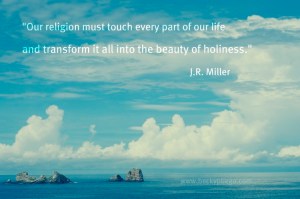
So, in all our life, the Sunday’s lessons—must be lived out during the week! The patterns of heavenly things shown in the mount—must be wrought into forms of reality and act and disposition and character. The love of God which so warms our hearts as we think of it—must flow out in love to men. We must be Christians on Monday—as well as on the Sunday. Our religion must touch every part of our life—and transform it all into the beauty of holiness.

I pray I will not forget, not even for a moment, that I am living in the Sacred, under the Shadow of the Almighty,

Have a most blessed Lord’s Day!

Becky

Lessons from the Furnace – Prayer-

This past week has been the most difficult season in my life; as you know our good, wise and sovereign God had very different plans that those we had for my precious niece, Erica Faith who died in labor with apparently no reason.

My friend Elizabeth has said it well,

“God needs no editor: the Author of Life has penned the preface, acknowledgments, introduction, setting, theme, characters, suspense, conflict, tragedies, triumphs, plot twists, and conflict resolution on first draft.”

We have cried with our face to the ground, and in the midst of our tears and sobbing, we have quietly learned many things.

One of the many things I have learned, is how valuable it is the prayer of the saints. How comforting it is to know that saints are interceding for you when you are walking through the Valley of Death; when Dragons spout fire against you, and the Shadows of Darkness seem to be all around you.

I have cried, and thank God for each one of you, who have stand with us through this hard providence. Thank you with my whole heart.

But I have also asked the Lord forgiveness because so many times I have not stood in the gap with my fellow brothers and sisters who are walking through difficulties until they are able to see the light. Many times they have asked me to pray for them and I have certainly done so, three, four, maybe even more than five times… but then I move on. Now I see, that one or two hours of prayer are not enough; that when a sister asks you to keep her in your prayers, is because she needs a fellow Christian who is willing to help her carry the burden. O how we need to live a life of prayer! This is also part of what it means to live in the Sacred. We must live seeking God’s face all day long, interceding with fervor for all the saints who are going through trials. The Valley of Death is dreadful indeed, and the prayers of the saints make it smoother.

“praying at all times in the Spirit, with all prayer and supplication. To that end keep alert with all perseverance, making supplication for all the saints…”  Ephesians 6:18 ESV

James Smith said,

“A real Christian has sympathy with all true believers. They are taken up into his heart, and are included in his prayers. For them he praises God, and for them he pleads with God. As one with Christ, he is one with them. As interested in Christ, he feels interested in them. They may be poor and needy, they may be oppressed and despised, they may be weak and feeble—but they excite his admiration, and draw forth his love.”

I pray that God will make me a woman who intercedes for others with perseverance. That I won’t fall asleep while others are crying in a sleepless night.

Samuel once said these words that have been in my heart these days,

“Moreover, as for me, far be it from me that I should sin against the LORD by ceasing to pray for you…” I Samuel 12: 23 (read the context here)

and J.R. Miller says concerning this verse,

“Perhaps we are not accustomed to think of praying for others in just this way, as a duty, the omission of which is a sin against God. We think of it as a privilege—but scarcely as a part of love’s solemn duty. We are in danger of narrowing our prayers to ourselves and our own wants. We think of our own sorrows and trials, our own duties, our own work, our own spiritual growth, and too often do not look out of the window upon our friend’s rough path or sore struggle. But selfishness in praying is one of the worst forms of selfishness. If ever love reaches its best and purest, it ought to be when we are standing before God.”

and if I want you to call me your friend, I must remember that,

“Friendship without prayer lacks a vital quality. There is no other duty of friendship which rests upon us with deeper obligation, than this of intercession. We know that we sin both against God and against our friend, when we cease to show him kindness in word and deed. No kindnesses shown in act are so important and so essential a part of friendship, as prayer for our friend.” J.R. Miller

Under His sun and by His grace, longing that He will find me persevering in prayer,

Becky

>When Living in the Moment may Distract you from Living for the Eternal

>

It has been some years now that with the help of the Lord, I have been learning how to live fully every day, every minute. I remember when my children were little and we were in that season of our lives when we ran all day to all those extra classes. We used to live under the pressure of the clock, the constant tic-tac that steals away moments of joy.

But living in the moment, enjoying the minutes, living fully each one of them, is not necessarily a godly thing to do. Actually, it may keep us from seeing beyond the minute and into eternity.

When our children were little I had to teach them about time, time-lines were hanging all over our walls, and we had to teach them about the calendar, the months, days, hours, minutes. Now they are older and we must teach them to live with their eyes fixed on what is not in that time-line. We are teaching them that what matters the most is not the moment, per se, but eternity.

Before I keep on going, please don’t get me wrong, I firmly believe that how we live every minute counts. I believe that our lives are made of minutes, and for the life we live in that sequence of minutes we will give an account to God.

But when we live only with eyes for the moment, we may find ourselves believing that we are the main character in God’s story.

Remember Martha and Mary and how they responded when their brother Lazarus was ill and then died (John 11 please read it all.). They were living in the moment, and for a moment they thought that because they were Jesus’ friends, and Jesus loved their brother, they were the main character in the story and Jesus had to come and help them. But Jesus didn’t live for the moment, He lived with His eyes fixed on eternity, on his Heavenly Father; He says on verse 4:

“This illness does not lead to death, It is for the glory of God, so that the Son of God may be glorified through it”

Having this goal in mind “when he, {Jesus}, heard that Lazarus was ill, he stayed two days longer in the place where he was”. 

Michael Horton says,

In terms of the unfolding plot, Lazarus is a character in Jesus’ story, not vice versa. The glorification of the Son as the Messiah is the real “show” here, as was the case with all of the miracles. They are signs, not ends in themselves.”

“Lazarus had to die in order for the greater miracle to occur. There is something more important than the healing of his friend. Jesus knew the great work he would accomplish in the power of the Spirit when he came finally to Bethany. It is like Elijah pouring water on the fire pit, just to make sure God’s glorious power will be obvious. As the greater Elijah, Jesus was engaged in a cosmic contest between Yahweh and the serpent. That was the larger story behind all these other stories.

How many times do we live “in the moment”, forgetting that each one of those moments, good or bad, are not an end on themselves? All those moments are part of a larger story that has not been unveiled before our eyes, a story that ultimately will bring glory to our Triune God. He is the main character of the story.

When I give thanks for the little things that make up my day, when I see a beautiful sunset, or beautiful bees playing in a fountain; when I see my sister carrying a baby in her womb, and my son coming from behind to kiss me; when I see how my husband loves me every minute, and how blessed I am to have a full pantry, I need to raise my eyes and look beyond the moment, beyond the time-line and remind myself that all these blessings come to me, not because I am the main character, but because in all these, God will be glorified. It all happens “so that the Son of God may be glorified through it”.

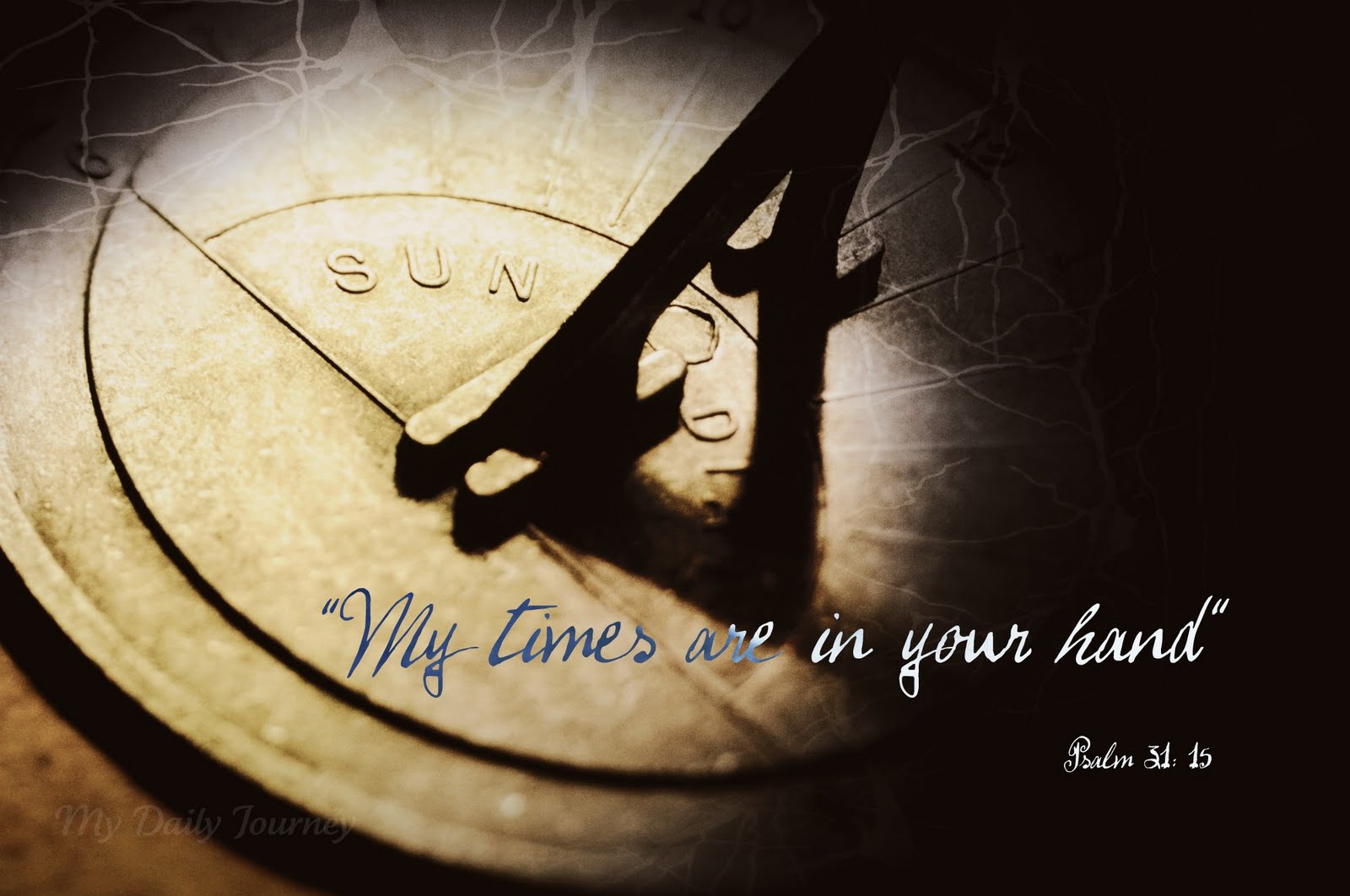
And the same is true, when the moments we are going through are more like those moments that Martha and Mary went through, moments of confusion, pain, uncertainty. When we expect Jesus  to come because He is our Lord, our Saviour, our friend, and He doesn’t and we don’t know what to think. Let us keep in mind, sisters, that those moments are only part of a whole story that is beyond our sight, beyond our minutes. Those moments are part of God’s grand plan to bring all things subject to Him, and to bring glory to His name. We are not the main character. Our moments, our times are in His hand.

Under His sun and by His grace,

Becky

>When the Sound of the Bagpipes Made Me Cry

>

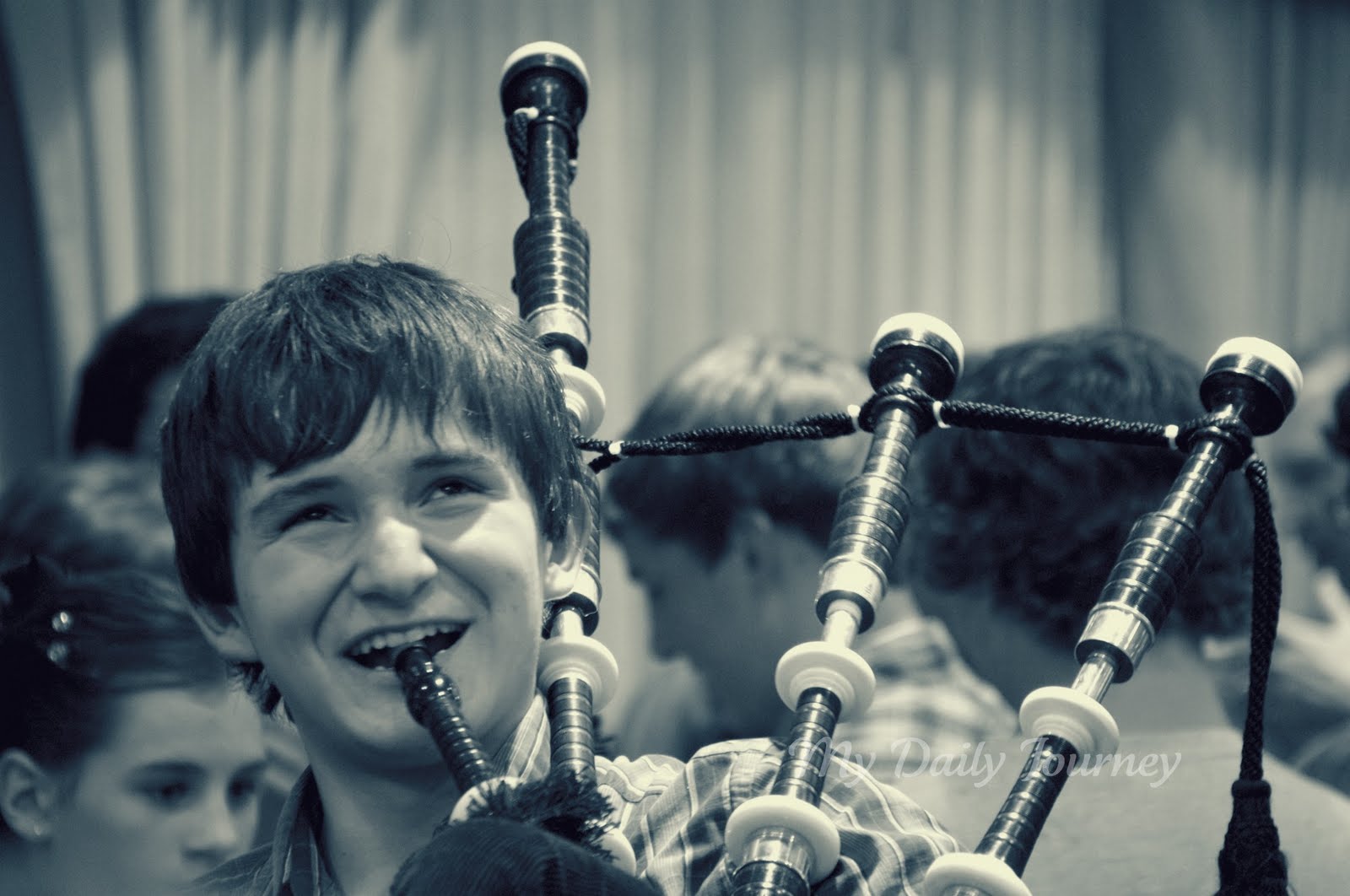
This story started six months ago, when our son started to learn how to play the chanter (the instrument you first need to learn how to play before start playing the bagpipes). He was very diligent, every day we would hear him making music, and we’d smile. He has making such a big progress. So one day, dad bought him the real thing: professional bagpipes. His instrument traveled many, many miles. It made it home, however,  a piece was broken, so our son had to wait few more weeks until the replacement came.

He still spent many hours behind the chanter. He really wanted to be ready to play among his friends at the End of the Year Gathering in PA.

The bagpipes were ready only a week before our trip. Four hours a day seemed not to be enough to practice, but we were all surprised. It sounded beautiful! The night before our trip, he calls me, and plays for me, I smiled and breathed thanks. He felt he was ready, he would definitely bring his pipes to the trip. His dream was about to come true.

To our surprise, on the first checkpoint at the airport in Mexico, they wouldn’t let him bring his pipes on board, and we did not have enough time to check them in; so we just handed them to our friends who (thank God!) were still waving us good-bye from the other side of the checkpoint.

I cried and my son hugged me. We just couldn’t believe it… all those hours, all those dreams. For a moment I almost forgot that I am living in the Sacred.

My Beloved held my hand, and said to me “This is God dealing with our son. He has a plan.”

We made it to the EOTYG safely, we even tried to forget about it. We were with our beloved friends, and we had so many reasons to be happy and grateful.

Until one evening, in the lobby of our hotel, we had the privilege to meet a wonderful family, whose son also played the bagpipes and had brought them with him.  We smiled, and of course, shared our story with them.

Few days later, on the open mic night, all of a sudden, with out expecting it, our son had some bagpipes in hand and started to play. I turned around and looked into the eyes of the mom whose son had brought bagpipes. We were both crying, while our sons were smiling.

This was God dealing with my son’s heart. He had a plan, a lesson to teach him and I was just an spectator.

Moments like this, help us see that at the end it is God who deals personally with each one of our children. At the end of the day, it will be Him and each one of our children alone. We watch as spectators, and give thanks.

It is in moments like this that we are reminded that God is sovereign over all things.  That we are living under His sun and by His grace.

Becky