>A Song Book for Children

>Looking for a good book of poems for children, I asked Grace and Truth Books (on Facebook) which books they recommended; they suggested few and I bought three, one is a song book for children and the other two are poetry books. (I will tell you about the poetry ones later this week, they are beautiful!)

This is what I found, a treasure indeed that was first printed in 1713, Divine and Moral Songs for Children by Isaac Watts; compiled, arranged, and edited by Carris J Koscher, from the Old Path Series.

I read on the introduction, (which is very interesting), that this book  “is the pinnacle of Puritan literature for children”

This is not a simple book with songs, it is a book that teaches biblical truths. “It will help bind parents and their children into a working faith that will give a cohesive strength to the basic of any society:  the family.” this is a book, that as you can well imagine was wherever the Mom’s Bible was, because as the author of the introduction says, in those days “it was not the responsibility of the Sunday School, or the Grammar School, but of the parents” to teach their children the Christian Religion.

The author of this great introduction, goes on to compare what children read before 1776, with what children read today (1975) in order to stress the importance of this small book of Divine songs. You will certainly enjoy reading her thoughts on this, just look at this:

“The homes (in those days) were happy and harmonious, and children were considered as a joyous blessing from the Almighty and treated as such. It is true that children read lengthy sermons, memorized Scripture and knew by heart the basic tenets of Christianity and were present and quiet in church on Sunday, but the results of this type of child rearing made children responsible, productive and happy. The stark contrast to the child of today is shocking in the extreme.” 
“Divine and Moral Songs for the Use of Children by Isaac Watts is exactly the type of book children need. It takes great and eternal truths and places it on the level of a child’s understanding. It will give children a positive Christian faith, and in working out its implications in their lives, responsibility, and leadership, will be developed more readily. It will serve as a bulwark against modern heresies and lay a sound foundation for later development…
The purpose of Watt’s songs is to educate for maturity. It is maturity this world needs, godly maturity.Isaac Watts assumed at all times that it was the duty of an adult to equip a child with a mature faith capable of conquering the world. Education which falls short of that is irrelevant and non Christian”

So, we happily opened the book, and we decided that first song we will learn by heart is  Song II, Praise for Creation and Providence, my oldest children will play the piano and we will raise our voices to praise Him in Spirit and in Truth.

I already put this little green book by my Bible, it is a treasure that I want to give to my children.

Some of the titles of the songs are these:

Praise to God for Our Redemption

Praise God for mercies Spiritual and Temporal

Praise God for the Gospels

The Excellency of the Bible

Praise God for Learning to Read

Heaven and Hell

The Advantages of Early Religion

The Ten Commandments

Our Saviour’s Golden Rule

And so many more…

Aren’t these things what we long to listen our children sing about?

Today, Lord, I am so grateful for godly people who have worked hard to preserve Christian literature through the years.  I want to thank them by making use of the books they worked hard to publish again, I am sure they would be very happy to see that!

I am so excited about this, in our home we will start today , will you join us?

I will give away one of this books for your family to enjoy; just leave a comment and we will announce a winner this coming Saturday. (USA, Canada and Mexico only)

This post is also linked to Raising Homemakers

For some strange reason I cannot upload images from my computer, 
so I will try to come later and add my pictures.  Done 🙂
Remember that starting on December 1st, I will be hosting every Wednesday on December a celebration here…We will be Celebrating the Incarnation; you are invited to come and link to your post; share what this amazing doctrine means, how do you keep it the main thing during the season, share with us the goodness!

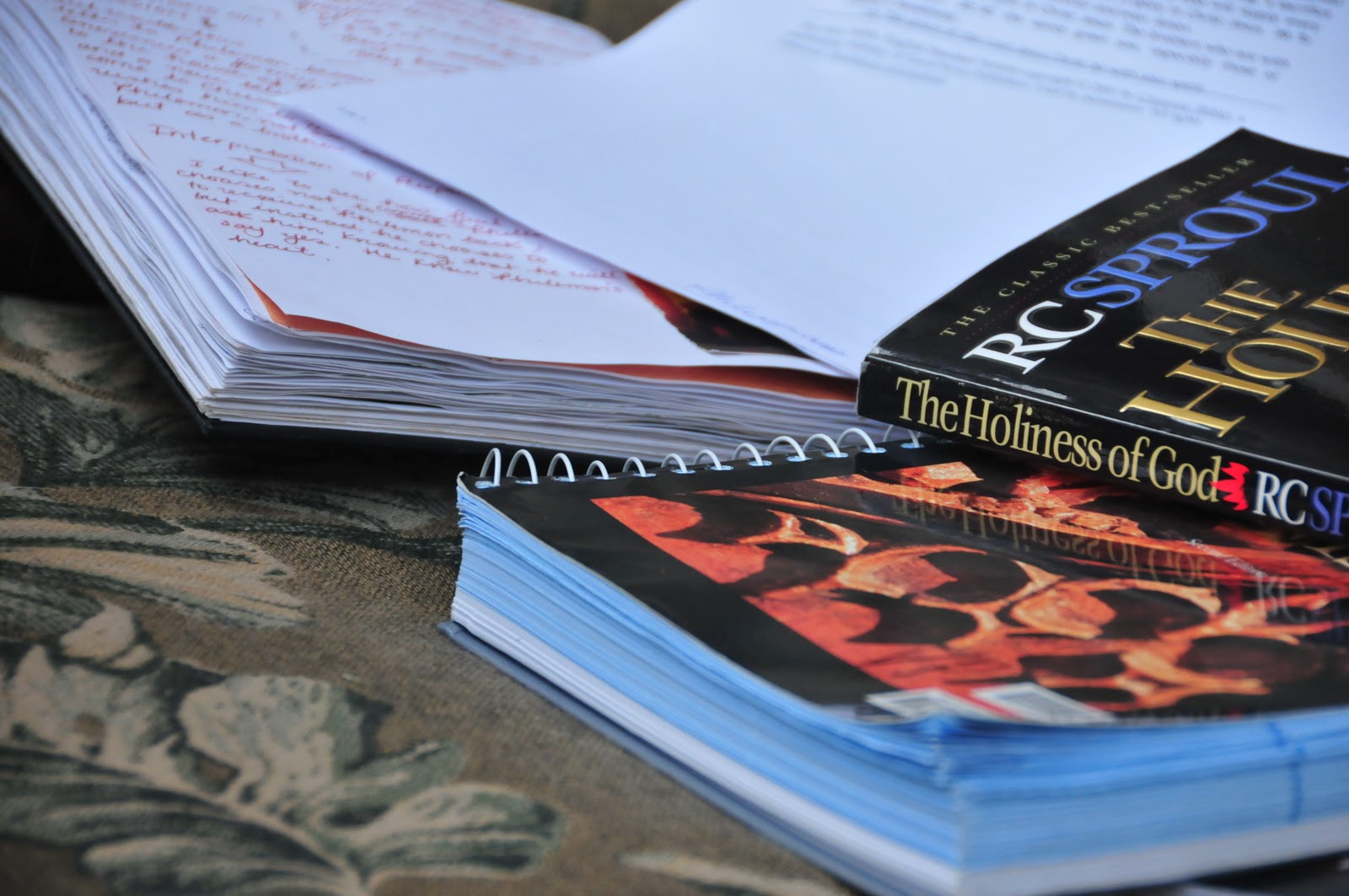
>The Holiness of God – Chapter Four-

>

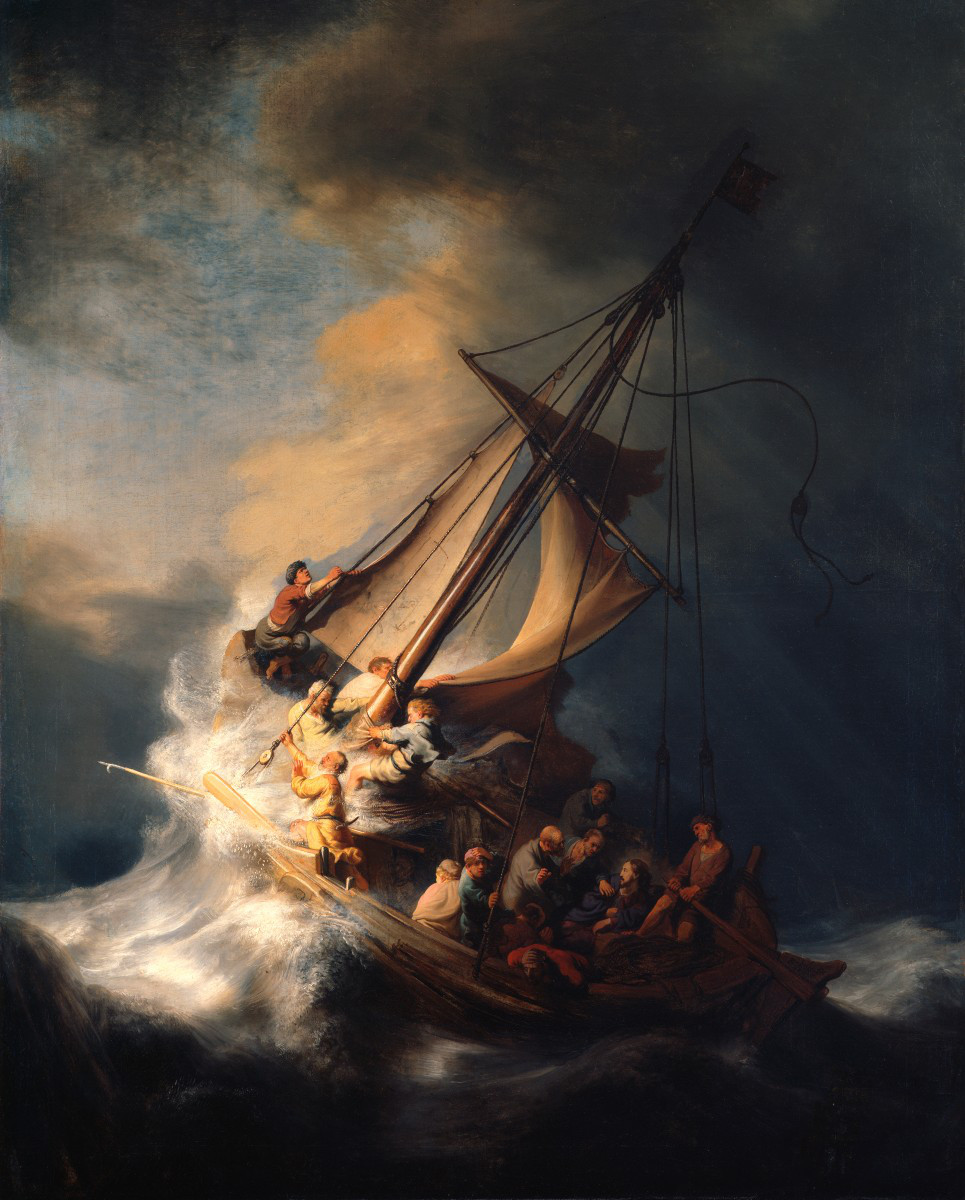
The Storm of the Sea of Galilee; Rembrandt Harmensz. Van Rijn

Chapter Four. The Trauma of  Holiness

“Hence the dread and amazement with which, a Scripture uniformly relates, holy men were struck and overwhelmed whenever they beheld the presence of God… Men are never duly touched and impressed with a conviction of their insignificance until they have contrasted themselves with the majesty of God”
John Calvin

God you are Holy. Let me never forget this, O Lord, please!

Sproul leads us through this chapter to different scenes, places, the first one is the Sea of Galilee. It was the night in which Jesus calmed the storm with His Word, yes, this is the event we all love to read about while trials and storms raise against us with fury. However, this time this event seems to be written to teach me more that the power of Jesus to calm storms. It is there to teach us about God’s holiness.

Jesus was waked up by his disciples who were in panic.

“Teacher, don’t you care if we drown?” (Mark 4: 38)

and in Sproul’s words,

“Their question was not really a question. It was an accusation. Their suggestion was thinly veiled. They were actually saying, “You don’t care if we drown” They were charging the Son of God with a lack of compassion. This outrageous attack on Jesus is consistent with mankind’s customary attitude toward God.”

Jesus did not say a word to them, instead He raised Hos voice and rebuked the wind and waves. Then He turned and asked His disciples “Why are you so afraid? Do you still have no faith?” (Mark 4:39-40)

And for some reason it seems that we have memorized only this part of the story. A powerful Jesus willing to calm the raging sea even when we have little faith. But the story hasn’t finished and Sproul encourages us to look at the reaction of the disciples, now that the sea was calm:

“They were terrified and asked each other ‘Who is this? Even the wind and waves obey Him!” (Mark 4: 41)

The storm was calmed and now, for the first time, Mark tells us that the disciples were terrified.

“The storm had made them afraid. Jesus’ action to still the tempest made them more afraid. In the power of Christ they met something more frightening than they had ever met in nature. They were in the presence of the Holy…
It is one thing to fall victim of the flood or to fall prey to cancer; it is another thing to fall into the hands of the Living God

We all have fall into some kind of desperation and fear in the midst of storms, rumors of cancer, tumors, broken finances, etc. and we seek desperately to the Master, we call Him, but truly, do we really want to see His Holiness in the storm? Maybe we will find out that the most terrible storm is not the one outside, but the one in our heart.

Now Sproul takes us to the same lake, however, the scene is another one (Luke 5:1-7). Luke tells us of the day when Jesus, the carpenter, told Simon, the fisherman, how and when to cast the nets to fish. And the question here that we must ask is this:

“How did Peter react? How would you have reacted? …
When the nets were bursting, Peter couldn’t even see the fish. All he could see was Jesus. Hear what he said ‘When Simon Peter saw this, he fell at Jesus’ knees and said, ‘Go away from me, Lord; I am asinful man!”

Again, we love this story because it tells us about a Jesus who provides miraculously, but why we always stop recalling the story when we feel we can’t benefit from it?

My country is plagued with the so called “Prosperity Gospel” and the “Modern Evangelical Christianism” of TV shows and praise and worship meetings, and what they have missed (among so many other things) is always the “next verses” those that bring us to our knees before the Holy One.
I feel rage when I see many looking after the gifts, the power, the provision, but run away before they meet the Holy One.

Our response to God’s power, to the manifestation of the Holy One, should be falling on our knees “undone”, crying “I am a sinful man”.

“We notice that Jesus did not lecture Peter about his sins. There was no rebuke, no word of judgment. All Jesus did was to show Peter how to catch fish. But when the Holy is manifest, no words are need to express it. Peter got the message that was impossible to miss. The transcendent standard of all righteousness an all purity blazed before his eyes. Like Isaiah before him, Peter was undone”

The chapter goes on, and Sproul warns us about the fake holiness of the Pharisees and Sadducees; I will not extend into that but you can read other comments on this chapter here, at Challies.

Today, as I consider all these, I can’t but be thankful for Jesus Christ. It is only through Him that I can come before a Holy God and not be consumed.

May we see Him as He is. May we find Him today as we consider His Word.

Related Posts:

The Holiness of God -Chapter One-
The Holiness of God -Chapter Two-
The Holiness of God -Chapter Three
The Holiness of God -Chapter Five-

>The Fruit of Her Hands -Part Four-

>

This is our last week reading together a very good book, The Fruit of Her Hands by Nancy Wilson. I have been blessed by all the comments of each one of you who have been participating in this forum. Thank you for your input; the conversation has been joyful indeed.

Chapter Seven. Lovemaking
What a wonderful chapter this is! I would dare to say that this has been my favorite one. Nancy Wilson takes The Song of Solomon as the best place to start because sex was God’s idea not man’s. In this book of the Bible (4:12; 5:1) the bride is referred to as “a garden enclosed”. It is not a public garden, but a private one; one with boundaries, one “within a protective fence that a marriage covenant provides”. 
As any other garden, the Christian woman needs to tend her own garden; How do we do this? “By being affectionate, approachable, warm, and responsive”

Let your fountain be blessed,
and rejoice in the wife of your youth,
As a loving deer, and a graceful doe,
let her breasts satisfy you at all times; 
and always be enraptured with her love.  (Proverbs 5:18- 19)

The author points that even though this verse is directed to husbands, there is a lot for us, wives, in it. She encourages us to rejoice in the marriage bed; she says that wives should not view sax as a mere duty or obligation, inconvenient and time-consuming, but a time of delight, of joy.
Nancy Wilson goes on to explain what it means to enrapture your husband with your love.

“This means that you must be more than simply responsive. You must be active in the sexual relationship. You certainly must delight him in a passive sense, but there is more required to enrapture him…this implies a great rejoicing on the part of both partners… This is not a teaspoonful once a week. It is a picture of a cup overflowing.”

There are hindrances that we must overcome at times, such as tiredness, fatigue, a big family, little ones, (and I would say teenagers who seem to be more talkative at nights!), not being in the mood, prudishness, and some others. How do we overcome all these? The author answers plainly,

“Put your theology into practice…
Don’t expect sudden, drastic, changes. our sanctification is a gradual process. But you should see progress as you apply His Word”

Again, studying the Word, abiding in it comes into play. We must bring, as I like to say, the doctrines into the kitchen…or in this case into the marriage bed!
This chapter ends with a word of encouragement for those Christian wives who have a non-believer husband, or are married to a man who doesn’t honor the marriage bed. I will just quote the author and encourage you, if this is your case, to read the book, or seek godly advice.
“Your godliness is never dependent on someone else. You stand before God in Christ and are accountable to Him for your behavior. 
Let God tend your garden, and do not let envy for other loved wives or resentment toward your husband ruin yours. and even if your husband does not see it or appreciate it the way he should, if he ever does wake up and open his eyes, he will see a lovely tended garden waiting for him”
Chapter Eight. Leftovers
This is a chapter in which the author deals quickly with some issues she did not want to left out. First of all she encourages the Christian woman not to pay attention to criticism and condemnation from the world against us. I like the way she says it,

“Criticism from the outside should be the result of our godly behavior, not our sinfulness”

Yes, we all know it. The world will certainly criticize us as we pursue our calling, as we seek to live holy lives, but we should always look at what the Scripture teaches and obey it.
Nancy Wilson also addresses the widows, and  all of us who will probably be widowed one day. (I never thought about that!) She encourages us to build a solid relationship with God and His Word, on her words,

“Wives, while your earthly husband is alive, cultivate biblical thinking about this. Good doctrine will be a tremendous help to you in trial. Believing and learning the right things about God are like storing up provisions for a famine. When affliction comes you will have a good store of grace available.”

She also addresses the topic of taking care of our elderly parents with love and honor and the real meaning of a wedding (going beyond flowers, colors and dresses).
Thank you, dear sisters for joining me in this precious endeavor, studying more about our role as wives and and moms. Thank you!

****************************
This is November of Thanksgiving; and today I want to raise my voice with other brothers and sisters to give thanks to God from whom all blessings flow.
871. Today I am grateful for God’s idea of marriage. 
Isn’t it a mystery indeed? One + One = One , how can that be? Lord, I am so thankful that you chose marriage to portray the relationship between Jesus and His bride. I am grateful for this covenant that bounds us together until death comes. I am grateful because in Heaven we will never be widowed, we will have YOU as our all in all, as our Husband and Maker. I am grateful for the marriage bed, for the warmth of two bodies; for hugs and kisses and love overflowing. 
872. I am also grateful for my husband, the lover of my soul. For his hands and heart. For the way he is. For the way he loves us and takes care of us. I am forever grateful for the marriage you have helped us build.

>The Holiness of God – Chapter Three-

>

Can I tell you a little secret? I do not want to write my review on this chapter because I did not like the second half of it!

Yes, I feel terrible saying this, but I just can’t help it. I read it twice and the third time I skimmed over it, and still, my thoughts were the same.

I enjoyed the first part of this chapter in which Dr. Sproul deals with the definition of holy:

“The primary meaning of holy is “separate”. It comes from an ancient word that means “to cut” or “to separate…
“God’s holiness is more than just separateness. His holiness is also transcendent. The word transcendence means literally “to climb across’… God is above and beyond us. Transcendence describes His; supreme and absolute greatness…”

This definition is just great, to think that He is higher than me, than the rest of us, helps my ego fall down and remember that I am clay made alive.

The author continues explaining how in the Word of God we find the word holy; used to express “something other than a moral or ethical quality”; In order for something to be holy, it first needs to be consecrated or sanctified by God.

“Only God can sanctify something else. God alone is holy Himself”

I learned in this chapter that when we speak of God as holy, “it doesn’t signify one single attribute. On the contrary, God is called holy in a general sense. The word is used a synonym for his deity. That is the word holy calls our attention to all that God is.”

If holy means transcendent, then worshiping idols made of wood, silver, gold, worshiping the moon, the sun, or anything else is nonsense because all these are not transcendent, “they; do not go above and beyond the creaturely. They are not holy”, says the author.

And now comes the part I did not like of this chapter. Dr. Sproul talks about a German scholar, Rudolf Otto, and how he tried to study the holy in a scientific way. This man “coined a special term for the holy. He called it mysterium tremendum…’awful mystery'”  (My first doubt, question, objection is this, can one really study the holy in a scientific way? how? I just could not follow along.)

The author goes on to explain that we have mixed feelings about the holy,

“There is a sense in which we are at the same time attracted to it and repulsed by it. Something draws us toward it, while at the same time we want to run away from it. We can’t seem to decide which way we want it. Part of us yearns for the holy, while part of us despises it. We can’t live without it, and we can’t live without it”

This is so true, this is why we need so desperately Jesus, a mediator.

But why does the author chooses to explain us such truth comparing it with his wife’s feeling when watching horror movies; why using the images of  scary radio programs? This I did not like. I just couldn’t understand it. How can we compare our relationship and feelings towards the Holy with our feeling towards scary radio  programs or horror movies. I felt lost.   

What are your thoughts about this?

Praising Augustus*

*”Augustus”; Sproul says that “only God could properly be called the augustus one. To be august is to be awe- inspiring, or awe-ful. In the ultimate sense only God is awe-ful” (p.44)

I am grateful to Tim Challies for inviting us to read along this book; it has proved a blessing for me to join a group of great people and thinkers.

The Holiness of God -Chapter One-
The Holiness of God- Chapter Two-
Holy, Holy, Holy 
The Holiness of God- Chapter Four- The Trauma of Holiness-

Living a Simple Life

********************************************

>The Fruit of Her Hands – Part Three-

>

I am so enjoying the conversation with you, my friends. Thank you for reading along and  tell me, isn’t this book, The Fruit of Her Hands by Nancy Wilson great?

Chapter Five. Contentment

“If we would have peace in our souls, we must maintain a war against our favorite sin and never leave off until it is subdued” Thomas Watson

“While sin in others is often blatant and obvious to us, our own sins are sometimes disguised. Because we don’t see them for what they really are, we can trick ourselves into fighting and confessing the wrong sins altogether.
One such sin is morbid introspection…” (p.69)

This is the way this chapter starts; it is a great and important chapter to read because we are so blind and so many times we “fail to see that we are responding to self-accusations, and not to the Holy Spirit”, as the author says.  Have you been there?

I have.

I have been in that situation when you just feel you are the worst mom, wife and daughter, that you don’t cook great recipes, don’t quilt or sew, and you feel so far from the Proverbs 31 woman.  Did you notice those little words: “feel”  We are reminded in this chapter that we need to dismiss “those vague accusations  grounded on nothing more than vague feelings” and  “which are not objective sins”.

O this is so true, so true!

We know that we should not walk by feelings and yet we fall into the trap. Nancy Wilson says it well,

“Remember, it is God’s Word that is the standard, not your feelings -good or bad, late or early. In the light of day it is easier to see your weaknesses, call for grace, confess your sins, ad thank God for His love and forgiveness. Like other sins, the sin of introspection can become a habit”

The chapter goes into a different direction and now the author talks about the big lie of  the world today: live fit and healthy, “for only the healthy and fit have fun”.

When we believe this lie, we become hostages of fear.

“for the Christian, there should be nothing to fear in this…review your theology to deal with these fears. Sound theology is the cure for fear. Consider that God is in complete control of  His entire creation. Do you believe this?” (p.74)

Again, this is why I love Nancy’s books. Her counsel goes right to the heart of the matter, where are you grounded? What do you believe? This is one of the reasons we ought to encourage one another to read big books, theology books, to the study of the Word. We must abide in the Word, in the whole counsel of God not only in some verses here and there taken out of context. O, how I love the Word of God!

The 7 closing words of this chapter are powerful, read them twice and think about them:

“Do not be afraid, but fear God.”

Chapter Six.  Duties of Homemaking

This is also a very powerful and practical chapter, in which Nancy reminds us that our calling has to do with the things that fill our days, such as diaper changing, doing dishes, cooking, kissing foreheads, and listening to our beloved ones.

And because God himself has called us to do this “all the mundane things {we do} are sanctified, holy, purposeful, and honoring to God, and  {we} shall offer them all to Him” (p.75 I tweaked the text and wrote it on 1st p. pl present tense)

She talks about hard work, about being joyful while we pursue our calling. She encourages us to learn how to manage our households (I Timothy 5:14)  but she also addresses the sin of idleness, the sin of “having to know”.

Besides that, they learn to be idlers, going about from house to house, and not only idlers, but also gossips and busybodies, saying what they should not. So I would have younger widows marry, bear children, manage their households, and give the adversary no occasion for slander.  (I Tim. 5: 13 -14)

From the text I made up these questions that can help me examine myself:

How do I use my time?

Am I being idle behind this screen?

Am I wandering from one blog (house) to another “just because”, just to visit? -and here, I would like to add a little more; next time you browse your favorite sites, blogs, etc, try to think and jot down 5 things you learned during those visits. Can you do that?  Be careful, I have noticed that sometimes I have had to answer to this question in a negative way.  Most of the time we are skim reading; maybe we will  be more blessed if we use that time to read a book, or pray, or read the Word, or memorize more verses, or sit besides our son just to hug him.

Can I afford spending all this time visiting?

“A woman’s God-given duties must necessarily be neglected to carry on such extensive visiting”

This chapter closes with a great encouragement:

“…our homes should be practical extensions of what we believe to be true about God and His world and demonstrate that it is all under His ownership”

What is it in your heart today? What did you learn in these two chapters?

Let us encourage one another to be godly wives and moms.

Related Posts:

The Fruit of Her Hands -Part One-
The Fruit of Her Hands -Part Two-

Ten Reasons for Contentment at Femina  (“Here are ten reasons why we should find contentment, found from the matchless works on the subject by the Puritan ministers Jeremiah Burroughs and Thomas Watson”)

Keeping up family Worship.
A Mom and a Wife in the Making

El Fruto de Sus Manos -Parte Tres- (en español)

**************************************

>Spanish For Children -a Review-

>

I am thankful to the folks at Classical Academic Press for giving me the opportunity to review their Spanish for Children program.

As a teacher of Spanish 1 and 2 at Veritas Scholars Academy, I was intrigued about the Spanish for Children program. How good it is? How well prepared will the grammar students using this program be for high school Spanish?  I am a Spanish native speaker, and as you can probably imagine, I love to teach my students beautiful pronunciation; so I also wondered about the DVD’s and CD; is the pronunciation clear and accurate?  Let me now tell you what I found.

Spanish for Children is a program recommended for upper grammar students (4th grade and up); their basic bundle includes the Student’s Primer, the Teacher’s Primer (answer key), four DVD and one CD, and a Spanish Language Reader, Tin Bot.

Spanish for Children 1 covers 37 weekly chapters which follow a very good and logic sequence. Starting from the -ar, -er and -ir verbs it covers about 142 verbs; about 150 nouns with gender and number,  adjectives and prepositions; starting to build on a new language in upper grammar stage with this great foundation is just an incredible way to start with the right foot!

Spanish for Children is Classically and Creatively taught, with lots of reviews, exercises and fun phrases that will put Spanish in context. It is a thorough program that will certainly prepare students in an incredible way for Spanish in high school, because it not only teaches isolated vocabulary but grammar structure, which is essential to be able to speak a new language; something that we want our Spanish students to be able to do.

I would say that if  Mom or Dad do not speak Spanish, they would definitely need to get the DVD set.  Believe me (I don’t make money if you buy it), it is important to have the children’s ear trained into listening good Spanish and Mrs. Julia Kraut does a great job; her pronunciation is clear and beautiful. The DVDs do more than teaching good pronunciation, they are a great help into understanding the lessons in-depth.  Mrs. Kraut explains every lesson in a very engaging way, and it is fun to listen to her class; it is not boring or tiresome. She starts each lesson chanting the weekly grammar chart, followed by an introduction to the new lesson, there are images accompanying the new list of verbs and vocabulary and then she goes on to explain the grammar concepts, always encouraging the students to practice what they have learned “even with their Teddy Bear”. I really appreciated that she continually shares her experience with the Spanish language and different cultural aspects surrounding it, because as I always tell my students, learning a new foreign language is not only about learning the language but understanding the culture. If you don’t get the DVDs you will certainly miss this part which I consider very important.

If students are diligent in studying the lessons every day and watching the  DVDs, I would dare to say that they would excel in learning Spanish even before reaching high school!

Classical Academic Press also offers many free on line resources to help students practice what they are learning, such as virtual flashcards, games, and readers. There is also a sample schedule ready for Mom to download and start planing the course. Mrs. Kraut has a blog where you can post your questions and read some more fun facts about Spanish and some teaching tips that the author likes to share.

In all, I highly recommend this program to all those families interested in introducing their children to the beautiful world of Spanish.

Giving your children the opportunity to learn a new language from an early age is a gift that not every one is willing to give because of the difficulties of teaching it, but this program definitely makes the task easier and really fun.

For more information visit Classical Academic Press

You can also find them on Facebook, where they have an active conversation with their followers.

Related posts from here and my former blog:

Classical Education and Memorization
More than Copy Work
Why Classical Languages Matter
Teaching the Word of God to our Children

*************************************************