The Two Objects Needed to Make a Home


Peasant Family at the Dinner Table by Jozef Israëls

What a great a read is Bed and Board: Plain talk About Marriage by Robert Farrar Capon. I am absolutely loving this book. I posted some quotes from the first four chapters here, and today I want to share with you a few more quotes from chapters 5 and 6.

“I usually say that you need only two things, two pieces of matter, to make a home: a bed and a table. It’s an oversimplification, but it’s a good one…For Bed and Board are the fundamental geographical divisions of the family; they are the chief places, and it is in them and around them that we dance the parts we are given.”

“He who perished by a tree is saved by a tree. He who died by an apple is restored by eating the flesh of his Saviour. Our lust is to be healed by being brought down to one bed, our savagery tamed by the exchanges around a lifelong table. Bed, Board, rooftree and doorway become the choice places of our healing, the delimitations of our freedom. By setting us boundaries, they hold us in; but they trammel the void as well. By confining, they keep track of us -they leave us free to be found, and to find ourselves. The vow of lifelong fidelity to one bed, one woman, becomes the wall at the edge of the cliff that leaves the children free to play a little, rather than be lost at large. Marriage gives us somewhere to be.”

“The bed is the heart of the home, the arena of love, the seedbed of life, and the one constant point of meeting. It is the place where, night by night, forgiveness and fair speech return that the sun go not down upon our wrath; where the perfunctory kiss and the entire ceremonial pat on the backside become unction and grace. It is the oldest, friendliest thing, in anybody’s marriage, the first used and the last left, and no one can praise it enough.”

“We were meant to meet, to sustain and to ease each other, and in the marriage bed we lie down to do just that. It is an island in a sea of troubles, where there is nothing else to do but rest and refresh. Yet how resourceful we are, with our turned backs and stubborns silences, or with our interminable pouts and dreadful debates about What’s Wrong With Us.”

“People admit is hard to pray. Yet they think it’s easy to make love. What nonsense. Neither is worth much when it is only the outcropping of intermittent enthusiasm. Both need to be done without ceasing…”

“The table can make us or break us. It has its own laws and will not change. Food and litter will lie upon it; fair speech and venom will pour across it; it will be the scene of manners and meanness, the place of charity or the wall of division, depending. Depending on what is done with it, at it and about it. But whatever is done, however it enters, it will allow only the possible, not the ideal. No one has ever created the Board by fiat. God himself spread his table, but Judas sat down at it. There is no use in thinking that we all have to do is wish for a certain style of family life, and wait for it to happen. The Board is a union of thing and persons; what it becomes depends on how the thing is dealt with by the persons.”

“The Board will always give birth to liturgy.”

“[I]t is precisely the absence of visible liturgy that nowadays makes the common life less obvious to common men.”

“Few of us have very many great things to care about, but we all have plenty of small ones; and that’s enough for the dance. It is precisely through the things we put on the table, and the liturgies we form around it, that the city is built; caring is more than half the work.”

Under His sun and by His grace,

Becky

The Promise of God, a Reality

We are reading a little book: According to Promise by C.H. Spurgeon after breakfast every morning because isn’t it exactly what we need as we start a new day? Don’t we all need to be reminded of His new mercies and never failing promises?

Today the words I read were mingled with grateful tears.

“Yes, the Lord means what He says. He never mocks men with barren words and empty sounds. Why should he deceive his creatures, and ask from them a barren confidence? The Lord may go beyond his word in giving more than it might be thought to mean; but he can never fall short of it. we may interpret his promises upon the most liberal scale. He never falls below the largest rendering which expectation can give to promise. Faith never yet outstripped the bounty of the Lord. Let us embrace the promise, and rejoice that it is substance and not shadow. Let us even now rejoice in it as being the reality of that which we are hoping.” (p.47)

Becky

Mid-February-Status from the Big City

@Ana Sofía Pliego Photography

Loving… The picture above. Annie captured perfectly a very common expression of her sister. Seeing them having so much fun together makes me smile and want to hug them both!

Watching… The peach and apple trees in our garden blossoming against a perfect blue sky. I love to see the reminders of life all around us. Isn’t this world wonderful? Miracles happen every day in front of our eyes and how I pray that I will have eyes to see them and not take them for granted.

Reading… The Brothers Karamazov and wishing that I was reading it with a group of friends more educated than me. This would be, I am sure, the perfect book to discuss with a friend, or in a class under the instruction of a good teacher (even if that would mean to write a paper about it!).

I just finished reading a wonderful book by Bonhoeffer:  Life Together: The Classic Exploration of Faith in Community. It helped me understand many things that are not always easy to understand in this life under the sun.

With one of my dearest friends I am reading These Strange Ashes, a book by Elisabeth Elliot. We decided to read it slowly and I am sure learning from both, the author and my friend.

My little one and I are two chapters away from finishing reading a fun, fun book: The Phantom Tollbooth by Norton Juster. We have had a great time reading it aloud. Thanks to Ink who sent it to us a Christmas gift.  🙂

The Commentary on Ephesians by Chapell and the book on the Sermon on the Mount by Pink, as well as Spurgeon’s commentary on Matthew are being my companions in my morning devotionals. And by the way, have you seen the Journibles? They are a great way to copy the Word of God, jot down study notes, prayers, thoughts, etc. I have been using them for a couple of years now and I love them; right now I am copying Ephesians and the Sermon on the Mount.

Exercising… Yes, I have not quit! 🙂

Listening… To this sermon over and over again. And if you are like me, who sometimes agonizes over relationships and don’t know if it is really possible to set boundaries and standards in our relationships with other Christians without denying the Christan love and grace, you should also listen to it.

Learning… That your own sons and daughters can be your greatest teachers.

Meditating… That when we talk about dying to ourselves for the sake of the Kingdom or our family, we normally think of not doing something or renouncing to do something,  but isn’t it sometimes that dying to ourselves calls us to do the opposite? Sometimes dying to oneself means doing something. Dying to ourselves is not passive, is not a sentiment that only sounds very spiritual but lacks action. Sometimes we need to speak, to act, to move, to choose, to defend, to contend, to do what we would naturally not be inclined to do for the sake of a greater love. And it is not easy.

Counting… The days until I get to see my sister and some of my dear friends in NC! So very grateful for that opportunity!

Embracing… Each day as it comes knowing that our seasons are in God’s hands.

Under His Sun and by His grace,

Becky

Life Together by Bonhoeffer -Borrowed Words-


I have read these words over and over again these past days. Lots to think about, to pray, to consider, to discern.

“By sheer grace, God will not permit us to live even for a brief period in a dream world. He does not abandon us to those rapturous experiences and lofty moods that come over like a dream. God is not a God of the emotions but the God of truth.”

“He who loves his dream of a community more than the Christian community itself becomes a destroyer of the latter, even though his personal intentions may be ever so honest and earnest and sacrificial.”

“Christian community is like the Christian’s sanctification. It is a gift of God which we cannot claim. Only God knows the real state of our fellowship, of our sanctification.”

“Where Christ bids me to maintain fellowship for the sake of love, I will maintain it. Where his truth enjoins me to dissolve a fellowship for love’s sake, there I will dissolve it, despite all the protests of my human love. Because spiritual love does not desire but rather serves, it loves the enemy as a brother. It originates neither in the brother nor in the enemy but in Christ and His Word.”

“Because Christ stands between me and others, I dare not desire direct fellowship with them. As only Christ can speak to me in such a way that I may be saved, so others, too, can be saved only by Christ himself. This means that I must release the other person from every attempt of mine to regulate, coerce, and dominate him with my love. The other person needs to retain his independence of me; to be loved for what he is , as one for whom Christ became man, died and rose again, for whom Christ bought forgiveness of sins and eternal life.”

” [Spiritual love] will rather meet the other person with the clear Word of God and be ready to leave him alone with this Word for a long time, willing to release him again in order that Christ may deal with him.”

“Thus this spiritual love will speak to Christ about a brother more than to a brother about Christ. It knows that the most direct way to others is always through prayer to Christ and the love of others is wholly dependent upon the truth of Christ.”

“Human love lives by uncontrolled and uncontrollable dark desires; spiritual love lives in the clear light of service ordered by the truth. Human love produces human subjection, dependence, constarint; spiritual love creates freedom of the brethren under the Word.”

“Therefore, at the beginning of the day let all distraction and empty talk be silenced and let the first thought and the first word belong to him to whom our whole life belongs.”

“The Psalter is great school of prayer.”

“The more deeply we grow into the psalms and the more often we pray them as our own, the more simple and rich our prayers will become.”

“It is not our heart that determines our course, but God’s Word.”

“Prayer should not be hindered by work, but neither should work be hindered by prayer.”

“The prayer of the morning will determine the day. Wasted time, which we are ashamed of, temptations that beset us, weakness and listlessness in our work, disorder and indiscipline in our thinking and in our relations with other people very frequently have their cause in neglect of the morning prayer. The organization and distribution of our time will be better for having been rooted in prayer, The temptations which the working day brings with it will be overcome by this break-through to God…”

“Real silence, real stillness, really holding one’s tongue comes only as the sober consequence of spiritual stillness… If we have learned to be silenced before the Word, we shall also learn to manage our silence and our speech during the day.”

“The Scripture meditation leads to prayer.”

“Intercessory prayer is the purifying bath into which the individual and the fellowship must enter every day.”

“We should listen with the ears of God that we may speak the Word of God.”

“We must be ready to allow ourselves to be interrupted by God.”

“Our brother’s ways are not in our hands; we cannot hold together what is breaking; we cannot keep life in what is determined to die. But God binds elements together in the breaking, creates community in the separation, grants grace through judgment. He has put his Word in our mouth. He wants it to be spoken through us…”

“Sin wants to remain unknown. It shuns the light. In the darkness of the unexpressed it poisons the whole being of a person. This can happen even in the midst of a pious community. In confession the light of the Gospel breaks into the darkness and seclusion of the heart.”

“The greatest psychological insight, ability, and experience cannot grasp this one thing: what sin is…”

In need of His Grace,

Becky

My favorite 12 Books of 2012

This was a good year of books for me. I had a plan (sort of a goal) at the beginning of the year and I am very happy to say that it did work for me. It consisted of reading more fiction, reading several books on the same topic, and reading about the authors of the books I liked (or disliked as it was the case of Anne Lamott’s books) to have a clear understanding of their worldview. I will stick to this same plan this coming year.

So after going through my list of books read in 2012, I chose these as my favorite ones (in no particular order):


1. The Way of the Righteous in the Muck of Life: Psalms 1-12 by Dale Ralph Davis.

This little book (only 144 pages) was a great blessing, it is encouraging as well as convicting. I read it over 12 weeks (one chapter every Lord’s Day).

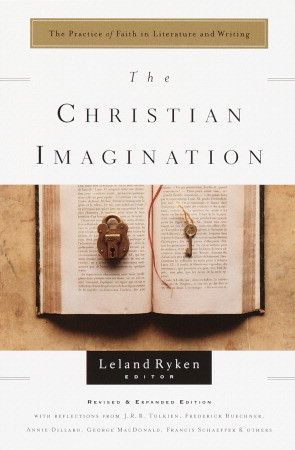
2. The Christian Imagination: The Practice of Faith in Literature and Writing, edited by Leland Ryken.

If you love reading and writing, this is a book that will become one of your favorites, too.

You don’t have to agree with every essay in this wonderful book but I assure you, in every page you will find good food for the thought.

I will not put this book away on a distant shelf, I want it always at hand.


3. Praying Backwards by Bryan Chapel.

Definitely my favorite book on prayer this year.

It is always good to be encouraged to live a life of prayer, and this book does that. I am grateful for it.


4. The Feminist Mistake: The Radical Impact of Feminism on Church and Culture by Mary A. Kassian.

This is an important book to read in this age in which Feminism is being more and more accepted in the Church.

You can read my review here.

5. Saving Leonardo: A Call to Resist the Secular Assault on Mind, Morals and Meaning by Nancy Pearcey.

This is such a wonderful book! Next time I read it (because, yes, this is the kind of book that deserves to be read -and studied- more than once), I will start with the last chapter.

Tim Challies has a good review of it here.


6. Total Truth: Liberating Christianity from its Cultural Captivity by Nancy Pearcey.

After reading Saving Leonardo, I had to read this book by the same author (actually she wrote this book first). I cannot recommend you these books enough.

This book (and Saving Leonardo) are a must read for Christian parents that want to teach their children to think and discern the worldviews around us.

7. Father Hunger: Why God Calls Men to Love and Lead their Families by Douglas Wilson.

I wrote this on Goodreads:

“Excellent book. I would really like to encourage my female friends to read it. This book is not only about “how to be a father” (which of course, is important). It goes deeper, it deals with many important topics that are threating the Christian biblical family such as egalitarianism and feminism.

8. The World- Tilting Gospel: Embracing a Biblical Worldview and Hanging on Tight by Dan Phillips.

I love everything about this book.  You will want to read it more than once and give it away to your friends.

It would be great to read it around aloud with the family.

Douglas Wilson has a good  and in depth review here.

9. If You Bite and Devour One Another: Galatians 5:15: Biblical Principles for Handling Conflict by Alexander Strauch.

Fantastic book.

I wrote this piece inspired by it.


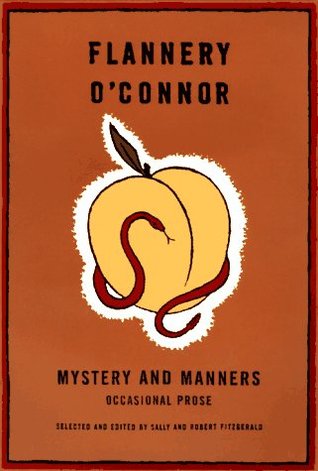
10 & 11. Everything that Rises Must Converge,  and Mystery and Manners: Occasional Prose, both by Flannery O’Connor.

My favorite combination this year. I first read O’Connor’s short stories and I felt the need to understand more of her worldview, her view of Redemption, so I read the collection of essays Mystery and Manners.  After reading both, O’Connor became one of my favorite authors.

12. I can’t choose only one of these books as my last favorite for this list.  The Book Thief by Markus Suzak, Of Mice and Men by Steinbeck, and Gilead by Marilynne Robinson (audio version) were fantastic, engaging, and each one left me with lots to think about.

The rest of my favorite books can be found on Goodreads.

My friend Persis at Tried with Fire, published today her six favorite books of 2012. It is definitely a list worth looking at.

Tony Reinke’s list of favorite books is also very good.  I am already adding some of his suggestions to my list of books to read in 2013.

What are some of your favorite books of 2012? Any good suggestions?

May our reading bring glory to God.

Becky

Wrecked by Jeff Goins – My Review-

I listened to the audio version of Wrecked: When a Broken World Slams into your Comfortable Life by Jeff Goins, and I have to say that this was a hard book for me to review because I expected to be confronted with the gospel calling me to do the hard things that sometimes I dismiss because of my comfortable life. Instead, I found a good book that motivates the reader to help others, to go out and do the hard things for others that can only be done when we come out from our comfort zone but without pointing to the gospel (even though some verses are quoted and some missionary stories are told).

Jeff Goins, is a very good author and I appreciate that he is the one that recorded the audio version. His style is engaging and his passion to make us come out from our comfort zone to help others with compassion is clearly there. However, he says over and over again (in many different ways) that “we can find the satisfaction we have been searching for…”  by living a generous life. He says that it is “generosity that gives our life meaning.” The problem with this line of thought through this book, is that the author leads the reader into living a life that finds meaning, satisfaction, and fulfillment not in Jesus, not in the gospel, but in doing this and that for others. And please, don’t think that I am denying works (I firmly believe that faith without works is vain), I am just saying that I disagree with the author in that our meaning in life, our satisfaction, our fulfillment should come from how much we help others or not. We will always be short of “good works.”

If you are like me, drawn to this book by its title, and know that you have to move out from your comfort zone without ignoring the fact that sin is the cause of the needs in this world as well as of the lack of help we offer to those in need, then I would, sadly to say, not recommend you this book. I recommend you instead Aaron Armstrong’s book, Awaiting a Savior: A Christian Response to Poverty. If you just want to “help others to find yourself” (a phrase the author uses), to find meaning and fulfillment in your life, then this book is for you.

Becky

Disclosure: I received an copy of this audio book from Cross Focused Reviews in exchange for an honest review. The opinions expressed in this review are my own.