Good Books for Girls and Boys (8-11) -And a Giveaway-

Earlier this week I posted J.R. Miller’s exhortation about how we must be careful on which books we choose to read; and I am pretty sure that this is something we need to teach to our children pretty soon in life. We want them to be readers but wise readers. Readers that grow not only as independent readers but readers that love to read good books, books that challenge them to grow in virtue and character, and having this in mind let us look at these books.

My friend Hollie asked me which books I would recommend for her 9yo girl; so I thought I would share my answer with you all including books for both, boys and girls. But to make this list even richer, I asked some of my friends (most of them Classical educators) to list some their favorite ones, and they did add some good books to the list. Look at it, see what you think and why not, suggest few more in the comments.

The Long List:

Black Ships Before Troy (The Story of the Iliad) is a book that I really enjoyed reading with my girl. We found many good opportunities to talk about love, marriage, and faithfulness in the light of God’s Word. (VP Comprehension Guide)

and also the Iliad retold for children by the same author, In Search of a Homeland.

If you would like to read and enjoy a good book of Shakespeare stories for children, I would really recommend you the series by Leon Garfield (book I and book II). I love the style, and the illustrations. Just wonderful!

Charlotte’s Web (Isabel’s suggestion)

Chronicles of Narnia

The Hobbit (Literature Guide here) Santiago and Isabel read this book together, and it was so much fun to see them enjoying themselves.

From Dark to Dawn. A Tale of Martin Luther and the Reformation

Trial and Triumph: Stories from Church History
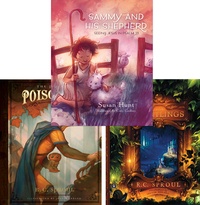
 

These Books from Ligonier

This book is in our wish list; maybe to celebrate Reformation day…
Ligonier Shop

Or this one as a fun introduction to Church History:

See more here

This is a favorite one here:

Ligonier Shop

How important it is to introduce our children to the great biographies of men in the Church History, and Simonetta Carr has done an excellent job writing an amazing series for our children.

Monergism carries all her books.

Another favorite, a rare jewel is Divine and Moral Songs for Children by Isaac Watts, an excellent book for memorization projects, or just to read aloud and reflect on the words. (I wrote more about it here and here)

Elizabeth @ Finding the Motherlode recommends these:

The Redwall Series by Brian Jacques,
The Phantom Tollbooth by Norton Juster,
The Trumpeter Swan by E.B. White,
Benjamin West and His Cat Grimalkin by Marguerite Henry

Elizabeth H. says “I love the historical fiction titles that Christian Focus Publications puts out.”

Brenda likes the American Girl series, and I have to say that Annie enjoyed reading those on her leisure time when she was little.

Amy recommends: The Wingfeather Saga by Andrew Peterson, and anything on Ambleside Online’s reading list!

Katy says, “In addition to the classics like RL Stevenson, Lewis, and Tolkien, we have enjoyed Donita K Paul, most everything by Edith Nesbit, and even the new Theodore Boone by Grisham.”

Norma likes:

Grandpa’s Box,(by Starr Meade, and I would like to mention here that she is one of my favorite contemporary authors for children, who writes from a solid Reformed Theology background. See more books of her here)
The Building on the Rock series (5 books)
The Squire and the Scroll
And some classics like, Where the Red Fern Grows.

Sue, whose children are now in a Liberal Arts college, says,  “My kids liked the Redwall series…over and over again.”

And Amy Lee said she liked, when she was that age, Grandma’s Attic books by Arleta Richardson and Childhood of Famous Americans books (available used or at many public libraries).

Lastly, I must say that I am decided to read more fiction books to my little one, like the ones N.D. Wilson has written. My oldest have read them and love them, so I am thinking that even though fantasy is not my favorite genre, I really want to feed Isabel’s soul with stories. (plus, I enjoyed reading Wilson’s book Notes from the Tilt-A-Whirl, his style is one that captures your attention fully.)

Looking through all these wonderful books, and because in October we celebrate The Reformation and my little girl’s birthday,  I thought I would host a giveaway. This time however, is for your little ones, which means the “rules” will be different.

Your child (8- 11 yo) must choose which book he or she would like to win (yes, call him and show him the options; or call your grandchildren on the phone -or Skype- and ask them which one will they want to read); then leave a comment with your child’s favorite option. If you have more than one child entering the drawing, please leave a separate comment for each one of them.

The options are:

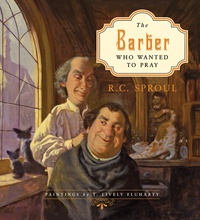
1. The Barber Who Wanted to Pray by R.C. Sproul

2. Boys and Girls Playing by J.C. Ryle

or

3.  Trial and Triumph by Richard M. Hannula

4. The Prince’s Poison Cup by R.C. Sproul

The winner will be announced next Friday, October 21.

Please, feel free to share the goodness with your friends!

May your weekend be full of good books and family time,

Becky

Homeschooling, What is Going on Here

Isn’t this the time of the year when you can perceive how your school year will look like? Well, for me it is; and I want to share how we are doing things around here.

We now have our oldest son in college and we all miss him very much; but at the same time, we are happy and much grateful to know that he is where God wants him to be; and that is a joy. This means that we have one less at home.

Nick and Annie are taking all their classes through Veritas Press Scholars Online.And let me tell you how grateful we are for this school; the teachers have been a godly influence for our children, many of them have been used by the Lord to mold our children’s lives in a very special way. Imagine for example, my 16 yo old daughter telling me how much she has grown spiritually these weeks while reading The City of God by Augustine in her Omnibus class and discussing it with her teacher and classmates. We had a wonderful and rich conversation about it and I cannot do other than to give thanks to God for this blessing.

Our little one (7yo) also wanted to take online classes as her big brothers, so she convinced Daddy and this year she is taking two online classes: Memory Period and Latin for Children 1. It is a joy to see her enjoying these classes so much. And of course she is not struggling with all the “new” words she has to learn in Latin because most of the vocabulary is so much alike to our Spanish words! It is great to see her having so much fun in these classes. In Memory Period they sing and sing and sing all different kind of songs to help them memorize many facts, from Math, Geography, History, Grammar, and even Latin. Her teacher makes every class special and Isabel enjoys the fact that Mrs. Duby actually invites all the students to have “a cup of tea and chocolate chip cookies” while doing their class.

We are also doing Saxon Math and for extra practice we use the Kumon workbooks, which have been a great drilling tool for us. For Science we are using Apologia’s book, Exploring Creation with Human Anatomy and Physiology; we are liking it so much and I specially love the new Notebooking Journal; it is so much easier than to make your own notebook and much nicer because it has pretty pages, templates to cut, mini books to assemble, etc. We really like doing this class together.

For History I am doing again what I did  with the rest of my children; we are going through The Story of the World Series by Susan Wise Bauer. This series are my favorite for grammar stage because they do cover the History of the world not only of the Western Civilization. It is the only curriculum I have seen that covers in several chapters through out the series, important cultures and happenings in Latin America. I enjoy Bauer’s writing style and my children have truly benefited from her books. We are currently doing Year 3.I have to admit that with my little one I have tried to use a wall timeline without success; and I don’t understand why if I used to love them so much. So we are using this one instead.

Some others things our little one likes to do are practicing her cursive and learning English with a friend of mine who has been a great help to us as she has taught all my children all these years the knots and bolts of English grammar! (this is the time when I teach Spanish in the same online school)  Isabel also loves to do the VP’s Literature guides like this one, specially all the hands-on activities and the recipes included.

My sister and I are now ready to do something new this year; we will start, this coming Friday, teaching Art History to our youngest children in Skype. We are very excited, but our children are super excited! After a long conversation and many messages (including some other topics, of course), we decided that we will use the one book that we both have, that we both started teaching to these two kids and that we both never finished. So yes, it was not a hard decision. As good sisters, we will be taking turns to teach our kids. And of course, she asked to go first and I said yes.

My favorite parts of our days are breakfast, lunch and dinner. Not because we get to eat (which we love to do), but because we do it slowly, we sit and talk a lot. After lunch we love to sit in our porch, we eat a piece of chocolate (sometimes two) and I read a book out loud to them. Of course this is also one of the times I miss my oldest son the most.

So we are happy, our year looks promising; and God willing, we will not faint.

What about your school year; how does it look? Any innovations, tips, suggestions?

Becky

>How to Make Online Friends in a Real World

>

You write emails and messages, and facebook statuses all year long. You have prayed over long distance friends, and shared your heart with them even though you have never seen into their eyes before. You have met these friends online, and now you love them and truly care for them. How can this be?
We met many of our online friends through an online school (the best, I dare to say) almost five years ago. And every year we go to the famous End of the Year Gathering where we all meet for a week to share laughs, words, hugs, tears. To look into our eyes, and gaze into the beauty of godly fellowship. 
Some of my closest friends are there, and some others, like Elizabeth, one of my best friends, I have met through the blogging world. How could this happen? Haven’t we been told that online friends are not real? That they do not belong to the real world?
We are now in a time where we can’t ignore the online world. It is part of us and we are part of it. My dearest sister and best friend lives in Canada while I live in Mexico, and yet we are in contact almost daily through all the new technologies that allow us to share those little things that make up our days.
Few of the things I have learned along with my children in this new world, new era, where online relationships do happen are these:
1. Know that there is a REAL person behind the screen. When I teach online, when I blog, when I send a facebook message, when I write or read an email; I know there is someone breathing on the other side. A person, a real one, with virtues and flaws. With good days and bad days. With a beautiful home that sometimes gets messy as mine. We are real people,  we are not “a thing” behind a screen.
2. Be YOU at all times. Be sincere, be real. When my dear friend Elizabeth and I sat on the same table to have lunch, for the first time after almost two years of being “online friends”, I was very happy to find “the Elizabeth” I knew I would find. We knew each other; we were not any different than the person that we show online. 
I have taught my children not to post ANYTHING that they would not say in person. When they started to learn how to relate in an online world, I would read their statuses and profiles, to make sure that they were being real. This is a very important thing to do at all times. As Christians, we are to be true to our faith on the family table, the mall, the farm, the school, facebook, etc. We cannot be double-minded. We must be always blameless children of God. 
3. Make it happen. This is the hardest part, but the most rewarding one: Go beyond the screen! Get the phone (or Skype which is cheaper if you have loved friends who live in the UK or Brussels). Listen to their voices, to their laugh, take the time to make it happen! Set a time, just as if you would go to a Starbucks to meet with your friend. It seems simple but it makes a world of a difference.
Now, try to meet them in person! This is what we must long for, to be with our online friends at a table, sharing the bread, and looking into their eyes.
This past week, as more than 400 people gathered in Lancaster, PA to celebrate the End of the Year Gathering, I kept my eyes open to see that true godly relationships can be built online where the Lord reigns among His people and His statutes are honored.  As one of our friend has said, “that week with these people was absolutely worth any pain that the good-byes may have wrought.”
I pray that God will help us live in this era of online relationships, true to our calling, honoring Him in all we do and say, praising Him with every word we write or read. 
Much love to you today, my dear friend!
Becky
*******************************
The picture above is of my little girl and her friends. Their lives have been brought together because of online friendships. This is the fourth year in a row that they get together to share laughs and songs!  My daughter cried when she said good-bye to them.

>Have You Included Latin in Your Homeschool Schedule?

>Classical languages matter and let me tell you that it is worth to invest time, effort and yes, some money into them.

We are part of a great community, Veritas Press Scholars Online, and we receive a monthly Epistula (letter) featuring a very interesting article every month.  Joanna Hensley, one of the favorite teachers at Veritas Press Scholars Academy and a precious friend of mine,  wrote a fabulous article on the importance of Classical Languages. I asked permission to post it here for you. Enjoy and think seriously about it….

My Daughter started last year with Song School Latin (she was 5 years old.)

Why Classical Languages Matter
A Latin teacher, like me, asked to write a newsletter article on “Why Classical Languages Matter” is tempted to peddle her wares like a fair barker with a megaphone: “Step right up! Get five languages for the price of one! Feel smarter in just fifteen minutes a day! Absolutely guaranteed to raise your SAT!” While all these promises regarding the study of Latin may be true, and while these may be the very reasons some students study Latin in the first place, there is something far more valuable and far less self-serving in the importance of studying classical languages. Classical languages are necessary for understanding ideas, and to illustrate the point, I will put down my megaphone and tell you the story of St. Isidore of Seville.
Born to a Christian family in Spain in A.D. 560, Isidore was a student at the Cathedral School of Seville, the first school of its kind to be structured around the trivium and quadrivium. In other words, he was one of the first boys in medieval Spain to receive a classical Christian education, not unlike the one offered by Veritas Press Scholars Academy. While the Spanish culture around him was disintegrating with the spread of anti-intellectualism and illiteracy thanks to the barbarian Goths who had taken over the government, the young Isidore was studying Latin, Greek, Hebrew, and the liberal arts, holding on to classical influences which were all too quickly disappearing in Europe.When Isidore grew up, he put his classical education to work in service to his culture. After his older brother Leander died, Isidore became an archbishop and boldly fought against Arianism, that heresy popular among the barbarian Goths which rejects the biblical understanding of the Trinity by saying that Jesus was just a man and not true God. It took courage to tell those powerful barbarians they were wrong. (Remember what had happened to poor Boethius? If you don’t, take Omnibus V.) Yet, Isidore stood fast to Scripture, and through him, God converted many.As an archbishop, Isidore presided over several church councils, including the educationally significant Fourth National Council of Toledo in 633. At that council, Isidore encouraged everyone there to open classical schools like the one he had attended as a boy, based on the trivium and quadrivium, in all the Cathedral cities. Again, this was a bold move, quite counter-cultural. Through this spread of classical Christian education, Isidore stalled the influences of barbarism and ignited an educational renaissance throughout Spain. Wondering what this has to do with classical languages? I’m getting to it.
In addition to fighting heresy and spreading education, Isidore wrote a gigantic encyclopedia-the first to be published during the Middle Ages-called the Origines (also known as the Etymologia and some of which students translate in my Latin II class). All 448 chapters of this 20-volume set were dedicated to understanding the origins of words. That Isidore could write such an encyclopedia is a tribute to his fine education. That he cared so much about etymologies illustrates his belief that knowledge comes to us through words, and the meanings of words come to us through study of classical languages. Isidore argued that the very existence of ideas depends upon understanding the origins of words, something you learn through the study of classical languages.
Why, then, do classical languages matter? Unless we know the origins of words, we cannot understand ideas. Since 90% of English words of two or more syllables come from Latin, English relies upon classical languages to express ideas. Take for example the phrase liberal arts. These are the arts which set a man free, not the arts which are particularly generous or best align with the Democrat Party. One understands the true meaning of liberal arts when he recognizes that the word is derived from liber, the same Latin word which gives English liberty and deliverance. This is just one example of thousands, but it shows how right Isidore was to think that understanding word origins is necessary for understanding ideas. This is why the study of classical languages is so important in becoming a well-educated person.
It makes sense to reasonable folk that words are connected to ideas. We express our ideas through words, and we read words in order to understand other people’s ideas. And yet, today’s postmodernism is challenging this basic connection between words and ideas. Our culture, like Isidore’s, is becoming more and more barbaric. Our church, like Isidore’s, is battling against heresy. Our postmodern world, like Isidore’s, needs to be reminded that words have true, objective meanings. What Isidore did to revive medieval Spain-namely, the spread of classical Christian education, the defeat of heresy, and a renewed appreciation for words-can revive our culture as well.
When words hold no significance, ideas simply do not flourish. I daresay this is why postmodern America is having trouble keeping up with the Great Conversation of western civilization. Knowledge does not advance when people argue what is is. Ideas do not flourish when words have meaning only for the individual. Debates do not resolve when no one even cares to define terms, and education is pointless when universal truth is replaced by relativism.
Let us instead commit ourselves and future generations to appreciating words. Let us love words so much that we study them all the way back to antiquity. Let us know exactly what is is, to the point that we can rattle off that irregular verb chart in languages millennia old. When someone tells us, “Sure, that’s what it means for you,” let us know with confidence that words do have objective meaning, going back to the days of Cicero and before. Let us read Cicero, while we are at it, and let our goal for studying classical languages be to enjoy the great books written in their original great languages. That goal is not far off. My Latin Readings students are doing that even now.
With classical languages under their belts, our children and their children actually can keep up with-even lead-the Great Conversation of western civilization. Knowing words is knowing ideas, and we need good ideas these days. So study Latin to improve your SAT score, master romance languages, and feel like an all-around smart person, but do your culture a favor and be like Isidore. Use your understanding of the origins of words to battle heresy in the church, spread classical education, and transform the culture through a renewed appreciation for words, and in this way give all glory, laud, and honor to the Word Made Flesh.
Joanna Hensley

Joanna teaches Latin and Omnibus at Veritas Press Scholars Academy, 
you can find the 2011- 2012 schedule here.

So yes, you have plenty of time to plan and include Latin in your homeschool schedule!

A repost from the archives of my old blog with few changes.

>Why Does the Mexican Flag has that Particular Eagle?

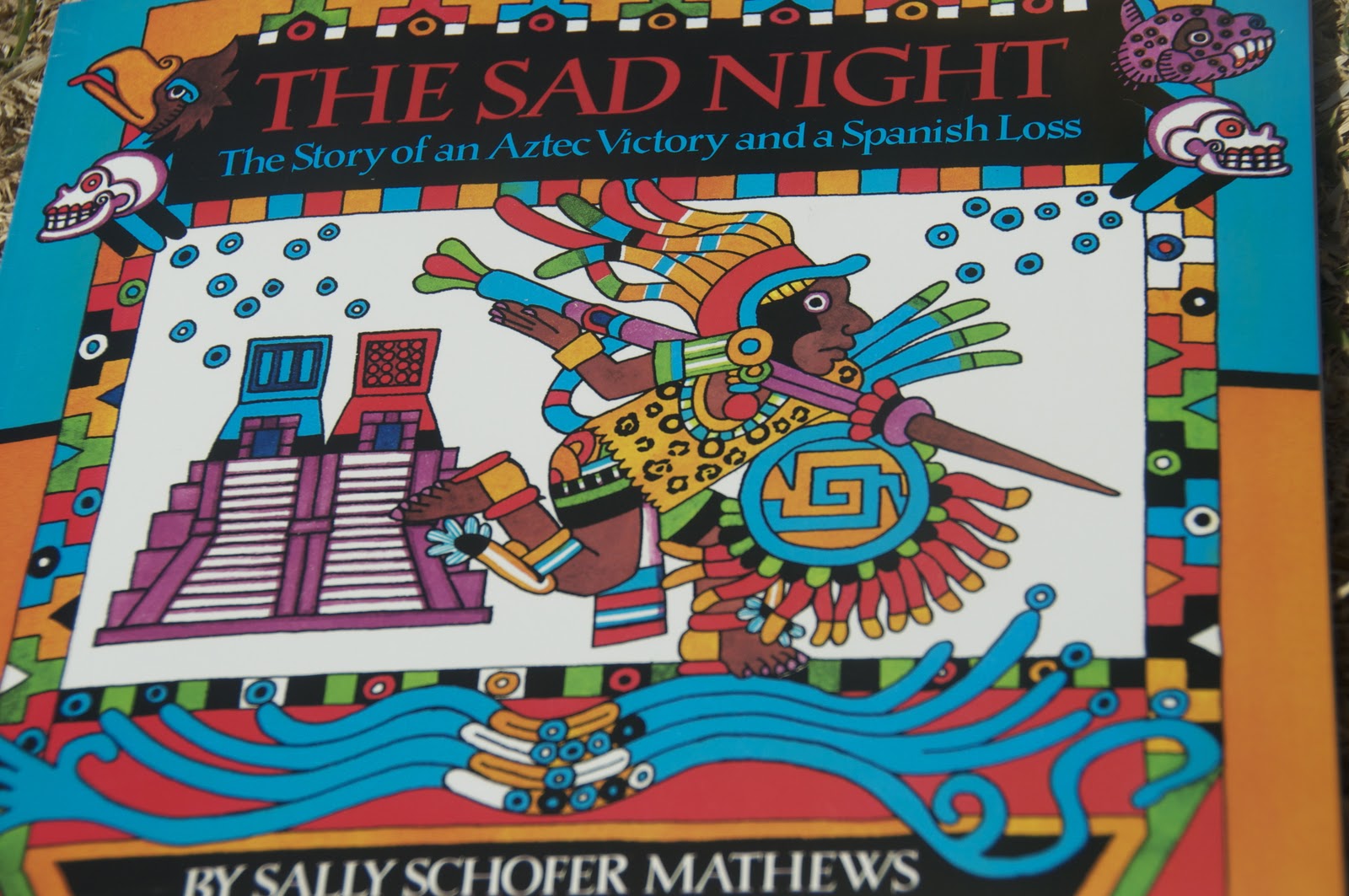
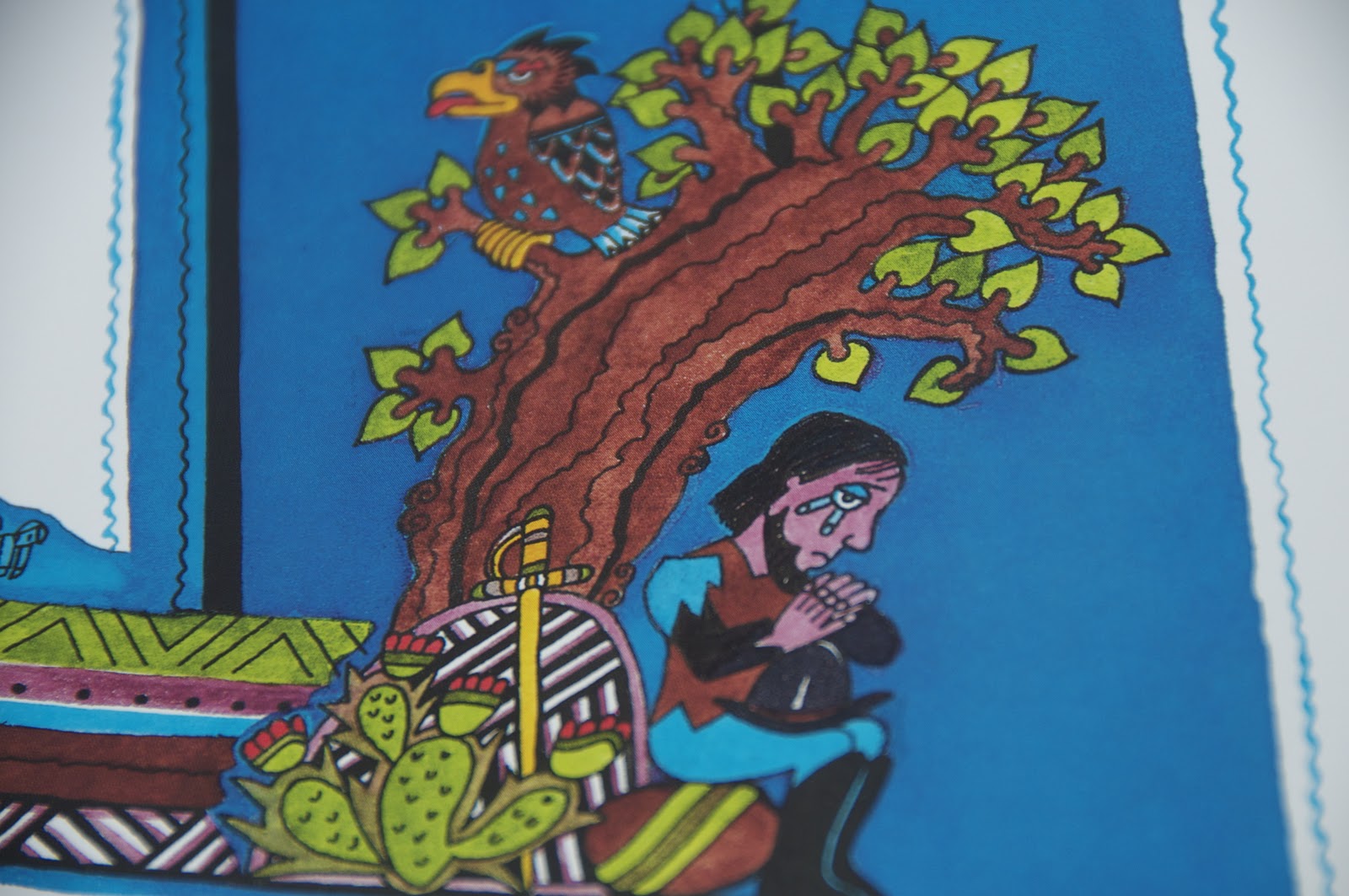
>Why does the Mexican Flag has that particular eagle, standing on a cactus, devouring a rattlesnake? You can read your little ones about this in this book I read to my little one this week. Yes, it is a very good, little book that my 7 yo enjoyed from the first page to the last. I really liked it because, even though it is short, it is accurate and the illustrations are beautiful.

The book is entitled The Sad Night, by Sally Shofer Matthew. 

And a little extra information for you ….

Why did the Spaniards finally conquered the Aztecs if they were outnumbered?

I have read many opinions and I have come to the conclusion that there were three important factors:

First the Aztecs had a totally different mindset when fighting. In Europe the idea was to win no matter what, in the Americas once a tribe fought and clearly won in battle that was it, it was settled who was the strongest one. However, the  Europeans were not going to be defeated like that, their interest were much more bigger than winning a one fight, than showing who was the strongest one. An Empire with many interests was behind all this. So, when the Spaniards lost this important battle (the Sad Night is the result of that loss) and they left. The Aztecs never thought that in a year they will come back with a larger army  decided to crash their civilization; that was not the way things worked on this side of the Atlantic.

The other factor was that these people, the Aztects,  lost because of all their superstitions. Moctezuma (yes, with a “c” and no with an “n” is the way we spell it in Mexico) was a great, brave warrior. He had the control over all the area (very BIG area, I have to say) No tribe was strong enough to resist the brutality of the Aztecs, however, through all this encounter with the white-bearded men  Moctezuma was paralyzed because all the time he was sure he was dealing with gods. At the end the generals and the people in general realized that gods or not they had to kill these men (gods?). Moctezuma tried to protect them ’till the end and this was his fall. People stoned him to death. (keep in mind the desperation that had to be happening here, the people “knew” that Moctezuma, their Tlatoani, was their god, so this was not an easy thing to do!)

Third, and most important, the Aztecs lost because it was written! Because God is sovereign over the nations, over the course of history, He is Lord over all, and He directs the history of mankind like the course of a river according to His infinite wisdom.

Well… I hope you enjoyed reading this, and I hope you get to buy this little book with a great story and full of  beautiful illustrations.

Have a blessed weekend, dear friends!

>Heaven and Hell by Isaac Watts

>My daughter and I just finished memorizing one of the poems from the book “Divine and Moral Songs for Children” by Isaac Watts (Praise for Creation and Providence), and we are now ready to start memorizing a new one. This time she was free to choose one; and this is the one she picked:

Heaven and Hell
Song X
There is beyond the sky
A heaven full of joy and love;
And holy children, when they die,
Go to that world above.
There is a dreadful hell,
And everlasting pains;
Where sinners must with devils dwell,
In darkness, fire, and chains.
Can such a wretch as I
Escape this curse end?
And may I hope, whene’er I die,
I shall to heaven ascend?
Then I for grace will pray,
While I have life and breath;
Lest I should be cut off to-day,
And sent to eternal death.

Very different than the “Veggie Tales”, right?

May God help us preach the true gospel to our children and to nourish their souls with the Truth, with the Scriptures that can make them wise unto salvation.

Under His sun and by His grace,