Elisabeth Elliot and Nancy Wilson on Journal-Keeping

This very much summarizes what I believe on journaling…

“I was very cautious about what I put in the journals. I don’t think it was because I feared someone else would discover my secrets. I think I was afraid to articulate, even for myself, feelings I might have to get rid of. Better to stick  with what God was saying to me than what my heart was saying. It seemed the safer course. I do not repudiate it now. The only way to build a house on the rock is to hear the Word (I couldn’t have heard it if all I listened to was my feelings) and then to try to do it…”

Elisabet Elliot, Passion and Purity (p. 54)

Nancy Wilson also wrote a while ago two posts on journal-keeping that are worth considering:
Part One. Part Two (if you only have time to read one, read part two. It is excellent -a must I would dare to say-.

“[W]e should and must guard our tongues in all things spoken and written: “He who guards his mouth preserves his life” (Prov. 13:3). Psalm141:3: “Set a guard, O Lord, over my mouth; Keep watch over the door of my lips.” Our pens need watchmen and guards just like our mouths. And the fact that a journal is “private”does not mean the words can be left unguarded.” -Nancy Wilson


“Life is short. Write good words.” -Nancy Wilson

Becky

Stories of Endless Grace

It is when I see my sisters in Christ
who have lost a child,
a husband,
a dream.
Sisters who have been betrayed,
abandoned.
Who have heard many times
that they have the “right” to be mad
to be bitter,
to be anger.
But by God’s Grace
are still clinging hard to
God’s Word,
to His Perfect love,
to the Cross,
That I learn the most
about trusting God.

These women, these sisters,
Who have lost the most precious gifts,
Are the ones who have their hands
And hearts full.
Their cup is overflowing.
God has filled their emptiness
With His prescence.
They now know Him as the God
who satisfies all of our needs.
They have walked with Him
through valleys
and shadows and
have embraced the blessed gift of
His Peace which surpasses all
understanding.

These women don’t name and claim promises.
These women bow down and
Glorify God in the abyss.
When silence is everywhere,
and no answers are found,
they cling to the Word of God,
and hide under the Shadow of the Almighty.

The lessons learned in the furnace,
in the missionary field,
in the trials,
in the hospitals,
in the cemetery,
in the court,
in the office,
in the kitchen,
in the prayer closet,
are all invaluable,
all of them rich.
All appointed by God,
to draw them closer to Him.

How they stood firm through each battle,
how they have persevered,
how they have glorified and thanked God
when they could have cursed Him.
Oh! It is only through Grace…
Grace that flows from the Cross,
Grace that knows the power of the Resurrection.
Grace that calls each one of us by name.
Grace that doesn’t let us go
or die,
or despair.

And we all know this,
the school of sanctification is not easy.
And we fail at times -many times-
but we persevere,
we have not been chosen to perish.
It is not about us,
about will-power,
about our own capacities,
or strength,
or godliness.
It is neither about our sin,
how big it is,
how low we have been.
It is all about His Saving Grace,
Grace that saves,
Grace that helps us fight,
Grace that brings us all the way to the finish line.

And I have heard my sisters say,
“I never thought I could possibly live through such a trial…
      and yet God’s grace sustained me through it all.”

I close my eyes and try to swallow hard.
Isn’t this the testimony that we need to hear?
The Doctrines of Grace,
The Catechism,
Our Creeds,
Worn as our daily robe?

As one man said,
“Stories are catechisms 
                 with flesh on.”
I believe it.
I have heard the stories my sisters have lived.
I have seen them being sustained by
the faith that is found in the marrow of their bones.
Their scars are real.
But so their smiles.
So their joy.

All is Grace and
each story hides in it many mercies.
And each one draws us near to our Father.
Beautiful stories of unending Grace.
mercies adorning their days.
Day after day…
New mercies which never fail to come.

God’s blessed joy has come in the morning,
His peace has guarded their hearts,
their minds.

And I look at each one of them,
how beautiful they are!
How strong
and meek they are.
How much like Jesus they have become.

And I give thanks for each one of them,
And always remember them in my prayers,

Becky

My favorite 12 Books of 2012

This was a good year of books for me. I had a plan (sort of a goal) at the beginning of the year and I am very happy to say that it did work for me. It consisted of reading more fiction, reading several books on the same topic, and reading about the authors of the books I liked (or disliked as it was the case of Anne Lamott’s books) to have a clear understanding of their worldview. I will stick to this same plan this coming year.

So after going through my list of books read in 2012, I chose these as my favorite ones (in no particular order):


1. The Way of the Righteous in the Muck of Life: Psalms 1-12 by Dale Ralph Davis.

This little book (only 144 pages) was a great blessing, it is encouraging as well as convicting. I read it over 12 weeks (one chapter every Lord’s Day).

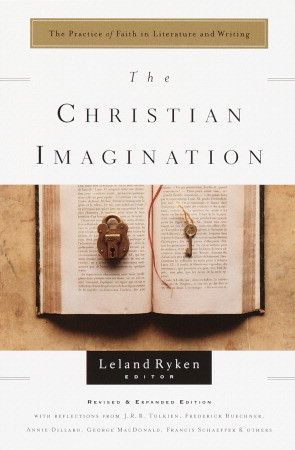
2. The Christian Imagination: The Practice of Faith in Literature and Writing, edited by Leland Ryken.

If you love reading and writing, this is a book that will become one of your favorites, too.

You don’t have to agree with every essay in this wonderful book but I assure you, in every page you will find good food for the thought.

I will not put this book away on a distant shelf, I want it always at hand.


3. Praying Backwards by Bryan Chapel.

Definitely my favorite book on prayer this year.

It is always good to be encouraged to live a life of prayer, and this book does that. I am grateful for it.


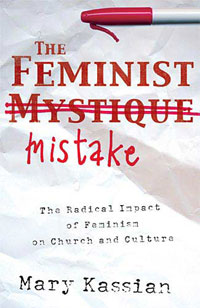
4. The Feminist Mistake: The Radical Impact of Feminism on Church and Culture by Mary A. Kassian.

This is an important book to read in this age in which Feminism is being more and more accepted in the Church.

You can read my review here.

5. Saving Leonardo: A Call to Resist the Secular Assault on Mind, Morals and Meaning by Nancy Pearcey.

This is such a wonderful book! Next time I read it (because, yes, this is the kind of book that deserves to be read -and studied- more than once), I will start with the last chapter.

Tim Challies has a good review of it here.


6. Total Truth: Liberating Christianity from its Cultural Captivity by Nancy Pearcey.

After reading Saving Leonardo, I had to read this book by the same author (actually she wrote this book first). I cannot recommend you these books enough.

This book (and Saving Leonardo) are a must read for Christian parents that want to teach their children to think and discern the worldviews around us.

7. Father Hunger: Why God Calls Men to Love and Lead their Families by Douglas Wilson.

I wrote this on Goodreads:

“Excellent book. I would really like to encourage my female friends to read it. This book is not only about “how to be a father” (which of course, is important). It goes deeper, it deals with many important topics that are threating the Christian biblical family such as egalitarianism and feminism.

8. The World- Tilting Gospel: Embracing a Biblical Worldview and Hanging on Tight by Dan Phillips.

I love everything about this book.  You will want to read it more than once and give it away to your friends.

It would be great to read it around aloud with the family.

Douglas Wilson has a good  and in depth review here.

9. If You Bite and Devour One Another: Galatians 5:15: Biblical Principles for Handling Conflict by Alexander Strauch.

Fantastic book.

I wrote this piece inspired by it.


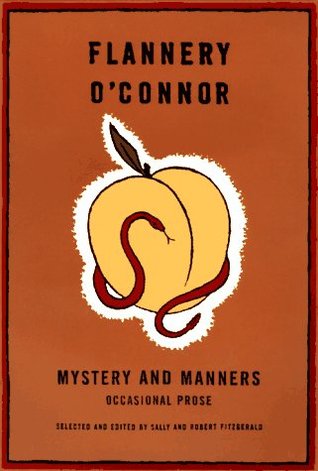
10 & 11. Everything that Rises Must Converge,  and Mystery and Manners: Occasional Prose, both by Flannery O’Connor.

My favorite combination this year. I first read O’Connor’s short stories and I felt the need to understand more of her worldview, her view of Redemption, so I read the collection of essays Mystery and Manners.  After reading both, O’Connor became one of my favorite authors.

12. I can’t choose only one of these books as my last favorite for this list.  The Book Thief by Markus Suzak, Of Mice and Men by Steinbeck, and Gilead by Marilynne Robinson (audio version) were fantastic, engaging, and each one left me with lots to think about.

The rest of my favorite books can be found on Goodreads.

My friend Persis at Tried with Fire, published today her six favorite books of 2012. It is definitely a list worth looking at.

Tony Reinke’s list of favorite books is also very good.  I am already adding some of his suggestions to my list of books to read in 2013.

What are some of your favorite books of 2012? Any good suggestions?

May our reading bring glory to God.

Becky

The Beauty of Being a Woman

When I was reading through The Feminist Mistake I kept thinking how grateful I am to be a woman and to know that I have been named by God.

So I wrote a small piece about the beauty of being a woman…

Come, read over at Desiring Virtue and share with us what are some of the things you are grateful about being a woman.

Under His grace,

Becky

The Feminist Mistake by Mary Kassian -My Review-

A professing Evangelical woman today will try to say that she is not a Feminist, that she only believes that in marriage (and Church) there should be no hierarchies, that in Christ we all are one and that we, wives, are not longer called to submit to our own husbands, instead we are both (husband and wife) called to submit to one another.  Is this even possible?

Mary Kassian’s book: The Feminist Mistake, The Radical Impact of Feminism on Church and Culture is an extremely important book in all this “gender debate” issue. And it is important because of at least three reasons:

1. It helps us understand the origins, the philosophical and theological views of Feminism and how it found its way into the Church.

2. It also help us understand how it is impossible to be a Feminist and a Christian. You can’t embrace both. Feminism always leads to a “new kind” of theology which has its own hermeneutic methods to interpret the Scriptures, so that it would be able to “support” its own beliefs.

3. It helps us understand that the so called “gender-debate” (egalitarianism vs complementarism), goes beyond the issues like “who takes the final decisions at home.” Feminism leads, little by little, to a complete non-Biblical view of God, and the world.

Kassian’s book is well written, clear, and engaging. It is also well researched and it includes a great number of references. Mary Kassian’s approach is objective, and does not deal with the subject as if she were in a “witch hunt,” she presents a professional historical account, and always from a solid Biblical standpoint.

The book is divided in two parts: The Philosophical Quake and Shock Waves

The first part is subdivided in three stages:

1. Naming Self (here she explains how women decided to name themselves, instead of letting God name them, define who they are).

2. Naming the World  (two of the things she deals about in this stage are: Women-centered Analysis of Theology and Women’s Studies in colleges).

3. Naming God (the feminization of God, and women and their place in the Church are discussed here).

In the second part of her book, Kassian deals with the advent of “biblical feminism,” the hermeneutic methods they use to sustain their “egalitarian” position, the  “what-to-do-know” kind of questions, and what will happen next if we refuse to see the danger feminism represents and we neglect to stand firm against it.

I would like to share with you some quotes on the matter of Feminism and Theology:

“In order to harmonize feminism and religion, Daly found it necessary to reject the theology that presented God as omnipotent, immutable, and providential, for she believed that this view discouraged women from seeking change. Furthermore, she viewed images of a jealous and vengeful God as projections and justifications for the role of the “tyrant father in patriarchal society” rather than as actual aspects of God’s character. The concept of an almighty, all-powerful, unchangeable, caring, providential God, jealous and demanding worship, was, according to Daly, an inadequacy in the conceptualization of basic doctrines which sustained and perpetuated androcentric theological teachings.” (p.47)


“Feminist theolgians, therefore, took the liberty of discarding passages of the Bible that did not agree with their vision of sexual equality. They either dismissed the text as outdated -relative only to a particular time and culture- and the author of the text as misogynistic, or they interpreted it and assigned it a meaning different from what the author had intended. The dynamic view of the Bible that feminists adopted allowed them to adjust biblical interpretations in order to make the Bible relevant to the problems and  perspectives of women in contemporary culture. Feminists argued that biblical interpretation could and should change.” (p. 108)


“Traditional symbols of the church had presented God as “He” and as King, Lord, and Judge. Feminists maintained that these religious symbols excluded women. The symbols needed to be updated to accommodate the new feminist consciousness. According to feminists, linguistics symbols of the Bible and church, as well as of God, needed to be altered in order to bring them into line with the inclusive equality of women.” (p.162)

Ruether and Stendal, two influential feminist theologians, said that “those who imaged God as male were guilty of idolatry,” and that “those who believed that God was, in some way or another, male were guilty of idolatry.” The author rightly responds,

“…by changing the biblical symbols, Russell altered and renamed God. This is a serious matter. For if feminism’s altered view of God is out of synchronization with who God really is, as He has revealed Himself, then it is not really God whom they are imagining and worshiping; and this is the idoaltry that the Bible condemns.” (p.168)

When women start re-naming God and try to de-sexualize Him, what they end up doing, according to the author’s analysis, is they depersonalized God, they attack God’s character,  they deny the Trinitarian relationship, they obscure the person and work of Christ, they obscure humanity’s relationship to God, and their own personal identity (p.168-173).

If you read this book carefully, you will clearly see the philosophical progression of feminism.

Mary Kassian says,

“While I do not deny that feminist vary in political theory and theology, I maintain that are all part of a larger continuum that supersedes and encompasses those variations. A feminist, at any given point in time, may not see herself or himself at the radical end of the movement, and I am certain that some individuals will never change their personal views to that extent. But the dissociation of one’s brand of feminism from the remainder of the feminist movement is a naive denial of reality. The philosophical progression of feminism is both coherent and logically immanent.” (p.241)

Maybe you are one of those who “sees feminism as an ideology that merely promotes the genuine dignity and worth of women.” Read what Mary Kassian wisely says on the matter:

“If this were true (the statement above), feminism would definitely be compatible with Christianity, for the Bible does teach that women and men are of equal value in God’s sight, co-created as bearers of God’s image. But the philosophy of feminism adds a subtle, almost indiscernible twist to the basic biblical truth of woman’s worth. Feminism asserts that woman’s worth is of such a nature that it gives her the right to discern, judge, and govern that truth herself… Feminism does not present itself as at outright affront to the Bible, but it nevertheless contains an insidious distortion that erodes the authority of the Scripture. Acceptance of the feminist thesis may not drastically alter one’s initial beliefs, but if followed, it will naturally and logically lead to an end miles away from the Christianity of the Bible.” (p. 261)

What now? Why should you read this book if you are not a “biblical feminist” (or an egalitarian)? I assure you, sisters, that the rise of this movement is coming more rapidly and with more fury than we can even start to imagine. We need to be ready to discern it and be well grounded in the Word of God to be able to teach our daughters (and sons) the dangers of this lie.

Let us press hard and embrace our precious and wonderful calling which is good, because God said so. Let us not be afraid, sisters, to be named by God, to embrace the beauty of our place in His story.

Then the man said, ‘This at last is bone of my bones and flesh of my flesh; she shall be called Woman, because she was taken out of Man’” Genesis 2:23

Under His sun and by His grace,

Becky

Mary Kassian blogs at Girls Gone Wise, and True Woman

 

*********************


Saturday’s Seven -Our Favorite Breakfast Cake and Some Book Recommendations-

My friend Hollie is sharing today on her blog a list of seven things –happenings– in her family, I decided I will jump in and share the Saturday’s Seven around here…

1. Today is one of those quiet, slow Saturdays in which we had breakfast at noon.

2. Talking about breakfasts, a favorite breakfast cake in our home comes from Alexandra’s kitchen: Buttermilk-Blueberry Breakfast Cake. Note that I always double the recipe and we eat it all during the weekend. I also like to make scrambled eggs with pesto,  or with goat cheese and herbs, or chives and cream cheese, or even with sun-dried tomatoes and grated manchego cheese. Bacon or breakfast sausages on the side are most welcome.

Coffee, of course, is always ready when the sun starts to come in through our windows.

3. I have been enjoying the new blog that some of my friends started a while ago. It is called Out of the Ordinary, I would like to encourage you to subscribe to it and read it on a regular basis. There is so much that I have to learn from God-fearing, Word-loving women like them.

4. It is really sad to see how many young evangelical women are embracing feminism. Some of my friends and I have been seeing this problem in our different countries, which tells us that it is an issue that we need to be ready to address no matter where we live. Feminism is a disease that is creeping into the church and we need to stand firm against it.

I just finished reading Women, Slaves, and the Gender Debate: A Complementarian Response to the Redemptive-Movement Hermeneutic by Reaoch. This is a book that you don’t just read, it is a book that you study. You need to sit down with a notebook, a pen, and your Bible. I recommend this book to those women  who really want to understand the gender debate and are willing to go deeper.

This week I started reading, The Feminist Mistake by Kassian, I will perhaps, write a review (only if time permits it). Some other books on this topic that are highly recommended are:  God’s Good Design: What the Bible Really Says About Men and Women by Claire SmithWhat’s The Difference: Manhood and Womanhood Defined According to the Bible by John Piper, and Radical Womanhood: Feminine Faith in a Feminist World by McCulley.


5. A wonderful book for children that I am loving is Wise Words: Family Stories that Bring the Proverbs to Life.  The description says (and I agree),

“In the tradition of Grimm’s fairytales, Peter Leithart has produced a wonderful collection of whimsical, yet meaningful, bedtime stories. The characters in each story are as varied as the biblical proverbs they reveal. Meet a chatty squirrel with a secret, or find out what happens when you run up against the Ministry of Nasty Smells. Sure to delight children ages five and up, but no promises they’ll be asleep by the time the story’s over.”

6. I can’t believe I am already on day 52 of my photography challenge “100 Days of Books.” It has been so much fun!  Many of you have been visiting me there… Thank you!

7. I am thinking about having someone redesigning my blog. I have an idea in my mind that I know you all will love. Sometimes changing the look of a place is good, don’t you think? We’ll see if it happens soon.

Happy Weekend, my friends!

Becky


@ The Dermer Family